QA

SOP Development Best Practices for Pharma Organizations

Dr. James Wilson

Queens, New York


Introduction

Ask any pharmaceutical inspector what they look for first, and the answer will often involve procedures. Are they current? Are they followed? Do they match what people actually do on the floor? Standard Operating Procedures (SOPs) are the written backbone of a GMP environment. They translate regulatory requirements and company policy into instructions that people can follow the same way every time.

SOP Development, Yet SOPs are also among the most common sources of inspection observations. Procedures may be too vague to guide action, too long to read, outdated, contradictory, or simply ignored. A poorly written SOP is worse than none at all, because it creates the appearance of control without the substance.

This article describes what makes a strong SOP, how to develop and manage one from start to finish, and how to build a procedure system that supports compliance and daily work.


1. What Is an SOP and Why Does It Matter?

A Standard Operating Procedure is a written, approved set of instructions describing how to perform a routine or repetitive task consistently. In pharmaceutical operations, SOPs cover activities such as equipment cleaning, material sampling, gowning, calibration, deviation handling, change control, laboratory testing, and batch record review.

SOPs matter for several reasons:

  • Consistency. They ensure that different people, on different shifts, perform the same task the same way.
  • Regulatory compliance. GMP regulations require written procedures for a wide range of activities, and they expect those procedures to be followed.
  • Training. SOPs form the basis for training new employees and verifying competence.
  • Accountability. They define who is responsible for what.
  • Risk reduction. Clear instructions reduce errors, mix-ups, and contamination.
  • Knowledge retention. They capture organizational knowledge so it does not leave when experienced staff do.
  • Investigation support. When something goes wrong, SOPs provide the baseline against which actual practice is compared.

Regulators expect firms to establish written procedures and to follow them. Under US regulations, for example, written procedures must be established and followed, and deviations must be recorded and justified. EU GMP similarly requires that instructions be written in clear, unambiguous language, specifically applicable to the facilities provided.


2. Where SOPs Fit in the Documentation Hierarchy

SOPs do not stand alone. They sit within a hierarchy of documents, and understanding this structure prevents duplication and confusion.

  1. Quality policy and quality manual. High-level statements of commitment and system structure.
  2. Site master file and validation master plan. Overviews of site operations and validation approach.
  3. SOPs. Procedures describing how processes and activities are carried out.
  4. Work instructions and forms. More detailed, task-level instructions, templates, checklists, and log sheets.
  5. Records. Completed batch records, logbooks, test results, and reports that show the procedure was followed.

Each layer should have a clear purpose. A common mistake is to put extremely detailed step-by-step instructions in an SOP that should instead be a work instruction, or to place policy-level statements in an SOP that operators need as a practical guide. Good design keeps each document at the right level.


3. Core Principles of a Good SOP

Before getting into the development process, it helps to understand what separates effective SOPs from ineffective ones.

Clear. Language should be simple, direct, and unambiguous. A reader should not have to interpret what is meant.

Accurate. The SOP must reflect what actually happens, consistent with regulatory requirements and approved processes.

Usable. It should be organized logically so the user can find what they need quickly, even under time pressure.

Complete, but not bloated. It should contain what is needed to perform the task correctly and nothing that obscures it.

Consistent. Format, terminology, and structure should be uniform across the SOP library.

Controlled. Only approved, current versions should be available, with changes tracked.

Followed. A procedure that is not followed is a compliance risk, regardless of how well it is written.

A useful test: could a newly trained operator perform the task correctly using only the SOP? If not, the SOP needs work.


4. Planning: Deciding What Needs an SOP

Not every activity requires an SOP. Over-proceduralization creates a library too large to manage and too dense to follow. Consider writing an SOP when an activity:

  • Is required by regulation or a guideline to be governed by a written procedure.
  • Has a direct impact on product quality, patient safety, or data integrity.
  • Carries high risk if performed incorrectly.
  • Is performed by multiple people or across shifts and sites.
  • Is complex, with multiple steps or decisions.
  • Must be repeated consistently over time.

Applying a risk-based lens helps prioritize. High-risk activities need detailed, tightly controlled procedures. Lower-risk tasks may be adequately covered by a brief instruction, a checklist, or a training note.

It is also worth reviewing the existing SOP library for gaps, overlaps, and obsolete documents before adding new ones. A mapped inventory linked to processes and regulatory requirements makes this easier.


5. A Step-by-Step Approach to Developing an SOP

Step 1: Define Purpose and Scope

State clearly why the SOP exists, what it covers, and what it excludes. A precise scope prevents misapplication and overlap with other procedures. For example, an equipment cleaning SOP might specify which equipment, which areas, and whether it applies to product changeover, batch-to-batch cleaning, or both.

Step 2: Assemble the Right Team

The best SOPs are written with the people who do the work. Involve subject matter experts such as operators, supervisors, analysts, and engineers, along with quality assurance and, where relevant, regulatory affairs and safety. Procedures written in isolation by someone who has never performed the task tend to be unrealistic.

Step 3: Gather Information

Collect relevant inputs:

  • Regulatory requirements and guidelines.
  • Company policies and quality manual requirements.
  • Validation reports, equipment manuals, and process descriptions.
  • Existing related SOPs.
  • Risk assessments.
  • Current practice, observed directly.

Walk through the process in person. Watching the task being done often reveals steps, workarounds, and hazards that no one thought to mention.

Step 4: Draft the Procedure

Write the first draft using an approved template. Keep it focused and logical, following the sequence in which tasks are performed. Use short sentences and active voice.

Step 5: Review

Circulate the draft to the working team and other stakeholders. Reviewers check technical accuracy, regulatory alignment, clarity, and consistency with related procedures. Collect comments systematically and resolve conflicts openly.

Step 6: Test the Draft

Where possible, have someone unfamiliar with the task follow the draft in a walkthrough or trial. Gaps and ambiguities quickly become obvious. This is one of the most valuable and most neglected steps in SOP development.

Step 7: Approve

Quality assurance and the responsible department head approve the final version, confirming that it is accurate, compliant, and ready for use. Signatures should be dated, and electronic approvals must comply with data integrity requirements.

Step 8: Train Before Implementation

The SOP should not become effective until affected personnel are trained. Training records should confirm that staff read and understood the procedure, and ideally that they can perform it correctly. Set an effective date that allows time for training.

Step 9: Distribute and Implement

Make the current version available at the point of use, through controlled paper copies or an electronic document management system. Withdraw superseded versions to prevent accidental use.

Step 10: Monitor and Review

After implementation, monitor how the SOP works in practice through observation, audits, deviation trends, and feedback. Then review it periodically and revise when needed.


6. Standard SOP Structure and Content

A consistent template makes SOPs easier to write, read, and audit. A typical pharmaceutical SOP includes the following sections:

  1. Header. Title, SOP number, version, effective date, department, and page numbering (for example, “Page 2 of 6”).
  2. Purpose. The reason the SOP exists.
  3. Scope. The areas, processes, equipment, or people covered.
  4. Responsibilities. Roles and their duties, such as operator, supervisor, QA, and QC.
  5. Definitions and abbreviations. Terms that may be unclear to readers.
  6. Materials, equipment, and safety precautions. What is required and any hazards or protective equipment.
  7. Procedure. The step-by-step instructions, the core of the document.
  8. Documentation and records. The forms, logs, or records to be completed and retained.
  9. References. Related SOPs, regulations, and guidelines.
  10. Attachments and appendices. Forms, flowcharts, tables, or diagrams.
  11. Revision history. What changed in each version and why.
  12. Approval block. Author, reviewer, and approver signatures and dates.

The procedure section deserves the most attention. Steps should be numbered, sequential, and focused on one action each. Decision points should be explicit, for example, “If the result is outside the limit, stop and notify QA.”


7. Writing Style: Making SOPs Clear and Usable

Even technically correct SOPs fail when they are hard to read. The following writing practices improve usability.

Use Plain, Direct Language

Choose simple words over jargon, and explain technical terms where needed. Replace “the operator shall ensure the verification of the integrity of the filter” with “Check that the filter is intact.”

Use Active Voice and Imperative Verbs

Active instructions make it clear who does what. “Weigh 500 g of material” is clearer than “500 g of material should be weighed.”

Be Specific

Avoid vague words such as “appropriate,” “suitable,” “sufficient,” “periodically,” or “as necessary” unless they are defined. Give values, limits, and frequencies: “Clean the equipment within 4 hours of use” rather than “Clean promptly.”

One Action per Step

Combining multiple actions in one step increases the chance that one will be missed. Break complex steps into separate numbered lines.

Use Visual Aids

Flowcharts, photographs, diagrams, and tables can communicate more effectively than paragraphs of text, particularly for multi-step or decision-based processes such as gowning, line clearance, or equipment assembly.

Keep It Concise

Long SOPs discourage use. Move secondary detail to appendices, and avoid repeating content that belongs in another document. If an SOP exceeds a manageable length, consider whether it should be divided.

Write for the Reader

Consider the reading level, language, and working environment of the users. In some facilities, SOPs may need translation or bilingual versions. A procedure used in a cleanroom or on a production line needs to be scannable at a glance.

Highlight Critical Steps

Use warnings, cautions, and notes sparingly but consistently, reserving them for information that genuinely affects safety, quality, or data integrity. Overuse dilutes their impact.


8. Document Control and Lifecycle Management

A well-written SOP loses its value if it cannot be controlled. A strong document control system ensures that the right document is in the right place at the right time.

Numbering and Versioning

Use a logical numbering scheme that identifies document type, department, and sequence. Version numbers should change with every revision, and the system should prevent duplicates.

Approval and Effective Dates

Distinguish between the approval date and the effective date. Effective dates should follow training completion.

Controlled Distribution

Controlled copies should be issued, tracked, and retrieved when superseded. Uncontrolled photocopies and personal printouts are a frequent source of outdated procedures in use. Electronic systems reduce this risk by displaying only the current approved version.

Change Management

Revisions should go through a documented change control process, including justification, impact assessment, review, approval, training, and implementation. Emergency or temporary changes need particular care, with a defined process and time limits.

Periodic Review

SOPs should be reviewed at defined intervals, commonly every one to three years depending on risk, to confirm they remain accurate and aligned with practice and regulations. Reviews should also be triggered by events such as deviations, audit findings, equipment changes, process changes, or regulatory updates.

Archiving and Retention

Superseded and obsolete SOPs should be archived securely and remain retrievable for the period required by regulations and company policy. This allows investigators to determine which version was in effect on any given date.


9. Training and Effectiveness

SOPs only work if people understand and apply them. Training should be more than signing a read-and-understood sheet.

Effective SOP training includes:

  • Role-based assignment. Staff are trained only on procedures relevant to their duties, but fully.
  • Varied methods. Reading, instructor-led sessions, demonstrations, simulations, and on-the-job coaching suit different tasks.
  • Assessment. Quizzes, practical demonstrations, and observed performance verify understanding.
  • Timely updates. When an SOP changes, affected staff are trained on the changes before the effective date.
  • Training records. Documentation shows who was trained, when, on which version, and by whom.

Training effectiveness can be evaluated by monitoring error rates, deviations linked to procedural failures, and audit observations. If the same SOP repeatedly appears in deviation reports, the cause may be the training, the SOP itself, or the process.


10. Linking SOPs to Deviations and CAPA

SOPs and quality events are closely connected. Deviations reveal where procedures are unclear, unrealistic, or not followed, and investigations should ask whether the SOP contributed to the event.

When a deviation occurs, consider these questions:

  • Was the SOP clear and complete?
  • Did it reflect actual practice?
  • Was the person trained on the current version?
  • Was the SOP difficult to follow or access?
  • Would a change to the SOP prevent recurrence?

Corrective and preventive actions often include SOP revisions. However, revising an SOP should not be the default response to every incident. Adding more steps, warnings, and sign-offs each time something goes wrong can produce bloated procedures that are harder to follow. Root cause analysis should determine whether the real problem lies in the procedure, the training, the equipment, the workload, or the culture.


11. Data Integrity Considerations

SOPs play a central role in data integrity. They define how data is generated, recorded, reviewed, and retained. Well-designed procedures support the ALCOA+ principles by:

  • Specifying that data be recorded at the time of the activity.
  • Describing how corrections are made without obscuring original entries.
  • Defining user access levels and password management for electronic systems.
  • Requiring audit trail review where applicable.
  • Clarifying how raw data is identified, stored, and backed up.
  • Preventing practices such as unofficial testing, unrecorded repeat analysis, and backdating.

Regulators often compare SOPs with actual behavior. A procedure that promises secure electronic data but is undermined by shared logins reflects a gap between paper and practice.


12. Electronic Document Management Systems

Many organizations are moving from paper to electronic document management systems (EDMS). The benefits are significant:

  • Automated workflows for authoring, review, and approval.
  • Controlled access and version control.
  • Automatic notifications for periodic review.
  • Integration with training management, so staff are assigned training when a document is updated.
  • Searchability and quick access at the point of use.
  • Audit trails of document activity.

However, an EDMS must be validated for its intended use and must comply with electronic records and signature requirements. Digitization also does not fix poorly written SOPs. Clean up and simplify the library before migrating it, or the problems simply move to a new system.


13. Common SOP Problems and How to Avoid Them

Too long or too complex. Split by topic, use flowcharts, and move detail to work instructions or appendices.

Vague instructions. Replace subjective terms with specific, measurable criteria.

Gap between SOP and practice. Involve end users in drafting, observe real processes, and update documents when practice legitimately changes. Do not leave “the real way” unwritten.

Conflicting procedures. Cross-check related documents and use a central inventory to spot overlaps and contradictions.

Outdated content. Enforce periodic review and link SOP updates to change control.

Poor training. Train before effective dates and verify understanding.

Copy-paste writing. Borrowed text from other sites or templates may not match local equipment or processes. Adapt every document.

Over-reliance on SOPs for every issue. Not every problem requires a new procedure. Sometimes better equipment, clearer labeling, or additional staff is the right answer.

Lack of ownership. Every SOP should have a named owner responsible for its accuracy and maintenance.

Uncontrolled copies. Remove outdated printouts and use controlled distribution.


14. Building a Culture That Supports SOP Compliance

A strong SOP system depends on the attitudes of the people who use it. Several cultural factors make the difference.

  • Leadership example. When managers follow procedures and support compliance even under time pressure, employees do the same.
  • Ownership by users. People follow procedures they helped create. Encourage feedback and show that suggestions lead to improvements.
  • No-blame reporting. Staff should feel safe reporting when an SOP is unclear or impossible to follow. Hiding problems or creating workarounds is a sign of a weak culture.
  • Explaining the why. When people understand the reason behind a step, they are more likely to follow it and less likely to take shortcuts.
  • Continuous improvement. Treat the SOP library as a living system that improves based on experience, data, and feedback.

15. Quick Checklist for SOP Quality

Before approving an SOP, ask:

  1. Is the purpose and scope clear?
  2. Are responsibilities defined?
  3. Are steps in the correct sequence, numbered, and specific?
  4. Is the language simple and unambiguous?
  5. Does it match actual practice and validated processes?
  6. Are critical parameters, limits, and frequencies stated?
  7. Are required records and forms identified?
  8. Are references accurate and up to date?
  9. Has it been reviewed by the people who will use it?
  10. Has it been tested or walked through?
  11. Is the revision history complete?
  12. Is training planned before the effective date?

Conclusion

SOPs are far more than regulatory paperwork. They are the practical tool that turns quality intentions into consistent action. A good SOP is clear, accurate, usable, and controlled. It is developed with input from the people who do the work, tested before release, supported by effective training, and kept current through disciplined document control and periodic review.

Pharma organizations that treat SOPs as living tools rather than static documents benefit in tangible ways: fewer deviations, smoother inspections, faster onboarding, and greater confidence that every batch is made and tested the same way. The effort invested in writing procedures that people can understand and follow is an investment in product quality and, ultimately, in patient safety.


Guideline References

  1. US FDA, 21 CFR Part 211 – Current Good Manufacturing Practice for Finished Pharmaceuticals (notably Subpart J, Records and Reports, and requirements for written procedures).
  2. US FDA, 21 CFR Part 210 – Current Good Manufacturing Practice in Manufacturing, Processing, Packing, or Holding of Drugs: General.
  3. US FDA, 21 CFR Part 11 – Electronic Records; Electronic Signatures.
  4. European Commission, EudraLex Volume 4, Part I, Chapter 4 – Documentation.
  5. European Commission, EudraLex Volume 4, Annex 11 – Computerised Systems.
  6. ICH Q7 – Good Manufacturing Practice Guide for Active Pharmaceutical Ingredients (Section 6, Documentation and Records).
  7. ICH Q9 (R1) – Quality Risk Management.
  8. ICH Q10 – Pharmaceutical Quality System.
  9. WHO Technical Report Series No. 986, Annex 2 – WHO Good Manufacturing Practices for Pharmaceutical Products: Main Principles.
  10. WHO Technical Report Series No. 996, Annex 5 – Guidance on Good Data and Record Management Practices.
  11. PIC/S PE 009 – Guide to Good Manufacturing Practice for Medicinal Products.
  12. PIC/S PI 041 – Good Practices for Data Management and Data Integrity in Regulated GMP/GDP Environments.
  13. US FDA (2018) – Guidance for Industry: Data Integrity and Compliance With Drug CGMP: Questions and Answers.
  14. MHRA (2018) – GXP Data Integrity Guidance and Definitions.
  15. ISPE GAMP 5 (Second Edition) – A Risk-Based Approach to Compliant GxP Computerized Systems.

SOP Development Best Practices for Pharma Organizations Read More »
Essential GMP Principles for Pharma Industry Professionals

Dr. Michael Lee

CA, USA


Introduction

Medicines are unlike most products people buy. Patients cannot see, taste, or test a tablet or injection to know whether it is safe and effective. They trust that the product contains the right ingredient, in the right amount, free from harmful contaminants, every time. Good Manufacturing Practice (GMP) is the system that earns and protects that trust.

GMP is the part of quality assurance that ensures medicinal products are consistently produced and controlled to the quality standards appropriate for their intended use. It is not a single procedure or a checklist for inspectors. It is a way of working that applies to everyone, from the operator weighing raw materials to the senior manager approving a budget.

This article outlines the essential GMP principles every pharmaceutical professional should understand, why each matters, and how to apply them in daily work.


1. Why GMP Exists

GMP regulations grew out of tragedies. Contaminated and poorly made medicines have harmed and killed patients throughout the twentieth century, and each major incident pushed regulators to tighten the rules. The Elixir Sulfanilamide poisoning in the United States in 1937, the thalidomide disaster of the early 1960s, and later contamination events involving sterile products and diethylene glycol in liquid medicines all shaped modern requirements.

The lesson from this history is that quality cannot be tested into a product. Final testing examines only a small sample and can miss problems that are unevenly distributed in a batch. Quality must be built in through controlled materials, validated processes, qualified equipment, trained people, and reliable records. GMP provides the framework for doing exactly that.


2. The Foundation: Pharmaceutical Quality System and Quality Management

GMP operates inside a broader Pharmaceutical Quality System (PQS), described in ICH Q10. The PQS defines how the organization manages quality: through leadership commitment, clear responsibilities, documented procedures, and continual improvement.

Core expectations include:

  • Management responsibility. Senior leaders must provide the resources, structure, and support for compliance, and they remain accountable for it.
  • An independent quality unit. The quality function must have the authority to approve or reject materials, batches, and procedures without pressure from production or commercial teams.
  • Risk-based decision-making. Resources and controls are directed to where the risk to patients is highest.
  • Continual improvement. Deviations, complaints, audit findings, and trends feed back into better processes.

Without this foundation, individual GMP practices tend to become isolated rules followed inconsistently.


3. Personnel: Training, Hygiene, and Responsibility

People are the most important and the most variable element in any manufacturing process. GMP therefore sets clear expectations for them.

Qualified and Trained Staff

Every facility needs enough qualified personnel to perform the work correctly. Employees should have defined roles, job descriptions, and documented training that covers:

  • Initial GMP training on joining the company.
  • Job-specific training on the procedures they perform.
  • Ongoing refresher training, including updates when procedures or regulations change.
  • Specialized training for higher-risk areas such as sterile manufacturing, potent compounds, or laboratory operations.

Training is only effective when it is assessed. Signing an attendance sheet proves presence, not competence. Observation, practical demonstration, and performance review are stronger evidence.

Personal Hygiene and Health

Operators are a potential source of contamination. GMP requires hygiene programs that cover handwashing, appropriate clothing and gowning, restrictions on jewelry and cosmetics in production areas, and prohibitions on eating, drinking, and smoking in manufacturing zones. Employees should report illnesses or open wounds that could compromise product quality. In sterile areas, gowning and aseptic technique are qualified and monitored.

Shared Responsibility

Although the quality unit has formal authority, quality is everyone’s responsibility. Operators should feel empowered to stop a process when something looks wrong, and supervisors should support that decision.


4. Premises and Facility Design

Facilities must be designed, located, constructed, and maintained to suit the operations performed in them. Good design prevents mix-ups, cross-contamination, and errors before they occur.

Key principles include:

  • Logical flow. Materials, personnel, and waste should move in a way that minimizes the risk of contamination and mix-ups.
  • Segregation. Areas for receiving, quarantine, sampling, production, packaging, storage, and quality control should be separated or controlled appropriately.
  • Surfaces and finishes. Walls, floors, and ceilings should be smooth, impervious, and easy to clean and disinfect.
  • Environmental control. HVAC systems regulate temperature, humidity, air quality, and pressure differentials between rooms.
  • Dedicated facilities where needed. Highly sensitizing or hazardous products, such as certain penicillins, cephalosporins, or potent compounds, may require dedicated or strictly segregated facilities.
  • Pest control and maintenance. Buildings should be kept in good repair, with effective pest control programs.

Cleanrooms are classified by airborne particle limits and microbial limits, and sterile operations rely on unidirectional airflow, pressure cascades, and environmental monitoring to maintain control.


5. Equipment: Qualification, Calibration, and Maintenance

Equipment must be suitable for its purpose and must not adversely affect product quality. GMP expects a lifecycle approach:

  • Design and selection. Equipment should be made of materials that do not react with, add to, or absorb from the product.
  • Qualification. Installation Qualification (IQ), Operational Qualification (OQ), and Performance Qualification (PQ) demonstrate that equipment is installed correctly and performs as intended.
  • Calibration. Measuring and control instruments, such as balances, thermometers, and pressure gauges, are calibrated against traceable standards at defined intervals.
  • Preventive maintenance. Scheduled maintenance reduces breakdowns and drift, and records show what was done and when.
  • Status labeling. Equipment should be clearly labeled as clean, in use, under maintenance, or out of service.
  • Cleaning procedures. Written, validated procedures describe how equipment is cleaned between batches and between products.

Computerized systems that control equipment or generate GMP data must also be validated, following the principles of GAMP 5 and Annex 11 of the EU GMP guidelines.


6. Materials Management

Product quality starts with the quality of materials. GMP requires control from the moment a material arrives until it is used or disposed of.

  • Approved suppliers. Suppliers of active substances, excipients, and primary packaging are qualified, and quality agreements define responsibilities.
  • Receipt and quarantine. Incoming materials are inspected, identified, and held in quarantine until released.
  • Sampling and testing. Samples are tested against approved specifications. Identity testing of every container, or a justified alternative approach, guards against mix-ups and adulteration.
  • Storage. Materials are stored under labeled, controlled conditions, with clear separation of quarantined, approved, and rejected stock.
  • Stock rotation. First-expired, first-out (FEFO) or first-in, first-out (FIFO) systems reduce the use of old stock.
  • Traceability. Each container is labeled with its name, batch number, status, and expiry or retest date.
  • Rejected materials. Rejected items are clearly identified and segregated to prevent accidental use.

Because supply chains are global and complex, risk-based supplier oversight, including audits, is increasingly important.


7. Documentation: The Backbone of GMP

An old GMP saying holds that “if it isn’t written down, it didn’t happen.” Documentation describes what to do, and records prove that it was done.

Types of Documents

  • Specifications for materials, intermediates, and finished products.
  • Master formulae and manufacturing instructions that define how a product is made.
  • Standard Operating Procedures (SOPs) that describe routine tasks.
  • Batch manufacturing and packaging records that capture what actually happened for each batch.
  • Logbooks and test records for equipment use, cleaning, calibration, and laboratory work.
  • Validation protocols and reports.

Good Documentation Practices

Documents should be clear, approved, version-controlled, and available at the point of use. Entries should be made at the time of the activity, in indelible ink or validated electronic systems. Corrections should never obscure the original entry: a single line, the date, the initials, and the reason should be recorded. Blank spaces should not be left where data might be added later.

Data Integrity

Regulators place heavy emphasis on data integrity, summarized by the ALCOA+ principles. Data must be Attributable, Legible, Contemporaneous, Original, and Accurate, as well as Complete, Consistent, Enduring, and Available. Electronic systems need unique user accounts, access controls, secure audit trails, and regular audit trail review. Practices such as testing into compliance, deleting raw data, sharing passwords, or backdating records are serious violations and have led to some of the most severe regulatory actions in recent years.


8. Production Controls

Production is where materials become medicines, and GMP requires that it be carried out according to approved, validated instructions.

Essential controls include:

  • Line clearance. Before starting a new batch or product, the area and equipment are checked to confirm that all materials, documents, and labels from the previous operation have been removed.
  • Verified dispensing. Weighing and dispensing are checked by a second person or by a validated electronic system.
  • Defined process parameters. Critical parameters such as mixing time, temperature, compression force, and fill volume are specified, monitored, and recorded.
  • In-process controls. Checks during production, such as tablet weight, hardness, pH, or fill volume, detect problems early.
  • Yield reconciliation. Actual yields are compared with theoretical yields, and unexplained discrepancies are investigated.
  • Prevention of cross-contamination. This involves technical measures such as dedicated equipment, closed systems, and air handling, and organizational measures such as campaign production, cleaning verification, and cleaning validation.
  • Labeling of intermediates and bulk products. Clear identification prevents mix-ups.

Any deviation from approved instructions must be documented and, where appropriate, investigated and approved by the quality unit.


9. Validation and Qualification

Validation provides documented evidence that a process, procedure, or system consistently leads to the expected results.

  • Process validation follows a lifecycle approach: process design, process qualification, and continued process verification. It confirms that the commercial process reliably produces product that meets its specifications.
  • Cleaning validation demonstrates that cleaning procedures remove product residues, cleaning agents, and microbial contaminants to acceptable limits, with limits increasingly derived from toxicological, health-based assessments.
  • Analytical method validation confirms that test methods are accurate, precise, specific, linear, and robust for their intended purpose.
  • Computerized system validation ensures that software is fit for purpose and protects data integrity.
  • Equipment and facility qualification confirms that utilities, equipment, and cleanrooms perform as required.

Validation is not a one-time event. Changes must be evaluated through change control, and revalidation is performed when they could affect product quality.


10. Quality Control and Laboratory Practices

The quality control laboratory verifies that materials and products meet their specifications. GMP expects laboratories to operate with the same discipline as production.

  • Approved methods. Only validated or verified methods are used.
  • Qualified instruments. Equipment is qualified, calibrated, and maintained.
  • Reference standards and reagents. These are properly sourced, labeled, stored, and used within their expiry.
  • Representative sampling. Sampling plans and techniques ensure samples reflect the whole batch or lot.
  • Stability testing. Stability programs establish shelf life and storage conditions and continue after commercial launch.
  • Out-of-specification (OOS) investigations. A failing result must trigger a structured, documented investigation rather than repeated testing until a passing result appears. Invalidating a result requires an assignable, scientifically justified cause.
  • Retention samples. Samples of starting materials and finished products are kept for defined periods to support investigations.

The laboratory must also maintain its own data integrity controls, including audit trail review and restricted access to results.


11. Deviations, CAPA, and Change Control

Even well-run facilities face unexpected events. GMP does not assume perfection. It requires that problems are detected, reported, investigated, and prevented from recurring.

Deviation Management

Any departure from approved procedures or specifications is recorded, assessed for impact on product quality, and investigated in proportion to its risk. Prompt reporting matters. A culture that punishes honest reporting produces hidden problems.

Root Cause Analysis and CAPA

Investigations should identify the true root cause rather than stopping at “operator error.” Tools such as the 5 Whys and fishbone diagrams help. Corrective and Preventive Actions (CAPA) then address the cause, with assigned owners, due dates, and follow-up to confirm that the actions worked.

Change Control

Changes to processes, materials, equipment, facilities, methods, or software are proposed, assessed for risk and regulatory impact, approved by the quality unit, implemented in a controlled manner, and verified afterward. Uncontrolled change is among the most common causes of unexpected quality failures.


12. Packaging and Labeling Controls

Packaging and labeling errors are a leading cause of product recalls. A wrong label or leaflet can cause serious harm, so GMP sets strict controls.

  • Segregation and line clearance between packaging runs.
  • Reconciliation of printed materials, including labels and cartons, with documented investigation of any discrepancy.
  • Verification of printed details, such as batch number, expiry date, and product name, at start-up and at intervals during the run.
  • Automated inspection, such as vision systems and barcode verification, where appropriate.
  • Secure storage and control of printed packaging materials, with destruction of surplus coded items.
  • Serialization and track-and-trace requirements, where applicable, to help protect the supply chain from counterfeit products.

13. Complaints, Recalls, and Product Quality Review

GMP does not end when a batch is released.

  • Complaint handling. Complaints are recorded, evaluated, and investigated, and trends are reviewed. Complaints related to potential quality defects may trigger batch investigations and, where needed, recalls.
  • Recall procedures. Companies must have a tested, documented plan to remove defective products from the market quickly, with clear responsibilities and communication channels.
  • Product Quality Review (PQR) or Annual Product Review (APR). A periodic review of each product examines data such as batch results, deviations, changes, stability, complaints, and trends to confirm the process remains in control and to identify improvements.

These activities close the loop by using real-world performance to improve future manufacturing.


14. Contract Manufacturing and Outsourced Activities

Many companies use contract manufacturers and laboratories. GMP is clear that the contract giver remains responsible for the quality of products made on its behalf.

Good practice includes:

  • Assessing and approving contract acceptors before use.
  • Establishing a written quality agreement that defines responsibilities for manufacturing, testing, change notification, deviations, and release.
  • Conducting periodic audits and performance reviews.
  • Keeping open communication channels for changes and problems.

Outsourcing the activity does not outsource the accountability.


15. Self-Inspection and Audits

Regular self-inspections (internal audits) let a company identify and correct weaknesses before regulators find them. A strong program is risk-based, covers all GMP areas, uses trained and objective auditors, and leads to documented corrective actions with management oversight. Supplier audits and third-party audits complement internal programs.

Effective audits look at how work is actually performed, not just whether procedures exist. Observing operations, speaking with staff, and examining records provide a realistic picture of compliance.


16. Building a Culture of GMP Compliance

Regulatory inspectors increasingly look beyond documents to assess quality culture, meaning the shared attitudes and behaviors toward quality and compliance. A strong culture has recognizable features:

  • Visible leadership commitment, including willingness to delay a shipment rather than compromise quality.
  • Openness. Employees can raise concerns and report mistakes without fear of unfair blame.
  • Accountability. People understand their roles and take ownership of quality.
  • Learning orientation. Errors are studied to improve systems.
  • Consistency. Procedures are followed whether or not an inspector is present.

The practical test of culture is what happens when quality conflicts with schedule or cost. The answer shows what the organization truly values.


17. Everyday Practices for Pharma Professionals

GMP principles become real through daily habits. Some practical guidelines for anyone working in the industry:

  1. Follow the current approved procedure. If it does not work, raise a change request rather than improvising.
  2. Document as you go. Record data at the time of the activity, accurately and completely.
  3. Never falsify or backdate. Honest documentation of a mistake is always better than concealment.
  4. Report deviations promptly. Early reporting allows better containment.
  5. Keep your area clean and organized. Good housekeeping prevents contamination and mix-ups.
  6. Stay current with training. Understand the reasons behind procedures, not only the steps.
  7. Question what seems wrong. If a result, instruction, or situation looks unusual, stop and ask.
  8. Think of the patient. Every action, however small, ultimately affects someone relying on the product.

Conclusion

GMP is often seen as a burden of rules, but its purpose is simple and meaningful: protect patients by ensuring that every medicine is safe, effective, and of consistent quality. The essential principles covered here, including a strong quality system, trained personnel, suitable facilities and equipment, controlled materials, reliable documentation, validated processes, rigorous laboratory practices, effective handling of deviations and change, and a genuine culture of quality, work together as a single system. Weakness in one area can undermine the others.

For pharmaceutical professionals, understanding GMP means understanding not only what the rules require but why they exist. That understanding turns compliance from a checklist exercise into a professional commitment. Regulations will continue to evolve with new technologies such as continuous manufacturing, digital systems, and advanced therapies, but the underlying principles of control, documentation, risk management, and patient focus will remain constant.


Guideline References

  1. ICH Q7 – Good Manufacturing Practice Guide for Active Pharmaceutical Ingredients.
  2. ICH Q8 (R2) – Pharmaceutical Development.
  3. ICH Q9 (R1) – Quality Risk Management.
  4. ICH Q10 – Pharmaceutical Quality System.
  5. US FDA, 21 CFR Part 210 – Current Good Manufacturing Practice in Manufacturing, Processing, Packing, or Holding of Drugs: General.
  6. US FDA, 21 CFR Part 211 – Current Good Manufacturing Practice for Finished Pharmaceuticals.
  7. US FDA (2011) – Guidance for Industry: Process Validation: General Principles and Practices.
  8. US FDA (2018) – Guidance for Industry: Data Integrity and Compliance With Drug CGMP: Questions and Answers.
  9. US FDA (2022) – Guidance for Industry: Investigating Out-of-Specification (OOS) Test Results for Pharmaceutical Production.
  10. European Commission, EudraLex Volume 4 – EU Guidelines for Good Manufacturing Practice for Medicinal Products for Human and Veterinary Use, including Part I (Basic Requirements for Medicinal Products), Annex 1 (Manufacture of Sterile Medicinal Products), Annex 11 (Computerised Systems), and Annex 15 (Qualification and Validation).
  11. WHO Technical Report Series No. 986, Annex 2 – WHO Good Manufacturing Practices for Pharmaceutical Products: Main Principles.
  12. PIC/S PE 009 – Guide to Good Manufacturing Practice for Medicinal Products.
  13. PIC/S PI 041 – Good Practices for Data Management and Data Integrity in Regulated GMP/GDP Environments.
  14. ISPE GAMP 5 (Second Edition) – A Risk-Based Approach to Compliant GxP Computerized Systems.
  15. MHRA (2018) – GXP Data Integrity Guidance and Definitions.

Essential GMP Principles for Pharma Industry Professionals Read More »

Vendor Audit Questionnaire for Laminated Tube (Lamitube) Manufacturer

Vendor Audit Questionnaire for Laminated Tube: Below is a structured, regulator-aligned Vendor Audit Questionnaire tailored for a laminated tube (Lamitube) manufacturer supplying to pharmaceutical companies. The framework integrates expectations from World Health Organization, U.S. Food and Drug Administration, Pharmaceutical Inspection Co-operation Scheme, and European Medicines Agency guidelines (especially GMP for packaging materials, e.g., EU GMP Annex 1, WHO TRS 986/1019, FDA 21 CFR 210/211).


The questions are short, audit-friendly, and layered (Main → Sub-questions) so you can probe deeply during inspection.


🔷 1. Quality Management System (QMS)

Main Question:

How is the Quality Management System established, implemented, and maintained?

Breakdown:

  • Is there a documented Quality Manual aligned with GMP?
  • Are SOPs controlled, approved, and version-managed?
  • How is document lifecycle (issuance → archival) controlled?
  • Are quality objectives defined and periodically reviewed?
  • Is there a system for Quality Risk Management (ICH Q9 aligned)?
  • Are deviations, CAPA, and change control systems integrated?
  • Is management review conducted periodically?

🔷 2. Regulatory Compliance & Certifications

Main Question:

Does the company comply with applicable regulatory and GMP requirements?

Breakdown:

  • Which certifications are held (ISO 9001, ISO 15378, GMP)?
  • Are audits conducted by regulatory agencies or customers?
  • Are previous audit findings available with CAPA status?
  • Is there compliance with pharma packaging guidelines?
  • Are regulatory inspections documented and closed?

🔷 3. Personnel & Training

Main Question:

Are personnel qualified, trained, and compliant with GMP?

Breakdown:

  • Is there an organizational chart with defined responsibilities?
  • Are job descriptions documented?
  • How is initial and ongoing GMP training conducted?
  • Are training effectiveness evaluations performed?
  • Are personnel hygiene and gowning procedures defined?
  • Are operators trained in contamination control?

🔷 4. Premises & Facility Design

Main Question:

Is the facility designed to prevent contamination and mix-ups?

Breakdown:

  • Is material and personnel flow logically segregated?
  • Are clean/controlled areas defined (if applicable)?
  • Is there HVAC system qualification and monitoring?
  • Are pest control systems in place?
  • Are lighting, temperature, humidity controlled?
  • Are utilities (compressed air, water) monitored?

🔷 5. Equipment & Maintenance

Main Question:

Are equipment qualified, calibrated, and maintained?

Breakdown:

  • Is there a list of critical equipment?
  • Are IQ/OQ/PQ performed where applicable?
  • Is preventive maintenance planned and documented?
  • Are calibration records maintained?
  • Are breakdowns recorded and investigated?
  • Is cleaning of equipment validated or verified?

🔷 6. Raw Materials Control

Main Question:

How are raw materials (e.g., laminate, resins, inks) controlled?

Breakdown:

  • Are suppliers qualified and approved?
  • Are incoming materials tested against specifications?
  • Is there a quarantine → release system?
  • Are COAs verified?
  • Are storage conditions controlled?
  • Is FEFO/FIFO followed?

🔷 7. Production & Process Control

Main Question:

Are manufacturing processes controlled and validated?

Breakdown:

  • Are batch manufacturing records (BMR) available?
  • Are critical process parameters defined and monitored?
  • Is process validation performed?
  • Are line clearance procedures implemented?
  • Are in-process checks documented?
  • Is rejection/rework controlled?

🔷 8. Printing & Artwork Control (Critical for Lamitube)

Main Question:

How is printed artwork controlled to prevent errors?

Breakdown:

  • Is artwork approved by customers before printing?
  • Are master artworks securely controlled?
  • Are printing plates/cylinders controlled and verified?
  • Is line clearance done between different artworks?
  • Are barcode and text verification systems used?
  • Are reconciliation procedures in place?

🔷 9. Cleaning & Contamination Control

Main Question:

Are cleaning procedures effective to prevent contamination?

Breakdown:

  • Are cleaning SOPs defined for all areas?
  • Are cleaning records maintained?
  • Is cleaning validation required and performed?
  • Are residues (ink, adhesive) controlled?
  • Are cross-contamination risks assessed?

🔷 10. Laboratory Controls & Testing

Main Question:

Are QC laboratory operations reliable and compliant?

Breakdown:

  • Are specifications defined for tubes (dimension, leakage, print quality)?
  • Are test methods validated?
  • Is there an approved sampling plan?
  • Are instruments calibrated?
  • Are OOS (Out of Specification) handled properly?
  • Are retain samples stored?

🔷 11. Packaging & Finished Product Control

Main Question:

How are finished laminated tubes controlled and released?

Breakdown:

  • Are finished goods inspected before release?
  • Is batch traceability ensured?
  • Are packing materials controlled?
  • Are labeling and identification clear?
  • Is transport validation considered?

🔷 12. Storage & Distribution

Main Question:

Are storage and distribution conditions controlled?

Breakdown:

  • Are warehouses clean and organized?
  • Are environmental conditions monitored?
  • Are dispatch procedures documented?
  • Is traceability maintained during shipment?
  • Are damaged goods handled properly?

🔷 13. Deviations, CAPA & Change Control

Main Question:

Are quality issues effectively managed?

Breakdown:

  • Are deviations recorded and investigated?
  • Is root cause analysis performed?
  • Are CAPAs tracked for effectiveness?
  • Are changes evaluated for impact before implementation?
  • Is change control linked to validation?

🔷 14. Complaint Handling & Recall

Main Question:

Is there an effective system for complaints and recalls?

Breakdown:

  • Are customer complaints logged and investigated?
  • Is trending analysis performed?
  • Is there a mock recall system?
  • How quickly can products be traced and recalled?
  • Are regulatory authorities notified if required?

🔷 15. Data Integrity & Documentation

Main Question:

Is data integrity ensured across all systems?

Breakdown:

  • Are records attributable, legible, contemporaneous (ALCOA)?
  • Are electronic systems validated?
  • Are audit trails enabled?
  • Is access control implemented?
  • Are backups performed regularly?

🔷 16. Vendor & Supply Chain Control

Main Question:

How are upstream vendors controlled?

Breakdown:

  • Is there an approved vendor list (AVL)?
  • Are vendor audits conducted?
  • Are critical suppliers periodically re-evaluated?
  • Are agreements (Quality Agreements) in place?

🔷 17. EHS (Environment, Health & Safety)

Main Question:

Are safety and environmental controls implemented?

Breakdown:

  • Are MSDS available for chemicals (inks, solvents)?
  • Are hazardous materials stored properly?
  • Is waste disposal compliant?
  • Are fire safety systems installed?
  • Are emergency procedures defined?

🔷 18. Continuous Improvement

Main Question:

Does the company focus on continuous improvement?

Breakdown:

  • Are KPIs defined (rejection rate, complaints)?
  • Are internal audits conducted?
  • Are improvement projects documented?
  • Is trend analysis performed?

✅ Pro Tips for Strong Vendor Audit (Practical Execution)

  • Focus heavily on:
    • Artwork control (highest risk in tubes)
    • Traceability (batch → raw material → dispatch)
    • Line clearance & mix-up prevention
  • Ask for live records, not just SOPs.
  • Perform shop-floor verification (not just QA office review).
  • Cross-check:
    • BMR vs actual production
    • COA vs test raw data
  • Look for data integrity red flags (backdating, overwriting, missing logs)


🔴 SERIES–2: ADVANCED / FORENSIC VENDOR AUDIT QUESTIONS


🔷 1. QMS Effectiveness (Beyond Documentation)

Main Question:

How do you demonstrate that your QMS is effective, not just compliant?

Breakdown:

  • Show last 12 months trend of deviations vs CAPA closure time
  • What % of CAPAs are delayed? Justify
  • Provide example where CAPA failed → what was done next?
  • How do you ensure recurrence does NOT happen?
  • Are KPIs linked to management incentives?
  • Show evidence of risk-based decision making, not SOP-driven only

🔷 2. Data Integrity (Critical – High Risk Area)

Main Question:

How do you ensure ALCOA+ compliance in real operations?

Breakdown:

  • Show raw data vs reported COA → any mismatch?
  • Are there any blank spaces, overwriting, backdating in records?
  • Who reviews audit trails and how frequently?
  • Can operators delete or modify data?
  • Show one real audit trail for a batch
  • What controls prevent “testing into compliance”?
  • How do you detect unofficial records (shadow documentation)?

🔷 3. Deviation Investigation Depth

Main Question:

How robust is your root cause investigation?

Breakdown:

  • Show a major deviation report (last 6 months)
  • Was root cause scientifically justified or assumed?
  • Was 5 Why / Fishbone / FMEA used?
  • Were multiple root causes considered?
  • Was QA independent in conclusion approval?
  • How do you verify root cause correctness?

🔷 4. Change Control – Hidden Risks

Main Question:

How do you ensure changes do not introduce unseen risks?

Breakdown:

  • Show a recent change control affecting production
  • Was risk assessment formal (ICH Q9)?
  • Were validation/revalidation requirements evaluated?
  • Was customer notified (for critical changes)?
  • Were changes implemented before approval (backdoor change)?
  • How do you track temporary changes?

🔷 5. Process Validation – Real Assurance

Main Question:

How do you prove your process is consistently capable?

Breakdown:

  • Show Process Validation Report
  • Are worst-case conditions included?
  • What is the process capability (Cp/Cpk)?
  • How are critical parameters justified?
  • Is continued process verification (CPV) performed?
  • Show trend of in-process rejection over time

🔷 6. Artwork & Printing – Zero Error Expectation Area

Main Question:

How do you ensure zero artwork error, considering high regulatory risk?

Breakdown:

  • Show real case of artwork error → what happened?
  • Is there 100% vision inspection or manual?
  • How is mix-up between similar artworks prevented?
  • Are cylinders uniquely coded and verified?
  • Is there dual verification before printing?
  • What is reconciliation tolerance for printed tubes?

🔷 7. Line Clearance – Practical Effectiveness

Main Question:

How do you guarantee zero mix-up between batches/products?

Breakdown:

  • Demonstrate a live line clearance
  • Who verifies clearance (production vs QA)?
  • Are previous batch remnants physically checked?
  • Are labels/artwork fragments controlled?
  • Is photographic evidence used?

🔷 8. Supplier Risk Management

Main Question:

How do you control risks from your raw material suppliers?

Breakdown:

  • Show supplier risk categorization
  • How often are critical suppliers audited?
  • Any supplier disqualified recently? Why?
  • How do you verify supplier COA reliability?
  • Do you perform skip testing or full testing?

🔷 9. Laboratory Control – Reliability Check

Main Question:

How do you ensure QC results are scientifically reliable?

Breakdown:

  • Show OOS investigation (real case)
  • Was Phase I / Phase II investigation followed?
  • Are analysts trained on data integrity?
  • Any retesting without justification?
  • How are reference standards controlled?

🔷 10. Rejection, Rework & Scrap Control

Main Question:

How do you prevent rejected materials from re-entering the system?

Breakdown:

  • Show rejected batch records
  • Is rework scientifically justified and approved?
  • How is scrap physically destroyed?
  • Any case of unauthorized reprocessing?
  • Are rejection trends analyzed?

🔷 11. Traceability (Backward & Forward)

Main Question:

Can you trace any product within minutes?

Breakdown:

  • Perform mock traceability test:
    • Finished tube → raw material batch
    • Raw material → all affected customers
  • Time required to retrieve data?
  • Is system manual or ERP-based?
  • Any gaps in traceability observed?

🔷 12. Complaint Handling – True Root Cause

Main Question:

How do you ensure complaints lead to real improvement?

Breakdown:

  • Show last 5 complaints
  • Are trends analyzed (e.g., print defect, leakage)?
  • Were CAPAs effective?
  • Any repeated complaints for same issue?
  • Was customer feedback incorporated?

🔷 13. Recall System – Practical Readiness

Main Question:

How prepared are you for a real recall?

Breakdown:

  • Show last mock recall report
  • Time taken to complete recall simulation?
  • % traceability achieved?
  • Are customers informed in simulation?
  • Are regulatory requirements considered?

🔷 14. Cleaning Validation (Critical for Cross-Contamination)

Main Question:

How do you ensure no carryover of ink/chemical residues?

Breakdown:

  • Are worst-case products selected?
  • What is acceptance criteria (scientific or arbitrary)?
  • Are swab/recovery studies performed?
  • Is visual cleanliness justified scientifically?
  • Any failure observed in cleaning validation?

🔷 15. Environmental Control (Especially Printing Area)

Main Question:

How do environmental factors impact product quality?

Breakdown:

  • Are temp/humidity linked to print quality?
  • Any environmental excursions recorded?
  • Impact assessment done?
  • Are sensors calibrated?

🔷 16. Warehouse – Hidden GMP Gaps

Main Question:

How do you prevent mix-up and deterioration in storage?

Breakdown:

  • Are status labels (Quarantine/Released/Rejected) clear?
  • Any case of wrong material issuance?
  • Are returns segregated?
  • Is pest control effective (show logs)?

🔷 17. Internal Audit Effectiveness

Main Question:

Are internal audits truly identifying gaps?

Breakdown:

  • Show last internal audit report
  • Were critical findings raised?
  • Any repeat observations?
  • Is QA independent from production?

🔷 18. Management Commitment (Reality Check)

Main Question:

How does top management ensure GMP compliance?

Breakdown:

  • Are resources sufficient (manpower, budget)?
  • Any production vs quality conflict?
  • Example where batch was rejected despite pressure
  • Are quality metrics reviewed at top level?

🔥 HIGH-IMPACT AUDIT TECHNIQUES (Use During Audit)

  • Ask: “Show me now” instead of “Do you have”
  • Cross-question same topic with:
    • Operator
    • Supervisor
    • QA
  • Pick random batch → trace everything
  • Compare:
    • SOP vs actual practice
  • Watch for:
    • Delayed entries
    • Too-perfect records
    • Identical handwriting


🔴 SERIES–3: TRAP QUESTIONS (HIGH-IMPACT AUDIT TOOL)

⚠️ How to use:

  • Ask indirectly
  • Cross-check answers between departments
  • Always demand live evidence

🔷 1. “Show Me Now” Trap (Reality vs Documentation)

Main Trap Question:

“Can you show me a batch currently under processing and all associated live records?”

Trap Breakdown:

  • Does the operator hesitate or call QA first?
  • Are entries made in real-time or backfilled?
  • Do timestamps align with actual process time?
  • Is handwriting consistent or pre-filled?

👉 Red Flag: Records updated just before showing


🔷 2. Data Integrity Trap (Backdating Detection)

Main Trap Question:

“Pick any record from last week—can you explain when exactly this entry was made?”

Trap Breakdown:

  • Compare:
    • Ink color / pen variation
    • Time gaps between entries
  • Ask operator:
    • “Did you write this immediately or later?”

👉 Red Flag: Same pen, same handwriting for full shift data


🔷 3. Shadow Documentation Trap

Main Trap Question:

“Do operators ever use rough sheets before final entry?”

Trap Breakdown:

  • Check drawers, behind machines
  • Ask casually: “How do you remember readings before writing?”

👉 Red Flag: Unofficial notebooks / loose papers


🔷 4. Deviation Suppression Trap

Main Trap Question:

“In the last 3 months, did any process fail but was not recorded as deviation?”

Trap Breakdown:

  • Cross-check:
    • Maintenance logs
    • QC OOS
    • Production downtime
  • Compare with deviation register

👉 Red Flag: Events exist but no deviation raised


🔷 5. CAPA Effectiveness Trap

Main Trap Question:

“Show a deviation that happened twice—why did CAPA fail first time?”

Trap Breakdown:

  • Check recurrence
  • Evaluate depth of root cause

👉 Red Flag: Same issue repeating with different wording


🔷 6. Artwork Mix-up Trap (Critical for Tubes)

Main Trap Question:

“What prevents two similar artworks from being mixed during printing?”

Trap Breakdown:

  • Physically verify:
    • Cylinders
    • Printed tubes
  • Ask operator to explain difference

👉 Red Flag: Reliance only on visual check without system control


🔷 7. Line Clearance Trap (False Compliance)

Main Trap Question:

“Can we check the previous product run on this line?”

Trap Breakdown:

  • Look for:
    • Leftover labels
    • Tubes under machine
  • Ask: “Who verified clearance?”

👉 Red Flag: Clearance signed but physical evidence remains


🔷 8. Training Effectiveness Trap

Main Trap Question:

Ask operator directly:
“Explain what you will do if you find a defective tube?”

Trap Breakdown:

  • Compare with SOP
  • Check confidence level

👉 Red Flag: SOP exists but operator unaware


🔷 9. QC Testing Manipulation Trap

Main Trap Question:

“Have you ever repeated a test because the first result was not acceptable?”

Trap Breakdown:

  • Ask follow-up:
    • “Was it documented?”
  • Check raw data vs final COA

👉 Red Flag: Retesting without investigation


🔷 10. OOS Handling Trap

Main Trap Question:

“Show me an OOS result and explain full investigation”

Trap Breakdown:

  • Check:
    • Hypothesis-driven investigation
    • Lab error justification

👉 Red Flag: Blaming analyst without proof


🔷 11. Change Control Bypass Trap

Main Trap Question:

“Have you ever implemented a change urgently before approval?”

Trap Breakdown:

  • Cross-check with production/engineering
  • Verify temporary changes

👉 Red Flag: Verbal approvals / undocumented changes


🔷 12. Supplier COA Trust Trap

Main Trap Question:

“Do you always test raw materials or rely on supplier COA?”

Trap Breakdown:

  • Ask:
    • “When was last full testing done?”

👉 Red Flag: Blind trust in supplier without verification


🔷 13. Traceability Stress Test (Live Challenge)

Main Trap Question:

“Trace this finished tube to raw materials within 10 minutes”

Trap Breakdown:

  • Observe:
    • Time taken
    • Data gaps

👉 Red Flag: Delays, incomplete traceability


🔷 14. Scrap Control Trap

Main Trap Question:

“What happens to rejected printed tubes?”

Trap Breakdown:

  • Physically inspect scrap area
  • Check destruction records

👉 Red Flag: Scrap accessible / reusable


🔷 15. Warehouse Mix-up Trap

Main Trap Question:

“Can you show any wrongly placed material found in last audit?”

Trap Breakdown:

  • Check labeling system
  • Verify segregation

👉 Red Flag: Same-looking materials stored together


🔷 16. Environmental Excursion Trap

Main Trap Question:

“What happens if humidity exceeds limit during printing?”

Trap Breakdown:

  • Ask for real case
  • Check deviation link

👉 Red Flag: No impact assessment


🔷 17. Internal Audit Integrity Trap

Main Trap Question:

“Why were no critical observations found in last internal audit?”

Trap Breakdown:

  • Compare with your findings

👉 Red Flag: Internal audit too “clean”


🔷 18. Management Pressure Trap

Main Trap Question:

“Has production ever continued despite quality concern?”

Trap Breakdown:

  • Ask different levels separately

👉 Red Flag: Conflicting answers


🔷 19. “Too Perfect System” Trap

Main Trap Question:

“You have zero deviations last month—how is that possible?”

👉 Red Flag: Indicates underreporting


🔷 20. Contradiction Trap (Powerful Technique)

Method:

Ask same question to:

  • Operator
  • QA
  • Supervisor

👉 Compare answers

Example:

  • “Who performs line clearance?”
  • “Who approves deviation?”

👉 Red Flag: Different answers


🔥 CRITICAL OBSERVATION SKILLS (MOST IMPORTANT)

During audit, continuously watch for:

  • ⛔ Entries written in same handwriting
  • ⛔ No corrections in months (unrealistic)
  • ⛔ Fearful operators
  • ⛔ QA answering everything (production silent)
  • ⛔ Delayed data retrieval
  • ⛔ “We always follow SOP” without explanation

🧠 PRO AUDITOR STRATEGY (FIELD-LEVEL)

  • Never rely on verbal answers
  • Always:
    • See → Verify → Cross-check
  • Use silence pressure (wait after asking)
  • Randomly select:
    • Batch
    • Operator
    • Record

✅ If you want FINAL LEVEL (ELITE)

I can prepare:

🔷 “Audit Scoring System”

  • Critical / Major / Minor classification
  • Risk-based scoring (FDA-style)

🔷 “Lamitube-Specific Risk Matrix”

  • Leakage risk
  • Print toxicity risk
  • Extractables/leachables concern

🔷 “DGDA Bangladesh Audit Angle”

  • Local regulatory expectations
  • Common inspection findings in Bangladesh

Vendor Audit Questionnaire for Laminated Tube (Lamitube) Manufacturer Read More »

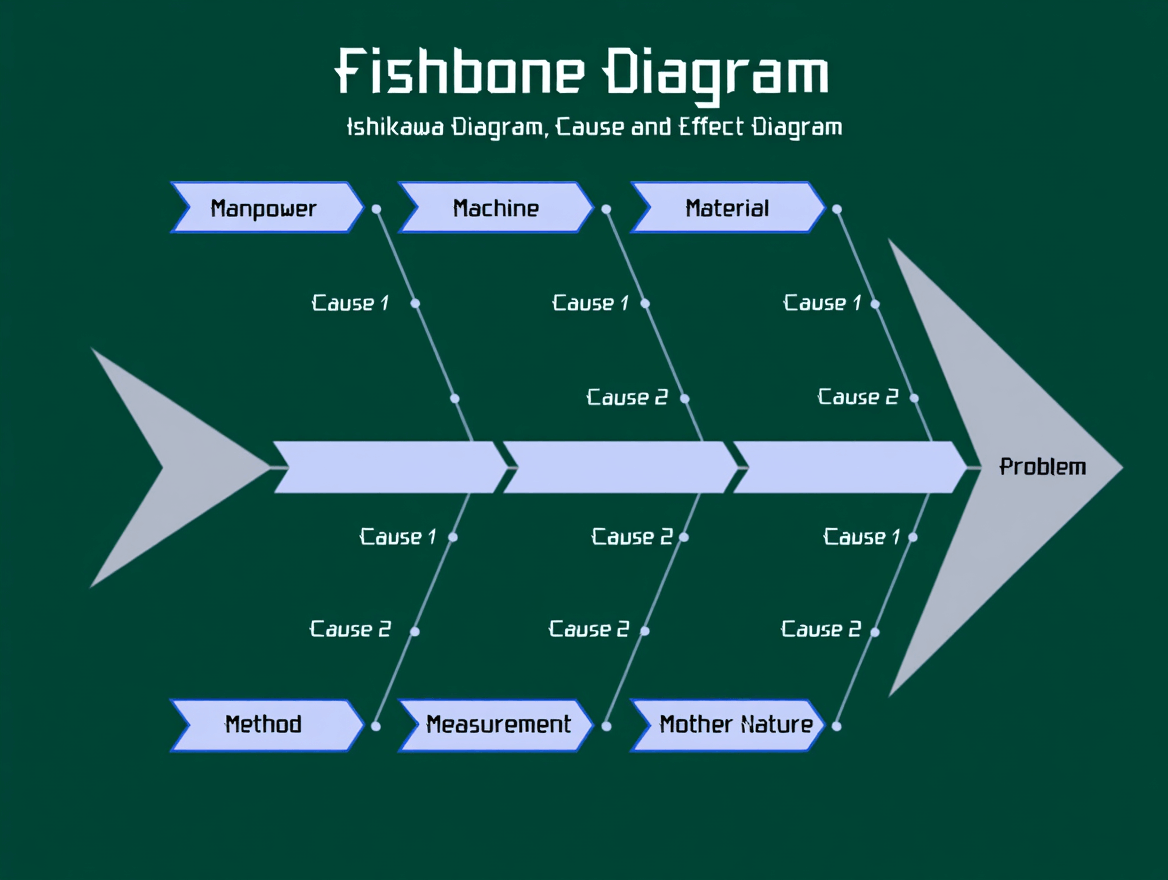
What is a Fishbone Diagram, how is it used?

A Fishbone Diagram (also called Ishikawa Diagram or Cause-and-Effect Diagram) is a visual tool used to systematically identify and organize all possible causes of a specific problem or effect. It was developed by Dr. Kaoru Ishikawa in the 1960s.

The diagram looks like a fish skeleton:

  • The “head” of the fish is the problem/effect you want to solve.
  • The “bones” branching off the spine are the major categories of causes.
  • Smaller bones branching off are the specific causes within each category.

Why use it?

  • Forces teams to think through all possible causes (not just the obvious ones)
  • Prevents jumping to conclusions
  • Encourages cross-functional collaboration
  • Very useful in root cause analysis (RCA), quality improvement, Six Sigma, Lean, etc.

How to Create and Use a Fishbone Diagram (Step-by-Step)

  1. Define the problem clearly
    Write it in a box on the right (the “head”). Be specific.
    Example: “Customer complaints about late deliveries increased by 40% in Q3”
  2. Draw the main spine
    A horizontal arrow pointing to the problem.
  3. Identify major cause categories (the big bones)
    Common categories (the 6 Ms for manufacturing, or adapt to your industry):

    • Man (People)
    • Method (Processes)
    • Machine (Equipment/Technology)
    • Material
    • Measurement
    • Mother Nature (Environment)

    For service/industry, people often use:

    • People, Policies, Procedures, Plant/Technology, etc.
  4. Brainstorm all possible causes
    Ask “Why does this happen?” repeatedly (5 Whys technique helps).
    Write each cause as a branch off the relevant category.
  5. Go deeper
    For each cause, ask “Why?” again and add sub-causes (smaller bones).
  6. Analyze and prioritize
    Circle the most likely root causes (use voting, data, Pareto, etc.).
  7. Develop action plan
    Address the confirmed root causes.

Practical Case Study: Restaurant Getting Complaints About Cold Food

Problem (Head of the fish):
“Customers frequently complain that food arrives cold” (complaints rose from 3 to 18 per week)

Fishbone Diagram Categories Used:
We used 6 categories suitable for a restaurant:

  1. People (Staff)
    • Servers forget to check food temperature before leaving kitchen
    • New staff not trained on urgency
    • Kitchen and serving staff not communicating
    • Too few servers during peak hours → delay
  2. Processes (Methods)
    • No standard procedure for checking food temperature
    • Food waits too long on the pass before being served
    • Tickets not prioritized correctly during rush
    • No “food ready” notification system between kitchen and floor
  3. Equipment (Machines)
    • Heat lamps broken or insufficient
    • Plates not pre-heated
    • Delivery trays too small → food stacked and cools faster
    • Old warming drawers not maintaining temperature
  4. Materials
    • Some dishes (e.g., pasta) cool faster than others
    • Large portion sizes take longer to eat → perceived as cold
  5. Environment (Mother Nature/Place)
    • Dining room AC set too low near some tables
    • Long walking distance from kitchen to farthest tables
    • Draft from entrance door
  6. Measurement (or Management)
    • No tracking of time from “food ready” to “delivered to table”
    • No temperature checks logged
    • No customer feedback analyzed by dish/table location

Root Causes Identified After Investigation (circled on the diagram):

  • Heat lamps were broken for 3 weeks (maintenance backlog)
  • No policy to pre-heat plates
  • Average time from kitchen to table was 4.5 minutes during peak (target should be <2 min)
  • Servers overloaded: 1 server handling 9 tables instead of max 6

Actions Taken:

  1. Repaired/replaced heat lamps same week
  2. Implemented plate pre-heating in salamander broiler
  3. Added a runner position during peak hours
  4. Created a simple checklist: food temperature >60°C before leaving pass
  5. Installed digital ticket system with timers

Result:
Cold food complaints dropped from 18 to 2 per week within one month.

What is a Fishbone Diagram, how is it used? Read More »

Self Inspection and Quality Audits

Self inspection programs serve as the cornerstone of effective quality management systems across industries, particularly those facing strict regulatory requirements. When implemented properly, these internal assessments help organizations identify improvement opportunities, ensure compliance, and maintain consistently high quality standards. This comprehensive guide examines the critical role of self inspection in quality management, outlines implementation strategies, and explores how it complements broader quality audit initiatives.


Understanding Self Inspection: Definition and Purpose

Self inspection is defined as the “verification of departmental activity used to determine effective implementation of documented quality systems”. Unlike external audits or third-party assessments, self inspection is conducted internally at the departmental level, where representatives examine their own documents, processes, and activities against established standards.

The fundamental purpose of self inspection extends beyond simple compliance checking. It serves as a proactive mechanism that helps organizations:

  • Identify potential quality issues before they impact products or services
  • Verify consistent implementation of quality systems
  • Drive continuous improvement through regular assessment
  • Prepare for external audits by regulatory bodies
  • Foster a culture of quality across all organizational levels

Self inspection differs from internal audits in subtle but important ways. While self inspections typically involve department representatives evaluating their own areas, internal audits are usually conducted by a separate quality assurance team or cross-functional audit teams to provide a more independent assessment. Both approaches complement each other within a comprehensive quality management framework.


The Critical Role of Self Inspection in Regulated Industries

In highly regulated sectors such as pharmaceuticals, healthcare, food production, and aerospace, self inspection plays a particularly vital role. Regular self assessments help organizations identify areas needing enhancement or refinement, whether in workflows, resource allocation, or communication channels. This proactive approach illuminates opportunities for improvement that might otherwise remain undetected until an external audit or quality failure occurs.


Ensuring Regulatory Compliance

Perhaps the most compelling reason for implementing robust self inspection programs is ensuring compliance with regulatory standards. By systematically reviewing internal protocols and procedures, companies can identify potential compliance gaps and take corrective action promptly. This reduces the risk of non-compliance findings during official inspections and helps avoid potential penalties, product recalls, or reputational damage.


Driving Continuous Improvement

Self inspection supports continuous improvement initiatives by creating a structured framework for ongoing evaluation and enhancement of quality systems. This iterative approach ensures that processes evolve and improve over time rather than remaining static until problems arise. Organizations that excel at self inspection tend to develop more resilient quality systems that can adapt to changing requirements and emerging challenges.


Fostering Audit Readiness

Organizations that regularly conduct thorough self inspections are generally better prepared for external audits by regulatory bodies. The self inspection process familiarizes staff with audit procedures, reduces anxiety around external assessments, and addresses potential issues before they become findings in an official audit. This state of constant readiness minimizes disruption when external audits occur and increases the likelihood of favorable outcomes.

Implementing an Effective Self Inspection Program

Successful self inspection programs require thoughtful planning and consistent execution. The following elements are essential for implementation:


Frequency and Scheduling

Based on established practices, self inspections should be conducted with appropriate frequency—typically once every two months with a ±7 days acceptable tolerance period. This regular cadence ensures ongoing vigilance without overburdening staff with excessive assessment activities. The schedule should be formalized and communicated to all relevant stakeholders to ensure proper preparation and participation.


Selecting and Training Inspectors

The selection of qualified individuals to perform self inspections is critical. These representatives should be nominated as auditors by the Department Head and have direct reporting to department leadership. Ideal inspectors possess:

Detailed knowledge of the department’s operations
Understanding of applicable regulations and standards
Sufficient objectivity to identify areas for improvement
Strong analytical and documentation skills
Effective communication abilities

Comprehensive training ensures that inspectors can perform thorough, consistent assessments that yield meaningful results. Training should cover not only technical aspects of quality standards but also soft skills like interviewing techniques and report writing.


Developing Comprehensive Checklists

Standardized checklists serve as the backbone of effective self inspection programs. While checklists provide a starting point, they should not restrict the scope of the inspection. Auditors should feel empowered to explore areas beyond the checklist when necessary to ensure thorough evaluation. Under the ‘Remarks’ column of these checklists, auditors should clearly indicate whether observations are adequate or inadequate.


Documentation and Reporting

Documentation is essential throughout the self inspection process. Clear record-keeping not only demonstrates regulatory compliance but also facilitates tracking of issues and improvements over time. A standardized numbering system for audit reports helps with organization and reference. For example, self inspection reports might be assigned a seven-character number like ‘SIXX/YY’ (where SI denotes Self Inspection, XX is the serial number, and YY indicates the year).

A register should be maintained by department auditors regarding the issuance of audit reports to concerned department heads. This ensures accountability and follow-through on identified issues. Reports should clearly document findings, proposed corrective actions, and timelines for implementation.


The Self Inspection Process: A Step-by-Step Approach

A systematic approach to self inspection enhances its effectiveness and ensures consistency across departments and inspection cycles. The process typically includes several key stages:


Pre-inspection Preparation

Before conducting a self inspection, auditors should review past inspection reports to understand previous findings and verify that corrective actions were implemented effectively. This historical perspective helps identify recurring issues and areas requiring special attention. Auditors should also:

Review relevant quality standards and regulatory requirements
Gather applicable standard operating procedures (SOPs)
Prepare inspection checklists and tools
Schedule interviews with key personnel
Notify department staff of upcoming inspection activities

This preparation ensures efficient use of time during the actual inspection and helps focus attention on high-priority areas.


Conducting the Inspection

During the inspection, auditors systematically evaluate the department’s activities against established standards and procedures. This includes examining documentation, observing processes, interviewing personnel, and testing key control points. The inspection should evaluate systems, processes, and functions to ascertain current compliance with good manufacturing practices (cGMP) or other applicable quality standards.

Inspectors should document observations in real-time, noting both conformities and non-conformities with supporting evidence. Physical inspection of facilities, equipment, and materials may be necessary, depending on the department’s function. Throughout the process, inspectors should maintain a professional, collaborative approach that encourages honest communication.


Analysis and Documentation of Findings

After completing the inspection, auditors should analyze findings to identify patterns, systemic issues, and root causes of problems. This analysis helps differentiate between isolated incidents and systemic weaknesses requiring broader corrective action. The audit team should prepare a comprehensive report documenting:

Areas examined and methodologies used
Specific observations and evidence
Assessment of compliance status
Identified non-conformities or areas for improvement
Recommendations for corrective actions

The report should be objective, fact-based, and specific enough to support clear understanding of any identified issues.


Corrective and Preventive Actions

For identified deficiencies, department heads should develop corrective action plans with specific, measurable steps and realistic timeframes for implementation. These plans should address not only the immediate issue but also prevent recurrence through systemic improvements. Department heads typically have about 15 working days to respond to audit findings with proposed corrective actions.

Effective corrective action plans include:
Clear description of the issue
Root cause analysis
Specific actions to address the immediate concern
Preventive measures to avoid recurrence
Responsible individuals for each action
Timeline for implementation
Methods for verifying effectiveness


Follow-up and Verification

After corrective actions are implemented, verification is necessary to ensure their effectiveness. This may involve follow-up audits by the original inspection team or designated quality assurance personnel. The verification process should be documented, with closure of findings formally recorded once satisfactory resolution is confirmed. Persistent or recurring issues may require escalation to higher management or more comprehensive intervention.


Quality Audits: Complementing Self Inspection Efforts

While self inspection focuses on departmental self-assessment, quality audits provide a broader, more independent evaluation of quality systems. These audits complement self inspection efforts by bringing different perspectives and methodologies to the quality assessment process.


Types of Quality Audits

Several types of audits may be employed as part of a comprehensive quality management system:

Internal audits: Conducted by qualified internal staff (but from different departments than those being audited) to provide an independent assessment of quality systems
Supplier audits: Evaluate the quality systems of vendors and partners
System audits: Examine the entire quality management system against standards like ISO 9001
Process audits: Focus on specific processes to verify efficiency and effectiveness
Product audits: Inspect finished products against specifications and requirements

Each type serves a specific purpose within the broader quality assurance framework and may require different approaches and expertise.


Audit Planning and Execution

Effective audits begin with careful planning. This includes reviewing past audit reports, defining the audit scope and objectives, creating a detailed audit plan, and gathering relevant documents. During execution, auditors inspect quality assurance procedures, verify compliance with standards, audit processes, examine control mechanisms, and evaluate risk management approaches.

Interviews with key personnel provide additional insights beyond documented procedures, revealing how processes actually function in practice. Testing and verification of data and information helps confirm the reliability of quality systems and identify potential weaknesses.


Audit Reporting and Improvement

After completing the audit, findings are analyzed and assembled into a comprehensive report. This preliminary report is typically discussed with the audited entity to clarify findings and address any misunderstandings. After revisions if needed, the final report is presented to relevant stakeholders.

The audit process culminates in the development and implementation of action plans to address identified issues, followed by monitoring of follow-up actions and closure of non-conformities. This structured approach ensures that audits drive actual improvements rather than simply identifying problems.


Self Inspection vs. External Audits: Understanding the Differences

While self inspection and external audits both evaluate quality systems, they differ in several important ways:


Purpose and Scope

Self inspection primarily serves as an internal improvement tool, helping organizations proactively identify and address quality issues. The scope is typically focused on departmental activities and may be tailored to address specific concerns or areas of emphasis.

External audits, particularly regulatory inspections, serve to verify compliance with legal requirements and protect public safety. Their scope is determined by regulatory frameworks, and organizations have limited control over what areas inspectors will examine.


Methodology and Approach

Self inspections follow internally developed procedures and checklists, with flexibility to adapt to organizational needs. The approach is often collaborative, with a focus on improvement rather than strict compliance enforcement.

External audits follow regulatory or certification body protocols, with methodologies designed to provide consistent assessment across multiple organizations. The approach tends to be more formal and compliance-focused, with clear documentation of deviations from requirements.


Complementary Benefits

The most robust quality systems integrate self inspection, internal audits, and external audits into a comprehensive approach to quality management. Self inspections identify issues at the departmental level, internal audits provide cross-functional perspective, and external audits validate the entire system against regulatory requirements.

Organizations that effectively coordinate these different types of assessments create a virtuous cycle of continuous improvement, with each type of evaluation strengthening the others and contributing to overall quality excellence.

Best Practices for Maximizing Self Inspection Value

To derive maximum benefit from self inspection programs, organizations should consider the following best practices:


Create a Culture of Quality

The most successful quality programs exist within organizations that foster a culture where quality is everyone’s responsibility. Leadership should visibly support and participate in quality initiatives, demonstrating their importance to the entire organization. Self inspection should be positioned as an improvement tool rather than a punitive measure.


Leverage Technology Solutions

Modern quality management systems (QMS) software can streamline self inspection processes through digital checklists, automated scheduling, centralized documentation, and trend analysis capabilities. These tools improve efficiency, enhance data security, and facilitate more sophisticated analysis of quality metrics over time.


Continuous Improvement of the Inspection Process

The self inspection process itself should be subject to periodic review and enhancement. Organizations should analyze the effectiveness of their inspection methodologies, checklists, and reporting mechanisms, making adjustments as needed to improve their value and efficiency.


Integration with Risk Management

Effective self inspection programs should be integrated with risk management processes, with greater frequency and depth of inspection for high-risk areas. This risk-based approach ensures efficient use of resources while providing appropriate scrutiny where it matters most.


Transparent Communication

Open communication about inspection findings, corrective actions, and quality metrics helps build organizational trust and encourages active participation in quality improvement efforts. Regular reporting to leadership and staff on self inspection outcomes and resulting improvements demonstrates the value of the program.


Self Inspection as a Strategic Advantage

Self inspection represents a powerful tool for organizations committed to quality excellence and regulatory compliance. When implemented effectively, it drives continuous improvement, reduces compliance risks, and prepares organizations for successful external audits.


As regulatory requirements grow increasingly complex and stakeholder expectations for quality continue to rise, robust self inspection programs become even more critical to organizational success. Those that embrace self inspection as a strategic advantage rather than a compliance burden position themselves to deliver consistent quality, build customer trust, and thrive in demanding regulatory environments.


By implementing comprehensive self inspection programs alongside other quality assessment approaches, organizations can build resilient quality systems that protect consumers, satisfy regulators, and support continuous improvement in an increasingly complex global marketplace. The investment in effective self inspection processes pays dividends through reduced compliance risks, improved operational efficiency, and enhanced product and service quality.

Self Inspection and Quality Audits Read More »