
AI Powered Drug Discovery: The Secret Weapon That’s Turning 10-Year Drug Timelines Into 10 Months
Imagine spending a billion dollars and an entire decade of your life chasing a molecule that, in the end, fails. Now imagine that same molecule, refined, tested, and validated in a fraction of the time — not because scientists suddenly got smarter, but because they finally got a smarter partner. That partner is artificial intelligence, and it’s rewriting the rulebook of pharmaceutical science faster than anyone predicted.
Welcome to the era of AI powered drug discovery — where algorithms scan billions of molecular combinations before breakfast, where machine learning models predict toxicity before a single mouse is ever tested, and where the line between “science fiction” and “standard operating procedure” has all but disappeared.
This isn’t hype. This is the biggest shake-up the pharmaceutical industry has seen since the discovery of penicillin. Let’s break down exactly why AI and machine learning are no longer optional extras in drug development — they’re the new engine room.
Why the Old Way of Discovering Drugs Was Basically Broken
For decades, drug discovery followed a punishing formula: identify a biological target, synthesize thousands of candidate compounds, test them one by one, watch most of them fail, and repeat. The traditional pipeline from initial discovery to market approval routinely stretched past a decade and consumed budgets that could fund a small country. Roughly nine out of ten drug candidates that enter clinical trials never make it to a pharmacy shelf.
That failure rate isn’t just a statistic — it’s wasted years, burned-out research teams, and patients waiting for treatments that arrive too late or never at all. The bottleneck was never a lack of ambition. It was a lack of speed and precision in sorting the promising molecules from the doomed ones.
This is exactly the kind of problem machine learning was built to solve: massive datasets, complex patterns, and a need for fast, iterative filtering. Enter AI powered drug discovery, and the entire equation changes.
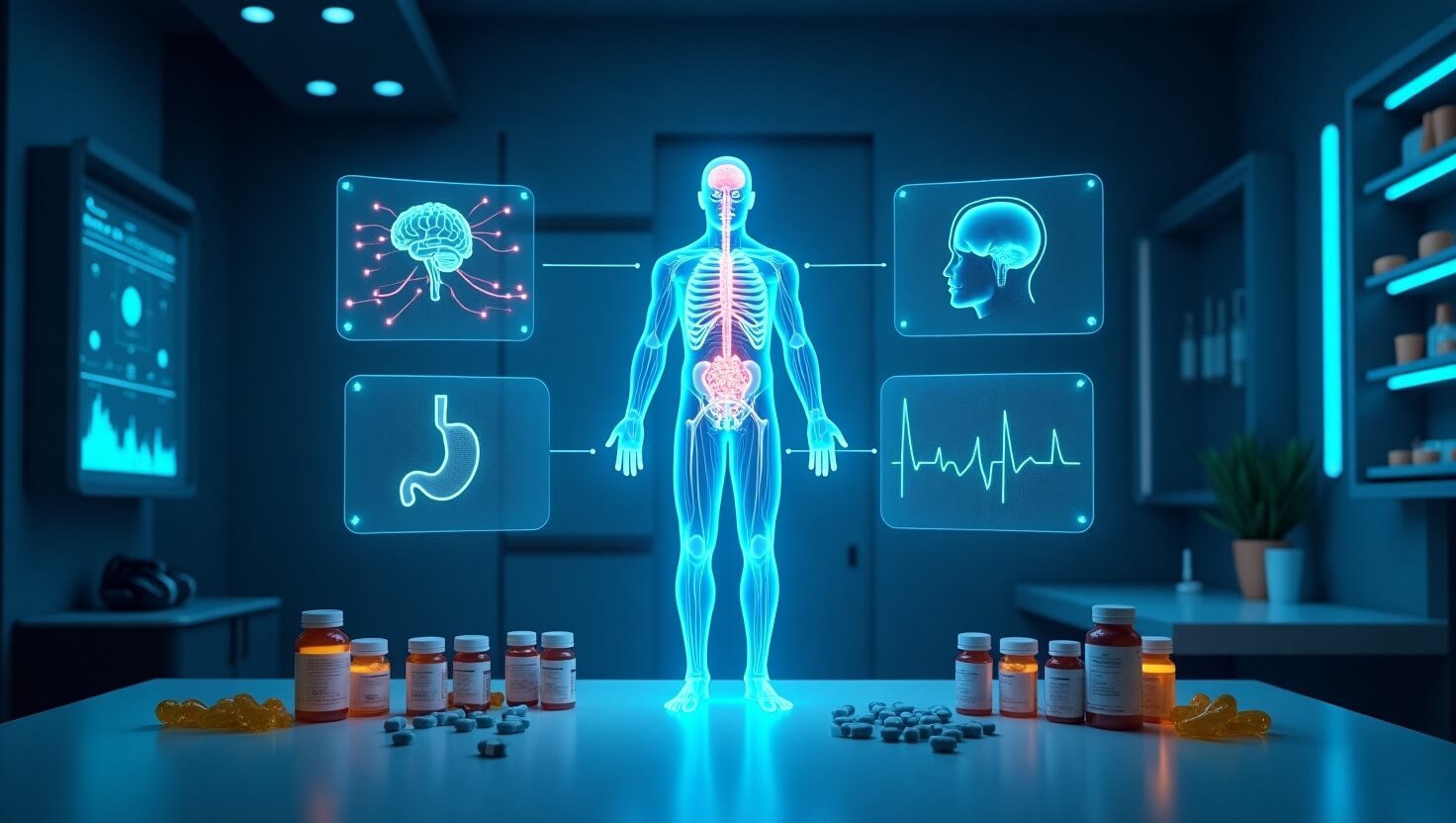
The Moment Everything Changed: AI Enters the Lab
Machine learning models thrive on pattern recognition across enormous datasets — exactly what molecular biology and chemistry produce in abundance. Every clinical trial, every genomic sequence, every protein structure, every failed compound from the last fifty years is a data point. Humans can’t hold that much information in their heads. Algorithms can.
Instead of physically synthesizing and testing every possible molecule, researchers now use AI models to simulate how a compound will behave, bind to a target, or trigger side effects — all inside a computer, long before it touches a lab bench. This approach, often called in silico drug discovery, has compressed timelines that used to take years into months, and sometimes weeks.
The breakthrough moment that made headlines worldwide was DeepMind’s AlphaFold, an AI system that cracked one of biology’s oldest puzzles: predicting the 3D structure of proteins from their amino acid sequences. Understanding a protein’s shape is critical because shape determines function — and function determines whether a drug will actually work. What once took years of painstaking lab work using X-ray crystallography can now be approximated computationally in a matter of hours.
How AI Powered Drug Discovery Actually Works (Without the Jargon Overload)
Let’s demystify this. AI in drug discovery isn’t one single tool — it’s a toolbox, and different tools tackle different stages of the pipeline.
1. Target Identification
Before you can design a drug, you need to know what you’re targeting — a protein, gene, or biological pathway involved in disease. Machine learning models trained on genomic and proteomic data can sift through massive biological datasets to flag targets that traditional research might overlook, often uncovering connections between diseases and biological mechanisms that weren’t obvious to human researchers.
2. Virtual Screening and Molecule Generation
This is where AI truly flexes its muscles. Instead of physically screening compound libraries, generative AI models can design entirely new molecular structures optimized for a specific target. Some systems use deep learning architectures similar to those behind image and text generation tools, except instead of generating pictures or paragraphs, they generate viable chemical structures with desired properties like solubility, stability, and binding affinity.
3. Predicting Toxicity and Side Effects
One of the most expensive and heartbreaking stages of drug development is discovering — often deep into clinical trials — that a promising compound is toxic. AI models trained on historical toxicity data can flag red flags early, filtering out dangerous candidates before they ever reach a human volunteer.
4. Optimizing Clinical Trials
AI isn’t just accelerating the lab phase — it’s transforming how trials are run. Machine learning can help identify ideal patient cohorts, predict which participants are likely to respond well to treatment, and even detect early signals of efficacy or failure, reducing the immense cost and time of large-scale trials.
5. Drug Repurposing
Sometimes the fastest way to find a new treatment is to look at old ones. AI models can scan existing, already-approved drugs and predict whether they might be effective against entirely different diseases — a strategy that gained massive attention during the search for treatments in global health emergencies, since repurposed drugs already have established safety profiles.
The Companies Betting Big — and Winning
This isn’t theoretical anymore. A wave of biotech companies has built their entire business model around AI powered drug discovery, and traditional pharmaceutical giants are racing to catch up through partnerships and acquisitions.
Companies specializing in AI-driven drug design have pushed molecules from initial computational discovery into clinical trials in a fraction of the traditional timeframe, something that would have seemed almost impossible a decade ago. Meanwhile, major pharmaceutical corporations have signed multi-billion-dollar partnerships with AI-focused biotech firms, essentially outsourcing their molecule-hunting to algorithms trained on oceans of biological and chemical data.
Even more telling: venture capital has poured staggering sums into AI-driven biotech startups over the past several years, a clear signal that investors see this not as a passing trend but as the future infrastructure of the entire pharmaceutical industry.
The Jaw-Dropping Numbers Behind the Hype
Let’s talk numbers, because they tell a story that’s hard to ignore.
- Traditional drug discovery and development can take upwards of a decade and cost well over a billion dollars per approved drug, when accounting for all the failures along the way.
- AI-accelerated approaches have, in several documented cases, cut the initial discovery phase — historically taking several years — down to a matter of months.
- Failure rates in AI-optimized candidate selection have shown meaningful improvement over traditional random or intuition-based screening methods, though it’s important to note AI hasn’t eliminated failure — it’s reduced wasted effort by filtering out doomed candidates earlier.
- The number of AI-discovered drug candidates entering clinical trials has grown dramatically over the past several years, moving from a handful of experimental cases to a genuine pipeline across dozens of companies.
These aren’t just efficiency gains. They translate directly into lives saved, diseases treated sooner, and costs that could eventually make life-saving medication more accessible.
Real-World Wins: Where AI Has Already Made a Difference
It’s easy to be skeptical of buzzworthy tech claims, so let’s ground this in reality. AI-assisted approaches have already contributed meaningfully to:
Antibiotic Discovery — Machine learning models have been used to screen enormous chemical libraries for compounds capable of killing drug-resistant bacteria, identifying promising antibiotic candidates that conventional methods had overlooked entirely, precisely because the molecules didn’t resemble any previously known antibiotic structure.
Rare Disease Research — Because rare diseases often lack large patient populations and extensive existing research, they’ve historically been commercially unattractive to pursue. AI’s ability to extract insight from smaller, sparser datasets is opening doors for treatments that traditional pharma economics would have ignored.
Oncology — Cancer treatment is being reshaped by AI models capable of analyzing genomic data from tumors to predict which therapies are likely to be effective for individual patients, pushing the industry closer to truly personalized cancer treatment.
Pandemic Response — During recent global health emergencies, AI-driven drug repurposing and vaccine design tools helped compress research timelines that would normally take years into a period of months, demonstrating just how critical this technology can be when speed quite literally saves lives.
But Wait — It’s Not All Smooth Sailing
Before you start imagining a future where AI cures every disease overnight, let’s pump the brakes and talk about the real challenges standing in the way.
Data Quality Is Everything, and It’s Often Terrible Machine learning models are only as good as the data they’re trained on. Biological and chemical datasets are often incomplete, inconsistently labeled, or biased toward certain types of molecules and diseases that have historically received more research funding. Garbage in, garbage out still applies, no matter how sophisticated the algorithm.
The Black Box Problem Many advanced AI models, particularly deep learning systems, function as “black boxes” — they produce predictions without clearly explaining their reasoning. In an industry where regulators and scientists need to understand exactly why a drug works the way it does, this lack of interpretability creates real friction, especially during the regulatory approval process.
Regulatory Bodies Are Still Catching Up Agencies responsible for approving new drugs are still developing frameworks for how to evaluate AI-generated candidates and AI-assisted trial designs. This regulatory uncertainty can slow down what would otherwise be a much faster pipeline.
AI Can Predict, But Biology Still Has the Final Word No matter how good the simulation, a compound still has to survive contact with actual human biology, which remains staggeringly complex and full of surprises. AI can dramatically narrow the field of candidates and reduce wasted effort, but it cannot yet fully replace the need for laboratory validation and human clinical trials.
Talent and Infrastructure Gaps Building effective AI powered drug discovery pipelines requires a rare blend of expertise — computational biology, chemistry, machine learning engineering, and clinical science all working in concert. That interdisciplinary talent pool is still relatively small, and competition for it is fierce.
What the Next Decade Looks Like
So where is this all heading? A few trends are worth watching closely.
Fully Generative Drug Design will likely become far more mainstream, with AI systems not just screening existing molecules but designing entirely novel ones from scratch, optimized for extremely specific therapeutic goals.
AI-Native Biotech Companies — startups built from day one around machine learning infrastructure rather than bolting AI onto traditional research processes — are expected to increasingly outcompete legacy players who are slower to adapt.
Personalized Medicine at Scale will move from a niche concept to a broader reality, with AI models tailoring treatments based on an individual’s genetic profile, lifestyle data, and even real-time biological signals.
Faster Regulatory Frameworks are likely to emerge as agencies gain more experience evaluating AI-assisted research, potentially unlocking even greater speed gains across the industry.
Democratization of Drug Discovery could become one of the most transformative outcomes of all. As AI tools become more accessible and computational costs continue to fall, smaller research teams, academic labs, and startups in resource-limited regions could gain the ability to pursue drug discovery work that once required billion-dollar budgets and massive infrastructure.
The Human Element That AI Can’t Replace
It’s tempting, in an article like this, to paint AI as some all-powerful force marching in to replace human scientists. That’s not the reality, and it’s important to be honest about it. AI powered drug discovery works best as a collaborative partnership — algorithms handle the scale and speed of pattern recognition across impossibly large datasets, while human researchers provide the scientific intuition, ethical judgment, creative problem-solving, and hard-won domain expertise that no model can fully replicate.
The scientists who thrive in this new landscape aren’t the ones competing with AI — they’re the ones who’ve learned to wield it as an extension of their own expertise, using it to ask better questions and test more hypotheses in less time, while still applying the critical thinking and skepticism that good science has always required.
The Bottom Line
AI and machine learning haven’t just improved drug discovery — they’ve fundamentally changed what’s possible. Timelines that once stretched across a decade are shrinking. Failure rates that once bankrupted promising research programs are dropping. Diseases that were once too rare, too complex, or too commercially unattractive to pursue are finally getting attention.
Is it a perfect solution? No. Data limitations, regulatory uncertainty, and the sheer unpredictability of human biology mean AI powered drug discovery is a powerful accelerant, not a magic wand. But the trajectory is unmistakable: the pharmaceutical industry of the next decade will look radically different from the one that came before it, and AI will be sitting at the center of that transformation.
For patients waiting on treatments that don’t yet exist, for researchers tired of chasing compounds that fail years into development, and for an industry desperate to bend the cost curve of innovation — AI powered drug discovery isn’t just a buzzword. It’s the beginning of a genuinely new chapter in medicine, and it’s already being written.