FAQ

How to Build Muscle Strength: A Complete Guide to Getting Stronger

Building muscle strength is one of the most rewarding fitness goals you can pursue. Whether you want to improve your athletic performance, enhance your daily functional abilities, or simply feel more confident in your body, developing muscle strength offers countless benefits. In this comprehensive guide, we will explore proven strategies, effective exercises, and essential tips to help you build muscle strength successfully.

\

What Is Muscle Strength and Why Does It Matter?

Muscle strength refers to the maximum amount of force your muscles can generate during a single effort. Unlike muscle endurance, which focuses on sustained activity over time, muscle strength emphasizes power and the ability to overcome resistance.

Developing muscle strength is crucial for numerous reasons. Strong muscles protect your joints from injury, improve your posture, boost your metabolism, and enhance your overall quality of life. Additionally, building muscle strength helps combat age-related muscle loss, keeping you active and independent as you grow older.


The Science Behind Building Muscle Strength

Understanding how muscle strength develops can help you train more effectively. When you challenge your muscles through resistance training, you create microscopic tears in the muscle fibers. During recovery, your body repairs these fibers, making them thicker and stronger than before. This process, called muscle hypertrophy, is the foundation of strength development.

To continuously build muscle strength, you must apply the principle of progressive overload. This means gradually increasing the demands placed on your muscles by adding more weight, increasing repetitions, or varying your exercises over time.


Essential Exercises for Building Muscle Strength

Compound Movements

Compound exercises are the cornerstone of any effective muscle strength program. These movements engage multiple muscle groups simultaneously, allowing you to lift heavier weights and stimulate greater muscle growth.

Squats are arguably the king of all strength exercises. They target your quadriceps, hamstrings, glutes, and core, building tremendous lower body muscle strength. Start with bodyweight squats and progress to barbell back squats as you develop proper form.

Deadlifts work your entire posterior chain, including your back, glutes, and hamstrings. This exercise is exceptional for developing functional muscle strength that translates to everyday activities.

Bench Press is the primary exercise for building upper body muscle strength. It targets your chest, shoulders, and triceps, creating a powerful pushing foundation.

Overhead Press develops shoulder and upper back muscle strength while also engaging your core for stability. This movement improves your ability to lift objects above your head safely.

Rows balance your pushing exercises by strengthening your back muscles. Strong back muscles are essential for good posture and overall muscle strength development.


Isolation Exercises

While compound movements should form the foundation of your training, isolation exercises help target specific muscles that need additional attention. Bicep curls, tricep extensions, and calf raises can supplement your compound movements and address any muscle strength imbalances.


Creating an Effective Muscle Strength Training Program

Training Frequency

To build muscle strength effectively, aim to train each muscle group two to three times per week. This frequency provides adequate stimulus for growth while allowing sufficient recovery time. Many successful strength programs follow a push-pull-legs split or an upper-lower body rotation.


Sets and Repetitions

For optimal muscle strength development, focus on performing three to five sets of four to eight repetitions per exercise. This rep range allows you to use heavy enough weights to challenge your muscles while maintaining proper form throughout each set.


Rest Periods

Rest periods play a crucial role in muscle strength training. Allow two to three minutes of rest between heavy sets to ensure your muscles fully recover before the next effort. This recovery time enables you to maintain high-intensity performance throughout your workout.

 

Progressive Overload Strategies

Implementing progressive overload is essential for continuous muscle strength gains. Consider these strategies:

  • Increase the weight by small increments (2.5 to 5 pounds) when you can complete all prescribed repetitions with good form
  • Add an extra repetition to each set before increasing weight
  • Perform an additional set of each exercise
  • Reduce rest periods gradually while maintaining the same weight

Nutrition for Muscle Strength Development

Protein Intake

Protein is the building block of muscle tissue and essential for muscle strength development. Aim to consume 0.7 to 1 gram of protein per pound of body weight daily. Distribute your protein intake evenly across meals to maximize muscle protein synthesis throughout the day.

Excellent protein sources include lean meats, fish, eggs, dairy products, legumes, and plant-based protein supplements. Consuming protein within two hours after training can enhance muscle recovery and strength gains.

Carbohydrates and Fats

Carbohydrates fuel your workouts and support muscle strength training performance. Complex carbohydrates like whole grains, vegetables, and fruits provide sustained energy for intense training sessions.

Healthy fats support hormone production, including testosterone, which plays a vital role in muscle strength development. Include sources like avocados, nuts, olive oil, and fatty fish in your diet.

Hydration

Proper hydration is often overlooked but significantly impacts muscle strength performance. Dehydration can reduce strength output by up to 25 percent. Aim to drink at least half your body weight in ounces of water daily, with additional intake during training.

Recovery: The Secret to Building Muscle Strength

Sleep Quality

Sleep is when your body performs most of its muscle repair and growth. Aim for seven to nine hours of quality sleep each night to maximize muscle strength development. Poor sleep can impair recovery, reduce testosterone levels, and hinder your progress.

Active Recovery

Light activity on rest days promotes blood flow to your muscles, delivering nutrients and removing waste products. Walking, swimming, or gentle stretching can enhance recovery without impeding muscle strength gains.

Managing Stress

Chronic stress elevates cortisol levels, which can break down muscle tissue and inhibit muscle strength development. Incorporate stress-management techniques like meditation, deep breathing, or enjoyable hobbies into your routine.

Common Mistakes That Hinder Muscle Strength Progress

Avoiding these common pitfalls will accelerate your muscle strength gains:

Training too frequently without adequate recovery prevents your muscles from fully repairing and growing stronger. Remember that muscle strength develops during rest, not during training.

Neglecting proper form increases injury risk and reduces the effectiveness of your exercises. Master the technique of each movement before adding significant weight.

Inconsistent training undermines long-term muscle strength development. Consistency over months and years produces far better results than sporadic intense efforts.

Ignoring nutrition limits your potential for muscle strength gains. Without adequate protein and calories, your body lacks the resources to build stronger muscles.

Tracking Your Muscle Strength Progress

Monitoring your progress keeps you motivated and helps identify what works best for your body. Keep a training journal recording the exercises, weights, sets, and repetitions you perform. Test your one-rep max on major lifts every eight to twelve weeks to measure muscle strength improvements objectively.

Conclusion

Building muscle strength is a journey that requires dedication, patience, and smart training strategies. By focusing on compound exercises, following a structured program, prioritizing nutrition and recovery, and avoiding common mistakes, you can achieve remarkable muscle strength gains.

Start implementing these principles today, and you will be amazed at how your muscle strength transforms over time. Remember that consistency is the ultimate key to success. Stay committed to your training, trust the process, and celebrate every strength milestone along the way.

Your journey to building impressive muscle strength begins with a single workout. Take that first step today and unlock your full physical potential.

How to Build Muscle Strength: A Complete Guide to Getting Stronger Read More »
What is the difference between Mass and Weight?

What is the difference between Mass and Weight? Generally, people, treat them same term in practical life but in physics, they are very much different. One is in practical matter another is variable place to place, Hight to Hight depends gravity. What is gravity? force that exists among all material objects in universe. Express as g & it change place to place, Hight to Hight but one thing that is not change, this is it. It is Mass.

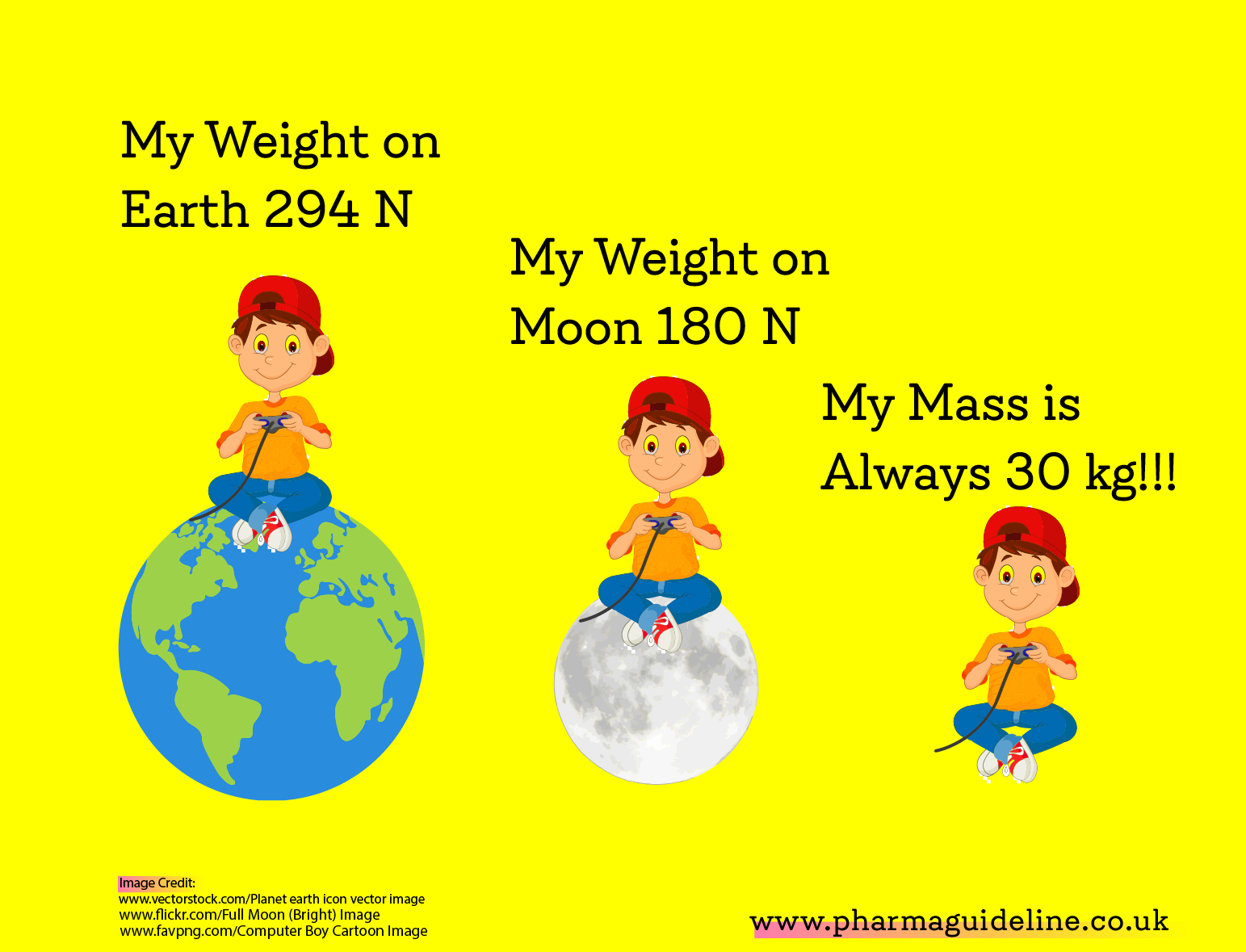
If you in Australia your mass is 59kg, if you in UK you are in 59kg if you in USA you are in almost 59kg, if you in Mars, obviously you are in 59kg. It can’t be change. This is just like your personality which never change other is your attitude which always chance place to place.

So, what is the definition of Mass?

Thousands of types of definition you will find in web but I like the following-

Mass can be defined as amount of matter present in you. No matter at what place you are may be in Africa or Europe its value remains constant.

What is the definition of Weight?

Weight is the force by which you are being attracted by this amazing planet. This is very much changeable from planet to planet & height to height. Gravity on Mars is 38 percent of Earth’s gravity, so a 100kg person on Earth would weight 38kg on Mars.

On the other hand, we can say that Mass is actually a physical quantity which measures amount of matter in a body whereas weight is actually the force with which earth pulls our body towards its own center.

How can we express them?

Generally, Mass is express by “m” and its S.I. unit is kg where as Weight is Expressed by “W” and its SI unit is N[Newton].

Weight is mainly the amount of forces force exerted by earth on a mass of any substance. Weight can be calculated as Weight=Mass x g, where g is acceleration due to gravity and its value is 9.8.

Let me explain,

If want to something buys from supermarket or any place where you prefer, may be online, they will mention mass of the Object not weight in practical though some of the company mention weight of the object but actually that it the mass of the object not weight of the object.

You will only get the weight of the object, when you multiply the value with “g”. So, if your weighing machine gives the reading for a object as 100kg then it weight will be 100×9.8=980N. Hope you got it.

Value of the weight is negligibly change in the earth surface as the value of the “g” is not significantly change on our planet surface but a little amount change in poles of the earth as the value of “g” slightly increase inversely in equator area the value decrease.

Evaluation of Mass & Weight

From the very beginning, people are involving their goods for trading. 2-pan balance scale and some reference weights were the primary transaction method to determine the quantity of item. Balance was achieved by placing unknown amount of goods to one pan and another pan contains reference weight. The main problem of the two pan scale was it can’t measure the force only measure the mass.

At the time of the advent of English, the traders referred their known item to compare to the another unknown item as “weights”, and this process known as weighing and thus the result ,mentions as weights at a little before 1000AD.

In late 1600, famous laws of motion developed by Isaac Newton’s but this is not quite accurate in extremely high speeds where theory of special relativity [Albert Einstein’s at 20th-century] is required. Mass depends on how much matter-atoms is an object.

Lot of research on relationship between the quantity of matter & effect of force on that matter, especially with the concept of gravity was performed by Newton & Hooke at 1600s. After the completion of the research, they publish their research paper in Latin as that time it was major communication medium in scientific research.

At 1700s, the Newton and Hooke works start to publish in English and in this process the decided the take the word “Weight” as amount of material which is already use for the centuries and its related to gravity and taking the word “Mass” [ which was unrelated meaning in that time] and having it mean to the amount of material [Similar meaning of Weight as that was using in that time]. So, the great confusion starts then. This was the fault of physicists & their translators.

Mass can be defined as the measurement of an object’s tendency to resist changing its own state of motion, well known as inertia. Left a football on a field will stay put or move in a straight line unless some force like friction, touch by foot or hand or creating obstacle to the line, it will keep moving forward. So much is the measure of force which will require to change its path.

Weight, can be defined as the measure of amount of downwards force that gravity exerts on a specific object. If the mass of the object increases then force increases, the more inertia it contains, then harder gravity pulls. On our Earth’s surface, force of gravity is almost 9.8 newtons per kg.

As the two term was confusing so people involve in trade, law, commerce had no interest to change the long use term “Weight” and continue it. Weight to them, physicists started calling mass already and this practice continue still today.

People who are involving in commerce & Law use the word “Weight” to define the amount of material where never involve the meaning of force and never implement the word “Mass”. At the year of 1750, spring scale was invented and it calibrated to read out the mass which surprisingly works very fine until it moved to significantly different strength of gravity. In our planet, the change of gravity is almost same until it Moves to poles or equator, if do so then change of gravity is not significant. So the traders continue to use the word “Weight” as they are using this term for a long period of time to define the word “Mass”.

At the period of time, physicists start proclaiming that the effectiveness of the Word “Weight” and “Mass” is correct and anyone who used them otherwise is very much incorrect and such shall be obsolete. This is totally insane as the physicists were violating the long-term usage of word “Weight”. They also emphasize the usage of word “Weight” referring forces. But this didn’t reflect the practical life. In practical life, in Commerce and Law, it is very much considered that the Weight is the synonyms of Massa and its correct is kilograms not newtons.

In this context, this is very much meaningful that “I weigh 99 kg” or “My weight is 99 kg” but as per Physics weight is the result of Mass and associated with gravity on its which unit is Newton not kilogram. As discussed, it can’t say forcefully that they are using the terminology incorrectly, moreover in some context the answer of the question is “There is no difference between “Weight and Mass” due to they are synonyms to each other and measured in kilogram.

But there is a clear distinction between the two terminologies where Mass is the amount of material which measured in kilogram and Weight is type of force with Mass measured in Newton. In technical field all of the measurements are associated with the Organization titled as “Weights and Measures”.

As per Scientists “Weight is measured in Newton[N] which is 9.8 times larger than Mass[m] in earth surface and this may vary from place to place [Earth to Moon, Earth to Mars, Earth to Saturn etc.] 10kg of Mass has Weight of 98N and this has the Weight in Moon has 10.6N in Moon.

To simply understand the difference between Weight & Mass is” Mass is the Personality of Matter and Weight is its own attitude which is variable to place to place”.

Mass is actually the intrinsic property of matter which is just like the like personality is of a man and weight is the gravitational pull on the specific object which depends on the other body which is employing on it which is similar to attitude depends on another party.

Expression of Weight and Mass
As per Physical Science, the Mass and Weight are the totally different and their expression is “m” for Mass and unit is kg where Weight express as m x g [g, acceleration due to gravity] and its unit is Newton.

Let consider Mass is m, then
Weight= m[Mass] x g[acceleration due to gravity]

What Is the Difference Between Weight and Mass?

In ordinary conversation, “mass” and “weight” are used interchangeably but they are very much different to each other. Mass is defined as the amount of material present in the matter where Weight is measured as how force of gravity acts on that mass. Amount of matter in a body is measured by mass and Express by “m” or “M”. The amount of force acting on a mass due to the acceleration due to gravity is measured by Weight and it’s the result of Mass multiplied by acceleration of gravity (g).

The values for mass and weight are the same if it does not move on Earth. If you change your location from low to or high to low gravity then the Weight of the Object shall be change but its mass remain same in any location as mass is not location dependent. You can think that your mass of the body is always same but your Weight shall be different on Mars compare to Earth.

Difference Between Mass and Weight

Sl. No.Differentiating PropertyMassWeight
1DefinitionMass is the measure of the amount of matter in a body.It is the measure of amount of force acting on a mass due to acceleration due to gravity.
2CriteriaMass of an object is same in everywhere as Mass is a property of matter.Weight always increases or decreases with higher or lower gravity as Weight depends on effect of the gravity.
3ValueMass is a constant Value and Mass can’t be zero in any place.If no gravity acts upon an object, as in space then Weight can be zero as 0 [Zero] gravity acts on the mass.
4LocationAs per location, Mass does not changeDepends on location, Weight varies accordingly.
5DenotationMass is denoted by “M”.Weight is denoted by “W”.
6MeasurementAn ordinary balance can be used to measure Mass.A spring balance is used to measure Weight.
7UnitMass generally is measured in grams and kilograms.Weight measured in newtons which is a unit of force.
8FormulaMass is always constant value for a body and there are several formulas to calculate the mass.
Mass can be calculated as:
Mass = Volume × Density
Weight is the measure of the gravitational force acting on a body.
Weight can be calculated as:
Weight = mass × acceleration due to gravity[g]
9Gravitational EffectMass does not depend upon gravity and is constant everywhere in the universe.Weight is dependent on gravity and so, it varies from place to place in the planet.
10Measuring InstrumentMass can be easily measured using any ordinary balance like beam balance, lever balance, pan balance, etc.Weight can be measured by a spring balance or by using its formula.

If I go other Planets then How Much I Weigh on there?

Due to acceleration to gravity the weight varies dramatically but person’s mass doesn’t change elsewhere in the solar system. The “surface” distance from the center of gravity plays a major role to calculate the gravity on the mass. When you travel on the top of the mountain [The Himalayas] your weight shall be slightly lower than the sea level. Always mass is not the major as mentioned before, distance plays a significant role.

Suppose, If I in Saturn, my weight will not increase Saturn 95.2 times as Saturn is 95.2 times heavier than earth due to its surface is so much far [1.4075 billion km from Earth] from the center of the earth. To get the actual weight of a person just multiply the appropriate number of Earth Gravity. For Example, 100-pound person shall be weight on 113.9-pound on Saturn or 1.139 times weight on Earth.

Different Surface Gravity on different Planet

ParticularsMultiple of
Earth Gravity
Surface Gravity
(m/s2)
Earth1 (defined)9.8226
Jupiter2.64025.93
Mars0.38953.728
Mercury0.37703.703
Moon0.1651.625
Neptune1.14811.28
Sun27.90274.1
Saturn1.13911.19
Uranus0.9179.01
Venus0.90328.872

Above the explanation, your weight will be same in Venus as the planet has the same size and mass as Earth. You feel slightly higher weight in Neptune and Saturn but less feel in gas giant Uranus. Almost same weight shall be assumed in Mercury and Mars though Mercury is much smaller than Mars[30% wider than Mercury].

If sun become cold [not possible in near future as assumed] you will feel 28 times much weight compare to Earth surface as it’s the more massive in our solar system.

What is the difference between Mass and Weight? Read More »

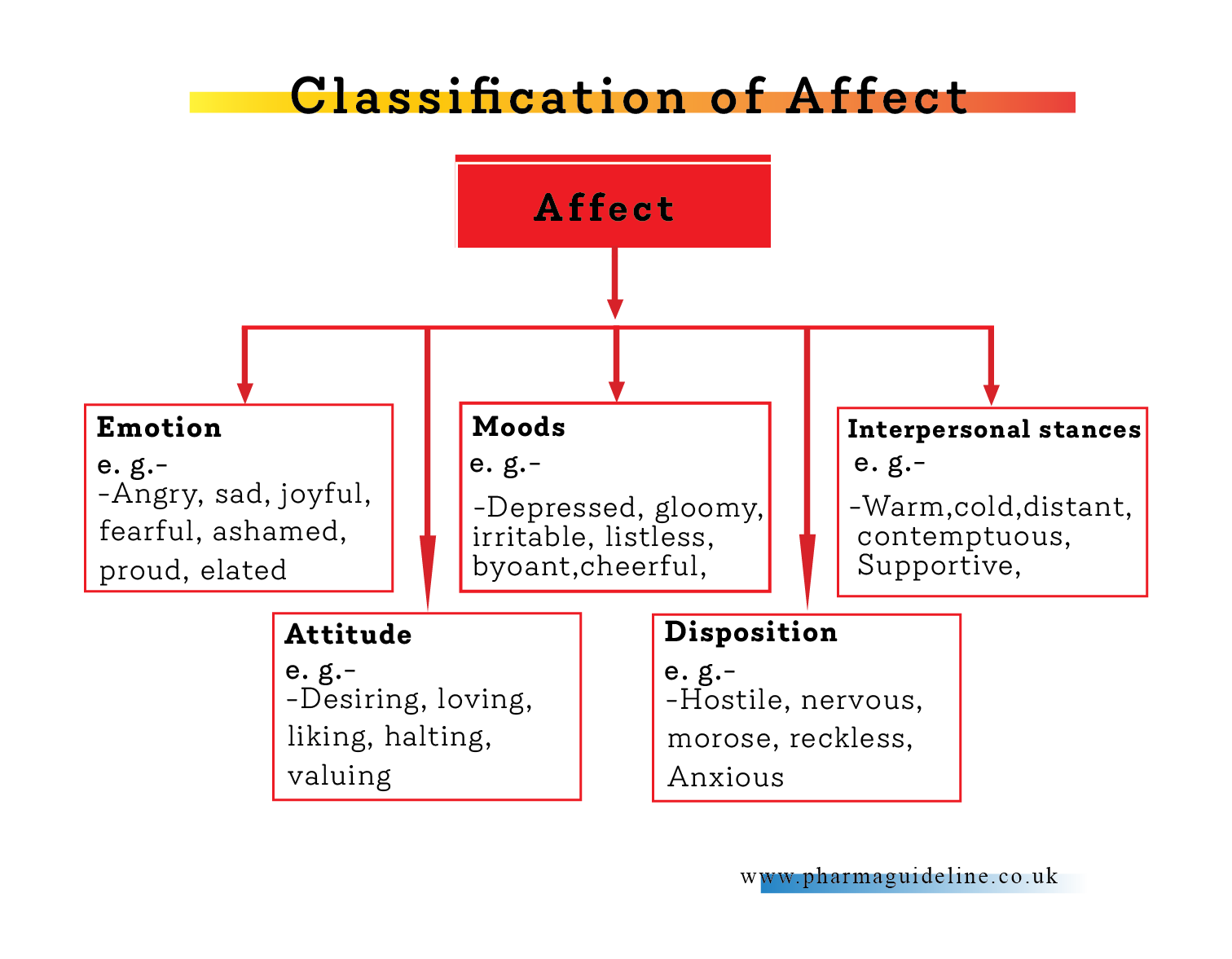
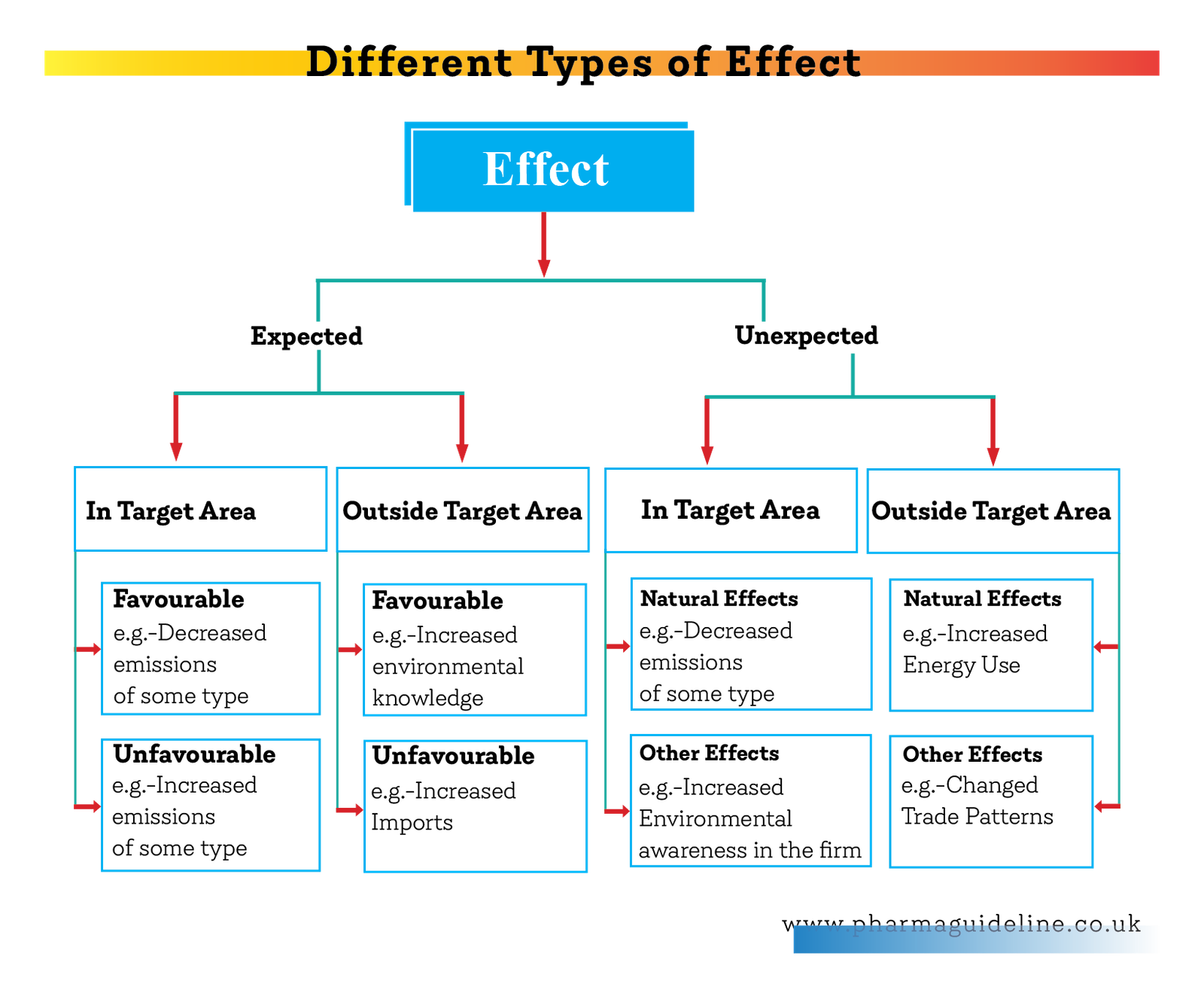
What is the difference between affect and effect?

Affect & Effect

These two words are verbs & nouns and their meanings overlap. It is not possible that whose word come first in English language. In general, Affect is used as Verb and effect as a Noun.

Meaning of Affect

[][]Affect means Change in something, to act on.
“The hot weather affected the iceberg.”[The hot weather produced a change in the iceberg.]

[][]To amaze the mind or move the feelings of,”
“Billie Eilish song ‘lovely’ deeply affected her.” [The music changed his moods or thoughts].

[][]You can also change the word Affect with Right word
“The hot weather damage the iceberg.”
“Billie Eilish song ‘lovely’ deeply moved her.”

To express a change or to describe an action, the word “Affect” shall be use.

Meaning of Effect

Effect means “result” or “consequence.” & Most commonly used as a noun. Effect can be replace with another noun.

“His high market share value was an effect of ownership change of the company” Another way to say it is, “His high market share value was a result of ownership change of the company”

Remember Difference Between Affect & Effect

[][]Memorize the word RAVEN; you can easily differentiate them_

R = Remember
A = Affect is a
V = Verb
E = Effect is a
N = Noun

There is another way to remember when to use affect and effect:
[][]A is for action (affect); E is for end result (effect).

Example

Affect

[][]Almost always used as a verb to mean to influence someone or something.

How does one’s creativity affect success on the project?
These songs will affect the number of people who will come to the outdoor concert.

[][]Affect can be used as a noun in one particular situation.
The old man’s facial expressions had a humorous affect.

Effect

[][]Most often used as a noun. It denotes an event or a thing. Often used when result is being discussed.

What effect did the job of company on his family?
Did his sudden retirement have any effect on his family?

[][]Effect can words like : on, the, any, into, , take, an, or.
The prescribed pill had an effect on the patient’s symptoms.
We have to consider the changes time to take effect.

[][]Effect can be used as a verb in one particular situation.
The new management is responsible to effect negative changes in the office.

What is the difference between affect and effect? Read More »