How Do Pharmaceutical Companies Make Money?
Pharmaceutical companies make money by discovering, developing, and commercializing medicines that address unmet medical needs. Their core business model is built around patented prescription drugs, but revenue also comes from vaccines, over-the-counter products, licensing, partnerships, and services. Below is a clear, up-to-date breakdown of where the money comes from, how prices are set, what patents really do, and the key risks and trends shaping pharma profits.
Who actually pays for medicines?
- United States: A mix of commercial insurers, Medicare/Medicaid, pharmacy benefit managers (PBMs), employers, and patients (copays/coinsurance). PBMs negotiate rebates from manufacturers.
- Europe and many other countries: Central or regional health systems negotiate prices, often with health technology assessment (HTA) bodies (e.g., NICE in the UK).
- Low- and middle-income countries: Government tenders, international organizations, and differential pricing strategies often apply.

The core engine: Patented prescription drugs
- Innovation drives value: Most revenue comes from branded drugs protected by patents/data exclusivity. These drugs command higher prices due to novelty, clinical benefit, and lack of direct competition.
- Specialty focus: Over the past decade, growth has shifted toward specialty and rare-disease therapies (oncology, immunology, gene/cell therapy), which often serve smaller populations at higher per-patient prices.
- Blockbusters: A small number of products can contribute a disproportionate share of total revenue and profits.
Mindfulness and Meditation Techniques
How pricing works (and why “list price” isn’t what it seems)
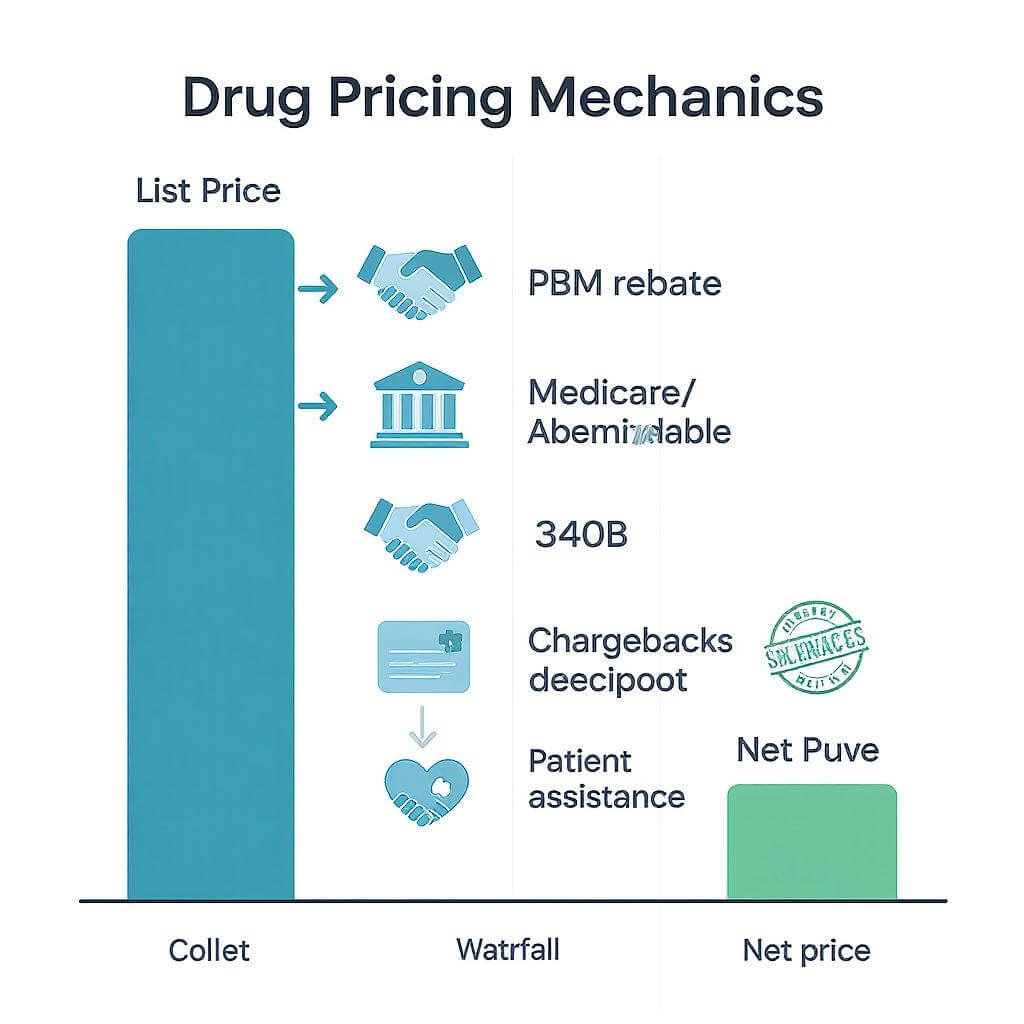
- List price vs. net price: In the U.S., manufacturers set a list price (WAC), but pay mandatory and negotiated discounts: rebates to PBMs/insurers, government discounts (Medicaid, 340B), chargebacks, and patient support. Net price = list price minus all these concessions.
- The “gross-to-net” gap: For many branded drugs in the U.S., net price can be 30–60% below list price, depending on the product and payer mix.
- Outside the U.S.: Prices are usually negotiated nationally, subject to reference pricing and value assessments, often resulting in lower net prices than in the U.S.
Patents and exclusivity protect profits (for a time)
- Patents: Typically last 20 years from filing. Because filing often occurs early in development, effective post-approval exclusivity is often 7–12 years.
- Regulatory exclusivity (U.S.): New Chemical Entity (5 years), biologics (12 years), orphan drugs (7 years), pediatric exclusivity (6 months), plus various add-ons. EU uses “8+2+1” data/market protection.
- Lifecycle management: Companies extend value via new indications, pediatric studies, new formulations (e.g., extended release), device-drug combos, and authorized generics.
The R&D pipeline economics
- High risk, high cost: Only a minority of candidates that enter human trials achieve approval. Industry-wide, roughly 1 in 10 (varies by therapy area) successfully reach market.
- Timelines: Discovery and preclinical can take 3–6 years; clinical development and review often add 6–10 years.
- Investment scale: Total cost to develop an approved medicine varies widely (hundreds of millions to several billions of dollars, depending on modality and failure-adjusted costs).
- Portfolio logic: A few big winners often offset many failures—one reason companies value platforms and scalable science (e.g., mRNA, antibodies).
Market access, sales, and promotion
- Access matters as much as science: Formulary placement, prior authorizations, and step therapy affect uptake.
- PBMs and rebates (U.S.): Manufacturers negotiate rebates for preferred formulary tiers; better placement can drive volume but reduce net price.
- Promotion: Engagement with healthcare professionals (education, field teams), medical conferences, and—mainly in the U.S. and New Zealand—direct-to-consumer advertising.
After exclusivity: Generics and biosimilars
- Small-molecule generics: Rapid price erosion and market share loss for the brand when generics launch; margins compress significantly.
- Biologics and biosimilars: Competition grows more gradually than with pills; price erosion is meaningful but typically slower and less steep than small molecules.
- Authorized generics: The brand company may sell a “generic” version to retain some share as prices fall.
Other revenue streams beyond branded Rx
- Vaccines: High-volume, tender-driven in many markets; strategic for public health and reputation.
- Consumer health/OTC: Pain relief, allergy, vitamins, skincare. Some big pharmas have spun these into separate companies, but it remains a revenue category for many.
- Licensing and royalties: Upfront payments, milestones, and ongoing royalties from out-licensing or co-developing assets and platforms.
- Collaborations and co-promotion: Shared risk and reward with biotech or other pharmas.
- Contract manufacturing (CDMO/CMO): Select companies monetize capacity by producing for third parties (more common among specialized manufacturers).
- Diagnostics and devices: Companion diagnostics can support therapy adoption; some firms bundle device-drug solutions (e.g., auto-injectors).
Regional pricing and market dynamics
- United States: Higher net prices on average; complex rebates; significant role for PBMs; DTC advertising allowed.
- Europe: Centralized or HTA-driven price negotiations; outcomes- and value-based agreements are increasingly used.
- Emerging markets: Volume-driven, tender-based, and differential pricing; growth opportunities with expanding access.
What the P&L often looks like (ranges vary by company and product)
- Revenue: Volume × net price (after discounts).
- Cost of goods sold (COGS): Often 5–10% of sales for small-molecule tablets; can be 15–30% for biologics due to complex manufacturing.
- R&D expense: Frequently 15–25% of sales for large R&D-based companies.
- SG&A (sales, general, administrative): Often 25–35% of sales, driven by field forces, marketing, and market access activities.
- Operating margin: Commonly 20–30% for large, diversified companies; varies widely based on mix and lifecycle stage.
Key risks and headwinds
- Patent cliffs and biosimilar waves
- Regulatory and price pressures (e.g., U.S. Medicare price negotiations, EU reference pricing)
- Clinical failures and safety issues
- Competition from alternative therapies and generics
- Supply chain and manufacturing complexities (especially for biologics)
- Litigation and compliance risks
Trends reshaping pharma revenue
- Biologics, cell and gene therapies: High-value, one-time or infrequent dosing models; experimentation with annuity and outcomes-based payments.
- Precision medicine: Smaller, biomarker-defined populations with strong clinical differentiation.
- Real-world evidence and value-based contracts: Tying payment to patient outcomes to support access.
- AI-enabled R&D: Aiming to improve target discovery, trial design, and success rates.
- Metabolic and obesity therapies: Rapidly expanding markets influencing payer strategies and budgets.
A quick revenue math example
- Net revenue = treated patients × duration × net price.
- Suppose a rare-disease therapy is priced at $300,000 per year, with 2,000 treated patients and an average 15% discount. Net price ≈ $255,000. Annual net revenue ≈ 2,000 × $255,000 = $510 million. From this, the company funds manufacturing, R&D, SG&A, taxes, and profit.
FAQs
Q: How do pharma companies set drug prices?
A: They consider clinical value, unmet need, competitive landscape, target population size, development/manufacturing costs, and payer willingness to reimburse. In many countries, negotiated or value-based frameworks set effective prices.
Q: Why are drug prices often higher in the U.S.?
A: The U.S. relies on market-based negotiations among manufacturers, PBMs, and insurers, with fewer national price controls. Rebates reduce net prices, but patient out-of-pocket can still be high depending on benefit design.
Q: Do pharmaceutical companies profit from generics?
A: Brand-focused companies generally see steep revenue declines when generics arrive. Generic-focused companies earn profits through high-volume, low-margin models. Some brands use authorized generics to retain share.
Q: How long do patents protect a drug?
A: Patents last 20 years from filing, but effective post-approval exclusivity is often 7–12 years due to early filing and development time. Additional regulatory exclusivities can extend protection for specific indications or populations.
Q: What is a PBM and why do rebates matter?
A: Pharmacy Benefit Managers negotiate drug coverage and pricing for insurers/employers. Manufacturers pay rebates for preferred formulary placement. Those rebates lower net prices but can complicate patient out-of-pocket costs.
Q: Why do prices sometimes increase annually?
A: Manufacturers may take list price increases to offset rebates/inflation, support ongoing R&D, or align with market dynamics. However, net prices (after discounts) may rise more modestly or even fall, depending on competition and payer leverage.
Q: How did COVID-19 vaccines generate revenue?
A: Through large government procurement contracts, often at negotiated prices per dose. Economics varied by country, volume, and contract terms; profits were influenced by scale, manufacturing efficiency, and partnerships.
Key takeaways
- Most pharma revenue comes from patented prescription drugs during a limited exclusivity window.
- Net price—not list price—drives revenue; U.S. gross-to-net discounts are substantial.
- R&D is costly and risky; a few winners fund many failures.
- Profits depend on market access, lifecycle strategy, and geographic mix.
- Generics/biosimilars reset economics post-exclusivity.
- Licensing, vaccines, OTC, and services provide diversification.
- Policy and payer trends (e.g., value-based contracts, price negotiations) are reshaping the model.
How Do Pharmaceutical Companies Make Money? Read More »