product

Understanding Stability of Injectable Products

Quality assurance in pharmaceuticals hinges on stability. For injectable products, where safety, potency, and sterility converge, stability is not just a matter of convenience; it is a scientific and regulatory requirement. Stability determines how the product’s shelf life is established, how recommended storage conditions are ascertained, container-closure compatibility, labelling, and most importantly, patient safety.

This article discusses the fundamentals of stability for injectable products, the design and implementation of stability programs, and the analytical and microbiological considerations separating the different injectable types: small molecules, biologics, and lyophilized products.


What Stability Means for Injectable Products

With an injectable formulation, stability means the product will retain its intended physical, chemical, microbiological, therapeutic, and toxicological limitations and characteristics until its expiry date. Stability incorporates several connected subdomains:

Chemical stability — the active ingredient has to retain its potency and purity and not produce dangerous degradants.

Physical stability — clarity, color, and viscosity must be maintained. Precipitation, crystallization, and phase separation must be avoided.

Microbiological stability — for microbiologically sterile preparations, sterility must be maintained. For multi-dose containers, preservative efficacy must be retained.

Particulate stability — no particulate matter, whether visible or sub-visible, must form over time.

Container-closure compatibility — the product and its packaging must not interact significantly through leaching or adsorption.

These aspects collectively determine a product’s shelf life, storage conditions, and in-use stability.


Why Injectables Require Special Stability Attention

Injectables go directly into the body’s sterile spaces, like tissues and blood. Any product instability could have immediate and serious consequences.

Toxic Degradants. Degradation products, even in small amounts, can be toxic.

Sterility Maintenance. Loss of preservative activity can lead to the introduction and growth of germs and subsequent infections.

Physical Changes. Precipitation and other physical changes can lead to the formation of emboli and inflammation.

Biological Sensitivity. Structural fragility of proteins and peptides can lead to denaturation through heat, light, and mechanical stress.

Consequently, injectables warrant more detailed data and continuous monitoring, tighter specs, and more comprehensive oversight compared to other forms like tablets and capsules.


The Regulatory Framework for Injectable Stability

All injectable stability programs must adhere to internationally harmonized standards and guidelines. The key authorities defining the principles and requirements for stability programs include the:

International Council for Harmonisation (ICH) — with guidelines Q1A(R2) and Q1B on the design, conditions, and photostability of stability studies.

World Health Organization (WHO) — stability testing guidance for APIs and finished products in diverse climates.

U.S. Food and Drug Administration (FDA) — comprehensive design, testing, and documentation expectations for stability programs.

UK Medicines and Healthcare products Regulatory Agency (MHRA) — the incorporation of ICH guidelines into the UK framework.

Pharmaceutical Inspection co-operation Scheme (PIC/S) — embedding stability expectations in the Good Manufacturing Practice (GMP) standards for inspection and compliance.

All together, these frameworks establish and control the global standards for assessing stability of injectable products.


Designing a Stability Program for Injectables

For a good stability program, you must have these key parts:

a. Stability-Indicating Analytical Methods

Tests must be proven to show when a product breaks down. Tools like HPLC or UPLC help to split and count the main drug parts and the breakdown products. Other tests, such as looking at pH, how thick a mix is, and checking for tiny bits, add to the chemical checks.

b. Stress Testing / Forced Degradation

Using high stress (like heat, light, adding oxygen, or extreme pH levels) helps find out how and why a product may break down. This also makes sure that the tests used can truly show if a product does remain stable.

c. Selection of Storage Conditions

Picking the right long-term, middle, and fast storage needs is key. Most of the time, long-term settings are 25°C/60% RH or 30°C/65% RH, based on weather zones. For cold items, a range of 2–8°C is normal. For things like shots, how they react to light and heat matters a lot.

d. Batch Selection

Often, tests are run on at least three large-scale batches that show what the making step is like. For things made from living systems, more checks might be needed due to how much they can change.

e. Container-Closure Compatibility

The pack set-up needs to be checked for any parts that might get out, bind, or stick to the drug bits. How they work with glass, plastic, rubber tops, or silicone oil in ready-to-use shots must be looked at with care.

f. Microbiological and Particulate Control

Tests need to show that the product stays clean and the preservatives work. For vials used more than once, the stability after many uses must be checked.

g. Photostability

A lot of injections break down when hit by light. So, these products are put under certain light levels and types to see if they need special packaging or labels.

h. In-use or Dilution Stability

When a product is mixed with other fluids before use, studies have to prove that it stays stable and works well with the tools used to give it.

Special Considerations: Small Molecules, Biologics, and Lyophilisates

a. Small-Molecule Injectables

These are often more firm in their makeup but may face issues like breaking down, reacting with oxygen, or light damage. Efforts on maintaining their stability focus on watching over their purity, acidity levels, and any tiny particles.

b. Biologics (Proteins, Peptides, Vaccines)

These products are very open to harm from their surroundings. They can change shape, stick together, or lose their power even in gentle settings. Hence, tests focused on clumping (with methods like SEC, DLS), checking strength, and maintaining structure are very important. Freeze-drying is a common method used to keep them stable.

c. Lyophilized (Freeze-Dried) Products

For freeze-dried injectables, assessing both the dried form and the mixed solution is crucial. Things like left-over moisture, how quick they mix, and how they hold up after mixing are vital. How well they are packaged is also very important to keep them stable over time.

Particulate Matter: A Critical Quality Attribute

Small bits in items can be a big risk to people. Tests to check how long the product lasts should watch for both big and tiny bits.

  • Visible Particles — If you can see the bits with your eyes, the batch is no good.
  • Sub-visible Particles — Measured by how they block light or how they move in a flow. There are set rules for bits larger than 10 µm and 25 µm in drug standards.

For shots that go in your body made from proteins, clumps of protein can look like bits and might start body defenses by mistake. Because of this, high-level tests are used to tell apart bits from outside and inside.

Bracketing and Matrixing in Stability Studies

Bracketing and matrixing are ways to test efficiently while still keeping data good.

  • Bracketing is when you test only the most and least strong settings (like highest and lowest doses, biggest and smallest boxes).
  • Matrixing is when you test just a few examples at each time.

Both ways need a good reason behind them and must be used with care for risks.


Ongoing Stability and Post-Approval Commitments

Stability checks do not stop when a product gets the okay. Makers have to keep doing ongoing stability studies on what they make, all through the product’s live time.

These checks make sure that the way they make things is still good and that the product stays up to its set quality as time goes by.

If there are any changes after approval — like new suppliers, places where they make things, or what they wrap products in — they need extra stability studies to show things are still alike.


Temperature Excursions and Cold Chain Management

For many shots, like biologics and vaccines, keeping the right temp during storage and moving them is key. Programs to keep them stable must have:

  • Studies to set clear temperature excursion limits.
  • Checking freeze–thaw cycles to see how tough the product is.
  • Writing down rules for cold chain management, including checked wraps and ways to move stuff.
  • Labelling instructions that tell the do’s and don’ts for temp limits (for example, “Do not freeze” or “Use within X hours after taking out from cold storage”).

Info on how these items are handled and moved in real life should help with what the labels say.


Analytical Techniques Commonly Used in Stability Studies

A strong stability program needs good tools that can spot both chemical and physical changes. Often used methods are:

  • HPLC/UPLC — for testing and breaking down products.
  • Mass spectrometry — for making sure of the structure and finding how things break down.
  • Size exclusion chromatography (SEC) — for checking the gathering of proteins.
  • Dynamic light scattering (DLS) — for measuring how big particles are.
  • Microbiological assays — for checking if things are sterile, if there are toxins, and if preservative works.
  • Rheological analysis — for checking how thick things are and if they stay the same physically.
  • Extractable and leachable studies — using tools like GC, LC-MS, and ICP-MS to test for harmful substances.

All these methods must be checked for their aim, how sensitive they are, and if they can be done again, making sure they truly show stability.


Risk-Based Approach in Stability Studies

Risk-based ideas are now a big part of making plans for stability. By checking risks, you can focus on key parts, cut down on tests you don’t need, and still stick to the rules.

Key things to think about:

  1. What traits are key for safety and how well the product works?
  2. What breaks down most often?
  3. How do changes in making or packing touch stability?
  4. What could go wrong with the environs during keeping and moving?

Make sure to write down risks and reasons in the stability plans and reports.

Key Expectations from Regulatory Agencies

Regulators want stability plans for injectables to show:

  1. Use of tested, sure methods that can show stability.
  2. Proof of stress tests to know how they break down.
  3. Test batches that show all mixes and pack types.
  4. Meet rules for test conditions (long-term, middle, fast).
  5. Data on stability under light for light-sensitive items.
  6. Proof of how well it fights germs and keeps preservatives working.
  7. Tests for how the container reacts with the content and checking for chemicals leaking.
  8. Keep a steady, ongoing program with info ready for checks.
  9. Check the risks for any grouping or mixing methods.

Common Stability Pitfalls and How to Avoid Them

  1. Non-Stability-Indicating Methods — Methods that can’t split up degradants fail to see when things start to break down.
  2. Ignoring Physical Instability — Biological products might clump together without showing chemical changes.
  3. Inadequate Container Interaction Studies — Not checking early for leachables or sticking can lead to product recalls.
  4. Weak In-use Data — Bottles used many times must prove that their protecting stuff works after each use.
  5. Neglecting Temperature Excursion Studies — Skipping these tests can cause trouble during real-life shipping, making products unusable.

Taking care of these issues early helps in easier reviews and makes sure products are safe.

Integrating Science with GMP

Getting the steadiness right for injectables isn’t just a lab job—it’s a mix of strict science and sticking to GMP rules. Tests need to match up with checked making steps, strong paper work, and data systems you can track.

GMP check groups want makers to keep easy-to-find, full, and traceable steadiness data. If things don’t go as planned or the results are off, you need to look into it and write down what you will do to fix it.

For complex or new injectables, it’s smart to talk to rules setters early. This helps make sure you meet their needs and skips the need for doing the work again, which can cost a lot.


The Stability of Injectable Products

The keeping of injectable items steady is a mix of chemistry, tiny life study, pack tech, and rule following. A strong steady plan makes sure the item works as it should, stays safe, and keeps its power all through its life.

Key Aspects:

  • Injectable items, as they are high-risk mixes, need a careful way to look at, test checking, and ongoing watch.
  • Global rules from groups like ICH, WHO, FDA, MHRA, and PIC/S make sure there is a steady science and rule plan all over the world.

In the end, keeping things steady is not just about the tech needs but also about staying true to the safety of the patients and trust in the item. This trust is what makes the base for belief in injectable drugs.

Understanding Stability of Injectable Products Read More »

How Do Pharmaceutical Companies Make Money?

Pharmaceutical companies make money by discovering, developing, and commercializing medicines that address unmet medical needs. Their core business model is built around patented prescription drugs, but revenue also comes from vaccines, over-the-counter products, licensing, partnerships, and services. Below is a clear, up-to-date breakdown of where the money comes from, how prices are set, what patents really do, and the key risks and trends shaping pharma profits.


Who actually pays for medicines?

  • United States: A mix of commercial insurers, Medicare/Medicaid, pharmacy benefit managers (PBMs), employers, and patients (copays/coinsurance). PBMs negotiate rebates from manufacturers.
  • Europe and many other countries: Central or regional health systems negotiate prices, often with health technology assessment (HTA) bodies (e.g., NICE in the UK).
  • Low- and middle-income countries: Government tenders, international organizations, and differential pricing strategies often apply.


The core engine: Patented prescription drugs

  • Innovation drives value: Most revenue comes from branded drugs protected by patents/data exclusivity. These drugs command higher prices due to novelty, clinical benefit, and lack of direct competition.
  • Specialty focus: Over the past decade, growth has shifted toward specialty and rare-disease therapies (oncology, immunology, gene/cell therapy), which often serve smaller populations at higher per-patient prices.
  • Blockbusters: A small number of products can contribute a disproportionate share of total revenue and profits.


Mindfulness and Meditation Techniques

How pricing works (and why “list price” isn’t what it seems)

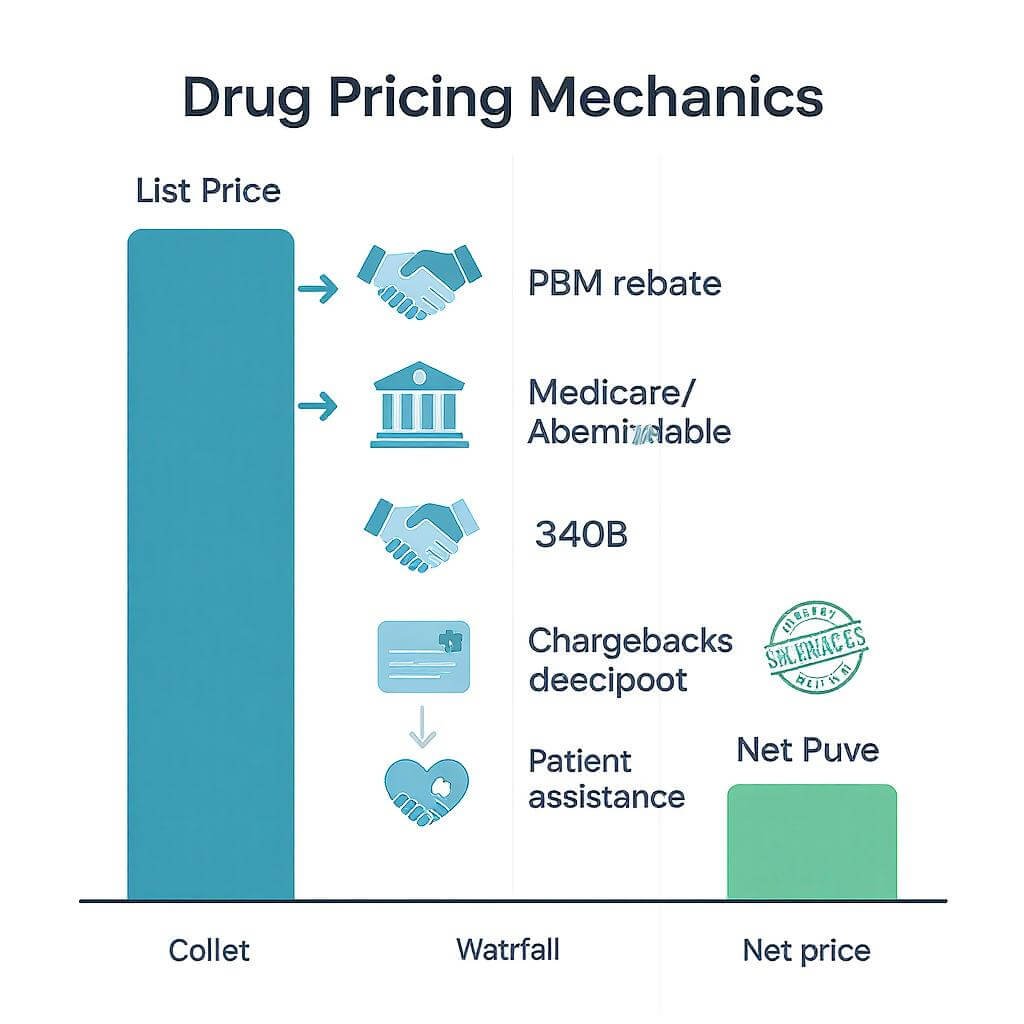
  • List price vs. net price: In the U.S., manufacturers set a list price (WAC), but pay mandatory and negotiated discounts: rebates to PBMs/insurers, government discounts (Medicaid, 340B), chargebacks, and patient support. Net price = list price minus all these concessions.
  • The “gross-to-net” gap: For many branded drugs in the U.S., net price can be 30–60% below list price, depending on the product and payer mix.
  • Outside the U.S.: Prices are usually negotiated nationally, subject to reference pricing and value assessments, often resulting in lower net prices than in the U.S.

Patents and exclusivity protect profits (for a time)

  • Patents: Typically last 20 years from filing. Because filing often occurs early in development, effective post-approval exclusivity is often 7–12 years.
  • Regulatory exclusivity (U.S.): New Chemical Entity (5 years), biologics (12 years), orphan drugs (7 years), pediatric exclusivity (6 months), plus various add-ons. EU uses “8+2+1” data/market protection.
  • Lifecycle management: Companies extend value via new indications, pediatric studies, new formulations (e.g., extended release), device-drug combos, and authorized generics.

The R&D pipeline economics

  • High risk, high cost: Only a minority of candidates that enter human trials achieve approval. Industry-wide, roughly 1 in 10 (varies by therapy area) successfully reach market.
  • Timelines: Discovery and preclinical can take 3–6 years; clinical development and review often add 6–10 years.
  • Investment scale: Total cost to develop an approved medicine varies widely (hundreds of millions to several billions of dollars, depending on modality and failure-adjusted costs).
  • Portfolio logic: A few big winners often offset many failures—one reason companies value platforms and scalable science (e.g., mRNA, antibodies).

Market access, sales, and promotion

  • Access matters as much as science: Formulary placement, prior authorizations, and step therapy affect uptake.
  • PBMs and rebates (U.S.): Manufacturers negotiate rebates for preferred formulary tiers; better placement can drive volume but reduce net price.
  • Promotion: Engagement with healthcare professionals (education, field teams), medical conferences, and—mainly in the U.S. and New Zealand—direct-to-consumer advertising.

After exclusivity: Generics and biosimilars

  • Small-molecule generics: Rapid price erosion and market share loss for the brand when generics launch; margins compress significantly.
  • Biologics and biosimilars: Competition grows more gradually than with pills; price erosion is meaningful but typically slower and less steep than small molecules.
  • Authorized generics: The brand company may sell a “generic” version to retain some share as prices fall.

Other revenue streams beyond branded Rx

  • Vaccines: High-volume, tender-driven in many markets; strategic for public health and reputation.
  • Consumer health/OTC: Pain relief, allergy, vitamins, skincare. Some big pharmas have spun these into separate companies, but it remains a revenue category for many.
  • Licensing and royalties: Upfront payments, milestones, and ongoing royalties from out-licensing or co-developing assets and platforms.
  • Collaborations and co-promotion: Shared risk and reward with biotech or other pharmas.
  • Contract manufacturing (CDMO/CMO): Select companies monetize capacity by producing for third parties (more common among specialized manufacturers).
  • Diagnostics and devices: Companion diagnostics can support therapy adoption; some firms bundle device-drug solutions (e.g., auto-injectors).

Regional pricing and market dynamics

  • United States: Higher net prices on average; complex rebates; significant role for PBMs; DTC advertising allowed.
  • Europe: Centralized or HTA-driven price negotiations; outcomes- and value-based agreements are increasingly used.
  • Emerging markets: Volume-driven, tender-based, and differential pricing; growth opportunities with expanding access.

What the P&L often looks like (ranges vary by company and product)

  • Revenue: Volume × net price (after discounts).
  • Cost of goods sold (COGS): Often 5–10% of sales for small-molecule tablets; can be 15–30% for biologics due to complex manufacturing.
  • R&D expense: Frequently 15–25% of sales for large R&D-based companies.
  • SG&A (sales, general, administrative): Often 25–35% of sales, driven by field forces, marketing, and market access activities.
  • Operating margin: Commonly 20–30% for large, diversified companies; varies widely based on mix and lifecycle stage.

Key risks and headwinds

  • Patent cliffs and biosimilar waves
  • Regulatory and price pressures (e.g., U.S. Medicare price negotiations, EU reference pricing)
  • Clinical failures and safety issues
  • Competition from alternative therapies and generics
  • Supply chain and manufacturing complexities (especially for biologics)
  • Litigation and compliance risks

Trends reshaping pharma revenue

  • Biologics, cell and gene therapies: High-value, one-time or infrequent dosing models; experimentation with annuity and outcomes-based payments.
  • Precision medicine: Smaller, biomarker-defined populations with strong clinical differentiation.
  • Real-world evidence and value-based contracts: Tying payment to patient outcomes to support access.
  • AI-enabled R&D: Aiming to improve target discovery, trial design, and success rates.
  • Metabolic and obesity therapies: Rapidly expanding markets influencing payer strategies and budgets.

A quick revenue math example

  • Net revenue = treated patients × duration × net price.
  • Suppose a rare-disease therapy is priced at $300,000 per year, with 2,000 treated patients and an average 15% discount. Net price ≈ $255,000. Annual net revenue ≈ 2,000 × $255,000 = $510 million. From this, the company funds manufacturing, R&D, SG&A, taxes, and profit.

FAQs

Q: How do pharma companies set drug prices?

A: They consider clinical value, unmet need, competitive landscape, target population size, development/manufacturing costs, and payer willingness to reimburse. In many countries, negotiated or value-based frameworks set effective prices.

Q: Why are drug prices often higher in the U.S.?

A: The U.S. relies on market-based negotiations among manufacturers, PBMs, and insurers, with fewer national price controls. Rebates reduce net prices, but patient out-of-pocket can still be high depending on benefit design.

Q: Do pharmaceutical companies profit from generics?

A: Brand-focused companies generally see steep revenue declines when generics arrive. Generic-focused companies earn profits through high-volume, low-margin models. Some brands use authorized generics to retain share.

Q: How long do patents protect a drug?

A: Patents last 20 years from filing, but effective post-approval exclusivity is often 7–12 years due to early filing and development time. Additional regulatory exclusivities can extend protection for specific indications or populations.

Q: What is a PBM and why do rebates matter?

A: Pharmacy Benefit Managers negotiate drug coverage and pricing for insurers/employers. Manufacturers pay rebates for preferred formulary placement. Those rebates lower net prices but can complicate patient out-of-pocket costs.

Q: Why do prices sometimes increase annually?

A: Manufacturers may take list price increases to offset rebates/inflation, support ongoing R&D, or align with market dynamics. However, net prices (after discounts) may rise more modestly or even fall, depending on competition and payer leverage.

Q: How did COVID-19 vaccines generate revenue?

A: Through large government procurement contracts, often at negotiated prices per dose. Economics varied by country, volume, and contract terms; profits were influenced by scale, manufacturing efficiency, and partnerships.

Key takeaways

  • Most pharma revenue comes from patented prescription drugs during a limited exclusivity window.
  • Net price—not list price—drives revenue; U.S. gross-to-net discounts are substantial.
  • R&D is costly and risky; a few winners fund many failures.
  • Profits depend on market access, lifecycle strategy, and geographic mix.
  • Generics/biosimilars reset economics post-exclusivity.
  • Licensing, vaccines, OTC, and services provide diversification.
  • Policy and payer trends (e.g., value-based contracts, price negotiations) are reshaping the model.

How Do Pharmaceutical Companies Make Money? Read More »

Mindfulness and Meditation Techniques

In our quick, always-on world, the act of mindfulness has come up as a strong cure for stress, worry, and the high asks of today’s life. Mindfulness, at its heart, is about staying aware of the now with an open mind, eagerness, and consent. This old act, started in Buddhist ways but now taken on by non-religious groups all over, gives a road to more peace, clearness, and health.


The journey into mindfulness starts with knowing that our minds often stray. Studies show that the average person uses almost half their awake time thinking about something other than what they’re doing now. This mind drift, while it can help in making plans or solving issues, often ends up in overthinking past events or feeling worried about what’s next. Mindfulness brings a new way: softly guiding our focus back to the present moment, where life really happens.


Understanding the Foundations of Mindfulness

More than just calm: Mindfulness is not only about being calm or stepping away from stress for a bit. It’s a deep change in how we see our thoughts, feelings, and what happens to us. When we take part in mindfulness, we grow a way of being that does not judge. We see what goes on inside us and around us without rushing to say if it’s good or bad, right or wrong.


A different way to think: This way of paying attention is very different from how we often live. Usually, we just get through life on autopilot, acting out of old habits in response to what happens. Mindfulness asks us to stop, look, and choose how to act, instead of just reacting. This small change can deeply touch our mental well-being, how we connect with others, and how good our life feels overall.


In the last few decades, experts have been very interested in mindfulness. Brain research shows that doing mindfulness often can change how our brains are built and work. Parts of the brain linked to focus, handling emotions, and knowing oneself are more active and even get bigger in people who practice a lot. This info shows that mindfulness is not just in our heads. It really does create changes we can see and measure in our bodies.


Core Mindfulness Meditation Techniques

The use of mindfulness covers many ways to meditate, each opens a new door to being aware of the now. Learning and trying out various styles helps people find the best fit for their mood and way of life.  At the heart of many mindfulness ways is breath awareness meditation. This method needs you to pay attention to how you breathe. You notice the air as it goes in and out of your nose, the chest going up and down, or the belly getting big and small. If your thoughts drift, and they will, you bring your focus back to your breath gently and without getting upset. This simple but deep method helps keep your mind on the present and grows your skill for keeping focus.


Body scan meditation is a strong way to get better at mindfulness. In this method, you look at each part of your body, from your toes up. Notice how each part feels without trying to change anything. As you move from your toes to your legs, torso, arms, and head, you become more aware of how your body feels. You learn to see any pain or tight spots without upset. This can really help if you often have pain or feel stress in your body. Walking Meditation: Mindfulness in Motion. Walking meditation shows that you don’t need to sit still to meditate. Here, you pay attention to the way walking feels. Notice your foot lifting, moving in the air, and touching the ground again. Loving-kindness meditation, which some see as different from mindfulness, has a lot in common with it and can make your practice broader. This method is about growing good feelings and kindness, first towards yourself and then to those you love, people you don’t know well, those who are tough to deal with, and finally everyone. By mixing being aware with trying on purpose to feel good things, people who meditate get better at both noticing what’s around them and handling their feelings.

Integrating Mindfulness into Daily Life

While sitting to meditate helps train us in mindfulness, our real aim is to carry this kind of sharp focus into all everyday acts. Mindfulness can turn normal tasks into chances for practice and being truly present. Mindful eating is one of the easiest ways to keep mindfulness in your day. Rather than eating meals while you’re lost in your phone or your own thoughts, mindful eating asks you to fully dive into the meal experience. You should notice the colors, feel, and smells of the food, chew slowly while enjoying the taste, and watch for signs that you are hungry or full. Doing this can not only make meals more enjoyable but also help your digestion and let you build a better relationship with what you eat.


Mindful talk makes us aware when we are with others. It means: To hear out fully, not just think of what to say next. To see how we feel as we talk. To say things on purpose, not just react.


When we use this in talk, we get on better, don’t get things wrong so much, and make deeper links with others. Mindfulness in the Workplace. Work gives many chances to be more mindful. Doing short breaks for mindfulness in the day, like taking a few slow breaths between meets, can keep our mind sharp and ease stress. Being mindful when we go from one work to another, stopping to clear our mind before we start the next thing, can make us do well more and feel less tired from doing too many things at once.


Overcoming Common Challenges in Mindfulness Practice

Misunderstandings: A lot of times, people think that the point of mindfulness is to clear the mind or end all thoughts. This is not true. In truth, mindfulness means to see thoughts as they come, but not to get lost in them. It’s not about getting to a certain place in your mind, but more about how you connect with what’s there now. When folks get this, they can drop the hard goals and start their practice with more kindness and less pressure.


When you start to meditate, feeling restless or bored is common, especially if you’re new at it. Our minds like to be busy and might not like the calm of just breathing or feeling the body. Instead of seeing these as bad things, try to watch those feelings without judging them, just as you would notice anything else. Over time, this teaches you to stay calm even when things feel tough.

Sitting still for meditation can make some parts of the body ache. While some aching is part of getting used to not moving, if it hurts a lot, you might need to change how you sit. Using soft cushions, sitting in chairs, or even lying down can help make meditation easier on your body.


The Science Behind Mindfulness Benefits

Lots of studies back the good that mindfulness has. If you keep at it, it can cut down stress and sadness. It can make your body’s defense stronger and boost your happiness. Studies of the brain show how mindfulness meditation can change the brain. The prefrontal cortex, which helps with managing feelings and thoughts, becomes more active and strong in people who meditate a lot.


On the other hand, the amygdala, which sets off stress, calms down. These shifts mean better stress management, choice making, and emotional steadiness.


Mindfulness has also shown promise in addressing specific health conditions. Chronic Pain Management: Research shows that mindfulness can help with long-term pain. Blood Pressure Reduction: Mindful habits bring down high blood pressure. Improved Sleep Quality: Helps you get a better night’s sleep. In mental health settings, mindful cognitive therapy has been great for keeping depression from returning and handling many kinds of worry and fear. The impact of mindfulness stretches out to touch more than just our health. It reaches into how well we do things and how we make new ideas. In Schools: Kids who use mindfulness do better at paying attention, do better in their classes, and are nicer to others. In Workplaces: Leads to less burnout, better job happiness, and makes you a better leader.


Building a Sustainable Mindfulness Practice

Creating a lasting mindfulness practice needs you to be intentional, patient, and adaptable. Instead of seeing mindfulness as just another thing on a big to-do list, those who do well make it a natural part of their daily life in ways that last.

Starting small is key to keep it up. Just five minutes a day can help and lay the ground for sticking with it longer. As it becomes a habit, you can slowly add more time. What matters most is doing it often, not how long each time; a quick daily session is better than long ones that don’t happen often.


Finding the Right Time and Space for Practice

  • Many people find that doing their meditation in the morning sets a good mood for their day, while some like to do it in the evening to relax and think over what happened during the day.
  • By setting up a spot to meditate, even a small corner with a cushion, it shows your brain it’s time to settle in and focus.


Community Support for Motivation

  • Joining a meditation group, in person or online, helps keep your drive strong. Being part of a group gives support, cheers you on, and lets you learn from what others have gone through.
  • Many places have groups where you can pay what you can or not at all, so everyone, no matter what they have money-wise, can join in.
  • A Two-Sided Effect: Tech can be both a help and a roadblock to mindfulness. Too much time with screens can break our mental peace, but mindfulness apps and web aids can be quite helpful, mostly for those who are new to it.
  • Using Tech Wisely: The main thing is to use tech with a clear goal, as a support to your practice rather than just another way to pull your attention.

Mindfulness for Specific Life Challenges

For Chronic Stress:
Mindfulness gives ways to spot stress early and handle it better. By noticing body tightness, fast thoughts, or strong feelings with a calm mind, users can break the stress loop before it grows.


In Relationships:
Mindfulness can change how we react and deal with fights. By stopping to see our feelings before we talk or act, we make room for kinder replies. It helps us see when we use old issues in new times or act out of fear, not love.


For folks finding it hard with tough feelings, mindfulness provides a way in between holding back and being swamped. Instead of pushing aside hard feelings or being swallowed by them, mindfulness helps us see and watch these emotions without rushing to act on them. This way, often known as “surfing the wave” of emotion, lets feelings flow through us without making more pain by fighting or overthinking.

The Future of Mindfulness Practice

Mindfulness’s Rise

  • Healthcare systems now use mindful ways as extra help.
  • Schools bring mindfulness into lessons to aid kids’ health and their scores.
  • Workplaces teach mindfulness to better worker joy and work rate.

Staying True to Mindfulness

  • Yet, as mindfulness gets more known, it’s key to keep its true deep value.
  • The rush to sell mindfulness may turn it into a short, easy trick or a way to do more at work, missing its real big chance to change things.
  • True mindfulness means more than just calming stress. It’s about a big change in how we see us and everything else. By putting mindfulness with things like kind heart training, body sense, and ways to deal with old wounds, we get better tools for healing and growth. As we learn more about the brain and the mind, we can make mindfulness fit more closely with many different needs.

Embracing the Journey of Mindfulness

  • Mindfulness gives us a way to be more there, calm, and clear in what we do. By using it often and with care, we learn how to face hard times with a steady heart and see chances with clear thought and smart choices.
  • This path is not about getting to a perfect quiet place, but about getting better at dealing with all that life throws at us.
  • As you start or grow your care for the now, think of this: each bit of time lets us start once more. May it be in deep sit-down talks or in day-to-day acts, each time we bring our minds back to now, we make our skill to see strong. With days and true work, being in the now is not just what we do, it becomes who we are. We live more in the now, with more kind care and gladness.


  • Mindfulness has a simple, deep ask: be all there in our life moments, take the good and hard times the same way, and learn the peace of knowing as we live. In a world that tries to pull us every way, mindfulness keeps us steady here and now, where life really happens and where we can find real calm.

Mindfulness and Meditation Techniques Read More »