ALCOA Plus [ALCO+] is the most powerful and sharp compare to previously introduced ALCO has the great importance regarding data integrity in pharmaceuticals company. Data security is the provocative questions is the pharmaceutical and related healthcare sector. Adulteration of data leads to serious health hazard to the end user.
All of the regulatory authority of healthcare related sector has taken their active place against data Adulteration. Data must be accurate, No an Adulterate data is accepted at any situation. Everybody desire the right data at any time any place. Data violation define the serious non-compliance of GMP.
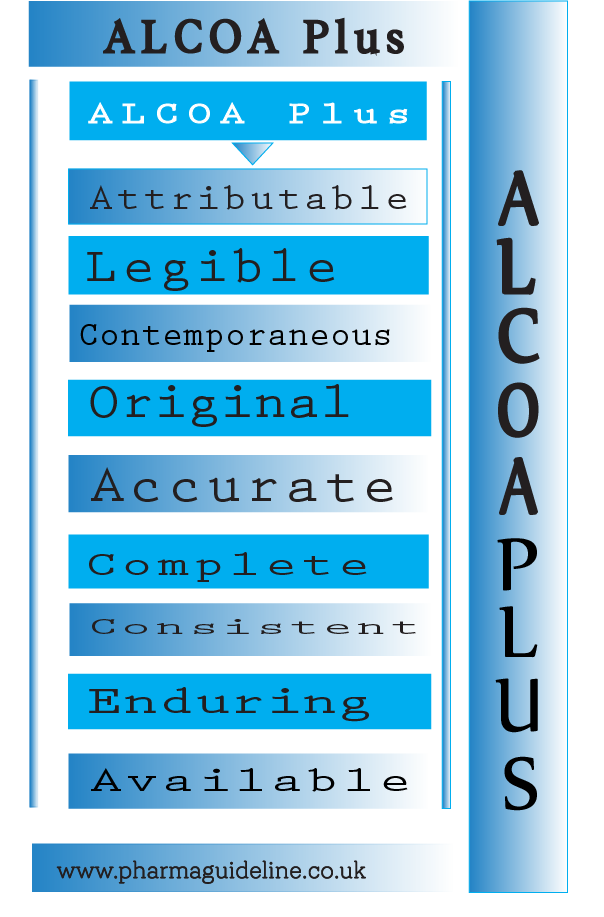
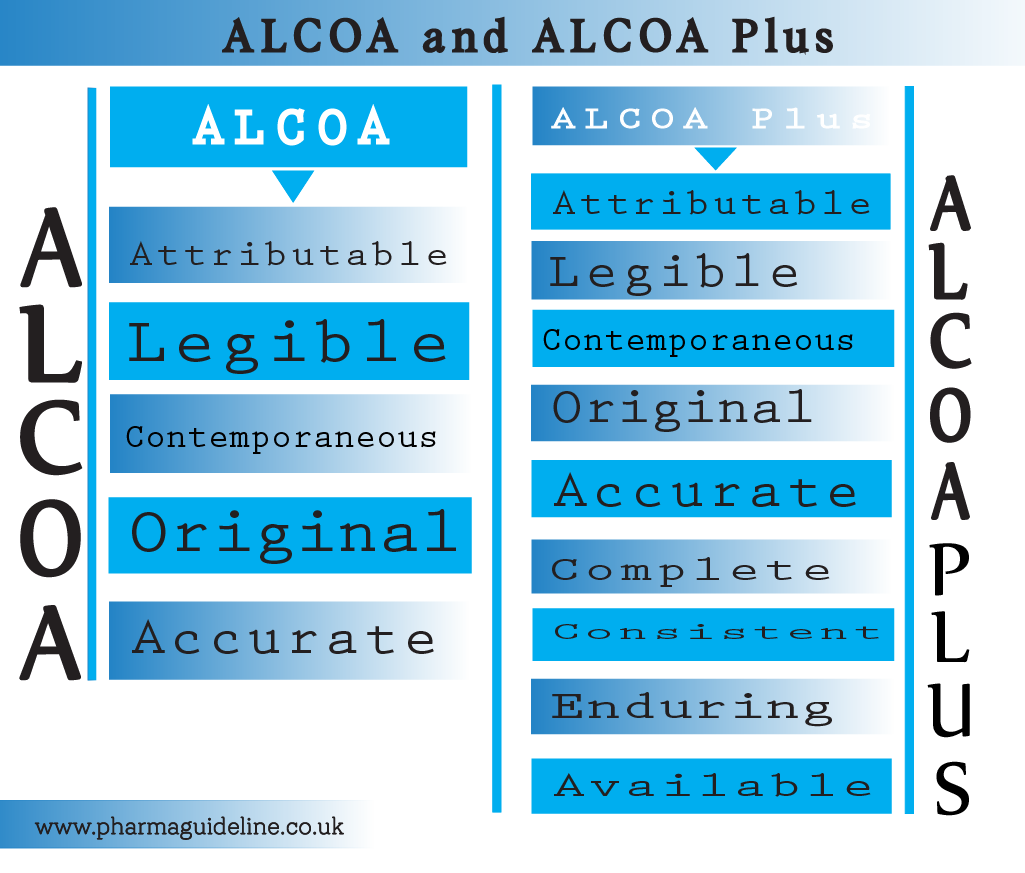
ALCOA is abbreviate form, which indicate Attributable, Legible, Contemporaneous, Original and Accurate. In the period ALCOA, extend to ALCOA Plus[ALCOA+] by addition of Complete, Consistent, Enduring and Available.
In previous time all of the GMP compliance company use ALCOA, now they use ALCOA Plus concept to capture its place the most dependable tool for data security. Most of the GMP oriented company taken the tool for data security and data quality. ALCOA Plus ensure the data security and Integrity. All of the major GMP authority choose ALCOA Plus and implemented their respective directive. ALCOA determine the all-out of data quality. UK MHRA, FRA, TGA, WHO purely involved in data security, quality and data integrity.
The ALCOA and ALCOA Plus concept has been illustrated for better understanding of data related matters.
1. Attributable
Attributable define that the data must be easily traceable, so that anyone can identify that a specific person has collect the data in define time and noted down correctly. To correct any type of error regarding data recording, correction to be made in such way that anyone can read the error data and the corrected data easily. Reason must be noted down with specific signature and date.
Any document subject to data recording must be contains specific field where anyone can note down his/her name then signature and date option. Specific must contains sufficient space so that anyone can record data easily. If any alteration required, put a straight line over the error data then write down the actual data with signature and reason. If space is not available the put an asterisk mask then put another asterisk in a place where sufficient space for signature and reason recording.
2. Legible
Most of document in pharmaceutical company subject to data recording in specific field of a specific document. Entered data must be readable. Data which can be easily readable defined as legible data. Unclear data create confusion to reader and result of a specific test or critical point create unwanted error. The personnel who are responsible to entered data must be trained on GDP [Good Documentation Practice].
Permanent ink or indelible ink to be use to record the data, ball point pen to be use instead of fountain pen. Different color ink to be use to identify the recorded data easily i.e. if the printed document is black color then blue color ink pen can be use to record the data. Similar color ink pen with printed document create delay to identify the specific data.
The input data must be clear and easy to traceable who is responsible to input the data. Data should be entered in such way that no visibility of data subject to misunderstanding to the reader. Anyone who is going to deal with the recorded data must be comfortable with it.
3. Contemporaneous
All the data subject to recoded in document must be recorded on time indicate contemporary data. All data must be entry on the specific field of the document, just after completion of the work with signature and date, if any error occur during data recording then GDP to be follow to correct the issue.
If any correction identified after recording of data in the later date then actual data to be entered data and time with signature on that date. No advance or later data entry is not indicate cGMP culture at your firm. On time data recording is the pre-requisite of the compliance.
A person on the specific date may be absent or leave or fall any unwanted situation, if he fail to entry the data cause serious non-compliance so in time data entry to be ensure. If require, a training session may be conduct to emphasize the importance of contemporary data. Contemporary data culture on the document define that your firm is up to date and ready to face any compliance audit both local and global.
4. Original
To protect the data integrity, the original record must be preserved in such way that it can be preserved till it expiry. Batch document and some documents to be kept additional one year from its product expiry but validation document lasts company life so all type of document preservation may not same. A policy to be develop to preserve the documents and record.
Some document need to duplicate in multiple copy, in this case the creator must ensure the authenticity of the multiple copy with the help of site quality head other that QA documents. A controlled copy seal may be introduce for this issue.
5. Accurate
All data subject to record in the document must be error free. Data can’t be change at any cost. Alteration of data is strictly prohibited. Print out any data create its accuracy, hand written or manually input data, subject to change or alteration. If any facility declare to print out option then manually input data is totally invalid. You must follow the machine print out. To maintain the data quality is the big compliance issue.
Alteration of any digit in manually define the serious discrepancy data quality. It is undesirable to may any digit to next digit or similar digit. Data rounding may be accepted as per USP method but it is not mandatory to follow.
6. Complete
If it’s declare that the data is complete, then it means no alteration, deletion, only original data has been taken from its actual documented time. Incomplete data create haphazard situation to identify the original. Incomplete data recording leads the false result. Data to be record at actual from its predefined time as mention on the document.
If any document declare that you have to record data in 45 minutes interval then you have to record the data at 45 minutes interval not 50 or 60 minutes interval. If you note/record data other than 45 minutes create incomplete/false data. This data is purely incomplete.
7. Consistent
Data must be consistent, chronologically arranged in appropriate time frame. Data should be record in in such way that any audit can rely on it. GDP practice is the best way to record the data. Series of data that is chronologically organized define the data is more consistent and reliable. A reliable data can face any type of GMP audit due to it provides best data integrity.
Most of the pharma company face serious non-compliance at regulatory audit for data integrity. If your firm confirm data integrity then you can create best GMP culture at your firm. To maintain data integrity is the prior conditions of the cGMP.
8. Enduring
All type of material is not suitable for data recording, specific paper to be introduce for specific data recording. Data to be record in such material that it can be traceable after a period of time. Generally long lasting material use for data recording. You should take care about readability of data after a specific period of time based on its impotence.
Usually better quality paper use to record validation related document as its last till company life. Regular uses document like batch production record may be record in general usage paper as its last maximum 3 to 5 years including shelf life plus one year.
Document subject to destruction, proper recording to be marinated as it can be easily teachable. Approval must be taken before proceeded any type of destruction related activities.
9. Available
Data should be kept in a specific place where you can easily find it or it is available as when required. It should be keep in a secure place and access must be limited. List of personnel must be define to access the specific area. Data plays an important role when any organization want to take any decision based on previous history. By this time you have to make it available on that time so you have to keep it in right place. All type of future reference backed by data history so you must pay attention to secure your data.
Form 483, after the application to FDA, the FDA send Inspector to the pharmaceutical pharm to inspect the applicant pharm. After complete the inspection, the inspection team note down their observations and communicate to the pharm for audit response in a specific form. The form used by the FDA inspection team to note down their observations, this official form is known as FDA Form 483[or simply 483].
Concisely, this is actually an official form issued by the FDA [Food and Drug Administration] Inspector not FDA office. The inspection team just issue this form to the firm for audit response just after completion of the auditing process at the site of the firm. This observation is not readily published the FDA website due to this is the preliminary assessment for the respective firm and the inspection team just want the explanation to the firm for their daily activities regarding cGMP compliance.
Sometimes local or international newspaper release the news that a respective company received 483. Almost everybody considered it as bad news for the company. Yes, this is really a bad news for the company when company failed to response positively against 483 then it leads to withhold the production of the site even license cancelled and shutdown of the activities of the firm.
At the time of the inspection of the firm, the FDA Inspector generally seek for cGMP compliance to the firm. All of the significant observations are recorded on the FDA form 483 and measures must take based on this observation. 15 working days are the timeframe to response this observations.
An EIR [Establishment Inspection Report] is always issued just after site audit along with or without FDA Form 483. 483 may be issue or not depend on the culture of cGMP compliance of the firm but FDA inspector must issue an EIR. The EIR must be response within 30 working days.
An EIR consist of the following things:
No Action Indicated (NAI) means that no relevant conditions were found during the site investigation. In practice, this means that the regulator has carefully examined the site and determined that it complies with relevant standards and regulations. For example, if routine inspections of a drug manufacturing facility do not uncover problems that affect product quality or safety, the FDA may issue an NAI rating indicating that no further action is needed.
On the other hand, VAI (Voluntary Action Indicated) means that a situation of minor offense has been discovered that must be resolved voluntarily by the company involved, even if immediate regulatory intervention is not required. For example, if an inspection of a food processing plant reveals minor differences in hygiene standards, regulators may issue a VAI rating and require the company to voluntarily correct the problems.
OAI (Official Action Indicated) is a classification given when an examination reveals a serious and undesirable condition requiring immediate regulatory action. In real-world situations, if a medical device manufacturing facility is found to have significantly deviated from quality standards, regulators may issue an OAI classification and require rapid corrective action to ensure public safety.
After FDA Form 483 is issued, the company’s senior management has 15 business days to respond and provide comments and an action plan. The FDA will then evaluate the proposed plan to determine its acceptability. If the FDA finds serious non-compliance, it can re-inspect the company to ensure that corrective actions were actually implemented. This iterative process ensures compliance with regulatory standards and protects public health.
Effect of FDA Form 483 on NDA or ANDA
During NDA or ANDA CMC reviews, the reviewer requests FDA Field Operations for information on the applicant firm’s compliance status. If a positive response is received, the CMC reviewer proceeds with further actions, expediting the application and leading to a positive approval decision. This process is referred to as PAI (Pre-Approval Inspection).
When evaluating a New Drug Application (NDA) or Abbreviated New Drug Application (ANDA), Chemistry, Manufacturing, and Controls (CMC) investigators work with FDA field operations teams to identify nonconforming or unsatisfactory test results. Agency. In fact, this important step includes a comprehensive evaluation of the manufacturing processes, quality control, and overall regulatory compliance of the pharmaceutical company applying for approval of a new drug.
For example, let’s say XYZ Pharmaceuticals, a pharmaceutical company, submits an ANDA for a generic version of an existing drug. CMC investigators responsible for evaluating the technical and manufacturing aspects of the request will work with FDA field operations to determine whether the XYZ Pharmaceuticals facility has already been inspected. This includes ensuring compliance with Good Manufacturing Practices (GMP) and other regulatory standards.
If the FDA field operations team provides a positive response indicating satisfactory results or compliance from a previous inspection, this clears the way for CMC examiners to proceed with the Pre-Approval inspection (PAI) process. PAI is an important step in which the FDA conducts an on-site inspection of the requesting company’s facility to ensure that its manufacturing processes meet regulatory requirements.
A positive response from the FDA field operations team will expedite the entire NDA or ANDA application process. This acceleration is due to the trust gained from previous positive visits, which in turn contributes to faster decision making. Finally, positive preapproval findings increase the likelihood of a positive approval decision for a drug application and highlight the important role compliance and preapproval records play in the drug regulatory approval process.
How to handling the FDA Form 483?
After completion of the inspection, discus the observation with the FDA Inspectior. If possible resolve the negative issue before leaving the FDA inspector.
Convince the Inspector about any other minor issue to resolve.
Try to understand the attitude of Inspector and know how about your firm.
Repeat the question politely if you are trouble to realize the issue
Try to avoid any confusion regarding audit observations
Try to avoid similar type of observations by consulting with the inspector
Try to response FDA Form 483 within 15 working days
Always be polite with the Inspector and never try to impose any issue.
Avoid any type of conflict with the inspector
All issues must be clarify from the Inspector.
Try to understand their demand regarding the current observations.
Never exhibit over smartness to the Inspector due they are smart enough to handle any situations.
What is Warning Letter?
FDA Form 483 may follow a warning letter for cGMP issues related to product quality and safety. FDA requires prompt response and justification. Failure to do so may result in a ban. Warning letters typically result from serious cGMP violations. More information is posted on the FDA website.
After issuing FDA Form 483, regulators may escalate their response by issuing a warning letter. This is especially true if observations reveal significant Good Manufacturing Practices (cGMP) issues that impact product quality and safety. It is important to note that the FDA has ongoing efforts to maintain product quality standards and prioritize consumer safety. If significant issues are identified, the FDA may issue a warning letter with detailed comments.
To illustrate, imagine that a pharmaceutical company undergoing FDA inspection discovers deviations from established cGMP protocols that affect the quality and safety of a particular drug product. If these deviations are deemed serious, the FDA may issue a warning letter. This formal notice outlines your specific concerns and highlights the need for corrective action to address the issues identified.
It is the responsibility of the affected company to respond to the warning letter and address the concerns raised with a thorough and reasonable response. If additional time is needed to implement corrective actions and respond to observations, companies must submit a request to FDA and provide comprehensive justification for an extension. Failure to respond appropriately to a warning letter can have serious consequences and could lead to litigation that could lead to a product ban or other regulatory action.
The importance of warning letters is associated with serious violations of cGMP and highlights the important role they play in maintaining quality standards in the pharmaceutical and manufacturing industries. Transparency in the regulatory process is evident because both warning letters and FDA Form 483 comments are publicly available on the FDA website. This transparency serves as a tool to increase accountability and keep stakeholders, including the public, informed about regulatory actions taken to address violations and maintain the integrity of the pharmaceutical supply chain.
When is an FDA Form 483 issued?
FDA Form 483 issued after the completion of the inspection to the specific firm to notify the violation of FD&C[Food Drug and Cosmetic] Act & its related acts. Generally, the trained FDA inspectors observed that the Food, Drugs, Device or Cosmetic has been prepared its standard practice, any type of cGMP violations goes to issuance of 483.
FDA Form 483 is issued following completion of an inspection and serves to formally notify a company of violations of the Food, Drug, and Cosmetic (FD&C) Act and related regulations. This important document is typically prepared by trained FDA investigators who carefully examine a company’s manufacturing processes involved in producing food, drugs, devices, or cosmetics.
FDA Form 483 is an important regulatory tool used to address deviations from established standards and practices. These deviations are often related to compliance with current good manufacturing practices (cGMP), which serve as a set of guidelines to ensure the quality, safety and effectiveness of products in industries under FDA jurisdiction.
To illustrate, consider a hypothetical pharmaceutical company that is under FDA investigation. Knowledgeable and professional inspectors inspect various aspects of business operations, from handling raw materials to packaging the final product. If the inspection reveals deviations from cGMP, such as deficiencies in controls, inadequate documentation, or noncompliance with established procedures, FDA inspectors will record these findings on FDA Form 483.
For example, if an inspector finds that a drug manufacturing facility does not maintain a sterile environment when manufacturing injectable drugs, this will be recorded on FDA Form 483. The company is then notified of the violation by issuing the appropriate form. It outlines specific areas of non-compliance and requires the company to immediately correct identified issues.
Although FDA Form 483 is not a formal enforcement action, it is an important tool for reporting deficiencies and encouraging corrective action. We urge companies to voluntarily take corrective action to address identified violations, prevent potential public health risks, and ensure continued compliance with regulatory standards. Typically, companies must respond to the FDA detailing the corrective action they intend to take. The agency may conduct a follow-up investigation to determine the effectiveness of such corrective action.
What is the purpose of an FDA Form 483?
The only purpose of the FDA Form 483 is to notify the firm management about the objectionable conditions and discuss with the objectionable conditions with the senior site management team. FDA always encourage the management to response the form 483 in writing with appropriate action plan and implement the same within due time frame.
The primary purpose of FDA Form 483 is to inform a company’s management of conditions deemed inadequate during an investigation. This form serves as an important communication tool between FDA and field senior management teams and facilitates comprehensive discussion of identified issues. A key aspect of this process is that the FDA requires management to provide a written response to Form 483 with a thoughtful plan of action.
Imagine a pharmaceutical manufacturing facility that is actually inspected by the FDA. If the inspector finds a deviation from regulatory standards, that deviation is documented on Form 483. For example, if there is a defect in the manufacturing process that could affect the quality and safety of the drug, the FDA uses the form to communicate those concerns to management. .
Upon receipt of Form 483, pharmaceutical company executives will meet to discuss any suspicious conditions identified. In response to the form, FDA actively encourages written feedback from management outlining a detailed action plan to address issues raised in the inspection. This written response represents an important step and demonstrates the company’s commitment to address and resolve the concerns raised by the FDA.
For example, management may commit to implement an improved quality management system, review standard operating procedures, or invest in improved equipment to ensure compliance with regulatory standards. Written feedback is not only a means of communication, but also strong evidence of a company’s commitment to quality and compliance.
FDA also emphasizes the importance of timely implementation of the proposed action plan. This highlights the urgent need to immediately address unlawful situations, mitigate potential public health risks and ensure companies meet regulatory expectations. The entire process involves collaboration between the FDA and regulated companies and promotes continuous improvement of manufacturing practices and compliance with regulatory guidelines.
Difference between FDA Form 483 and Warning Letter
FDA Form 483
Warning Letter
A FDA Form 483 is issued just after completion of the applicant site auditing process by FDA Inspector(s)
Warning letter issues after finding of serious cGMP non-compliance
It consists of List of observations found during auditing process.
It consists of List of regulatory significance observations found during auditing process.
It issues by the FDA inspector after completion of the site audit.
It issues from the FDA office based on serious Regulatory non-compliance
A firm may face to FDA Form 483 due to his bad cGMP practice
Warning Letter(s) issues where serious non-cGMP practice done especially regarding product quality
FDA Form 483 response must be complete within 15 working days
Warning Letter response must be complete within 30 working days
FDA Form 483 observations may be deleted at the site upon discuss with FDA Inspector if satisfactory answer may be delivered
A warning letter can’t be refuse/reject/resolve without proper justification
Is the FDA Form 483 list of every possible deviation from law and regulation?
When it comes to FDA inspections, it is important to note that any unknown or questionable observations are carefully documented on FDA Form 483. This form is an important tool during the inspection and contains a complete record of observed conditions that cause concern or require explanation. Importantly, the scope of FDA Form 483 goes beyond listing observations during the inspection.
Specifically, FDA Form 483 captures real-time inspection results as well as suspicious conditions that may be present in the facility but not necessarily observed during the inspection. This comprehensive approach increases transparency and accountability in the inspection process by thoroughly documenting any potential risks or deviations from regulatory standards.
For example, imagine a pharmaceutical manufacturing facility undergoing FDA inspection. Although the inspector may note some deviations from good manufacturing practices during the actual inspection, FDA Form 483 goes beyond these immediate observations. This provides a platform to address and document any concerns or existing conditions that may impact product quality or compliance but were not clearly identified during inspection.
By including a wide range of illegal conditions on FDA Form 483, regulators can work with inspection companies to effectively implement corrective and preventive actions. This approach not only provides a more holistic understanding of the compliance environment, but also drives continuous improvement within regulated sectors.
Simply put, FDA Form 483 is a dynamic and comprehensive document that goes beyond simple real-time observations during an inspection. It serves as a repository for all known and potential criminal situations and provides a thorough and transparent assessment of a facility’s compliance with regulatory standards. This proactive approach ultimately helps improve overall product quality, patient safety, and compliance in the industries being audited.
How is the FDA Form 483 communicate with the company?
After completion of the inspection, the FDA Inspector(s) discussed the factory management in read and discuss until fully understood by the senior management to clarify the objectionable matters.
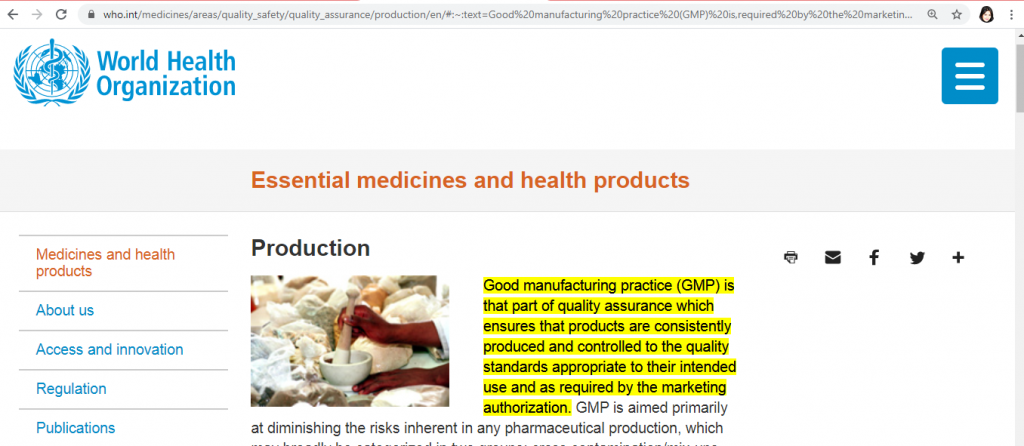
Definition of GMP: “Good manufacturing practice (GMP) is that part of quality assurance which ensures that products are consistently produced and controlled to the quality standards appropriate to their intended use and as required by the marketing authorization.”
Definition of GMP according to US FDA Guideline
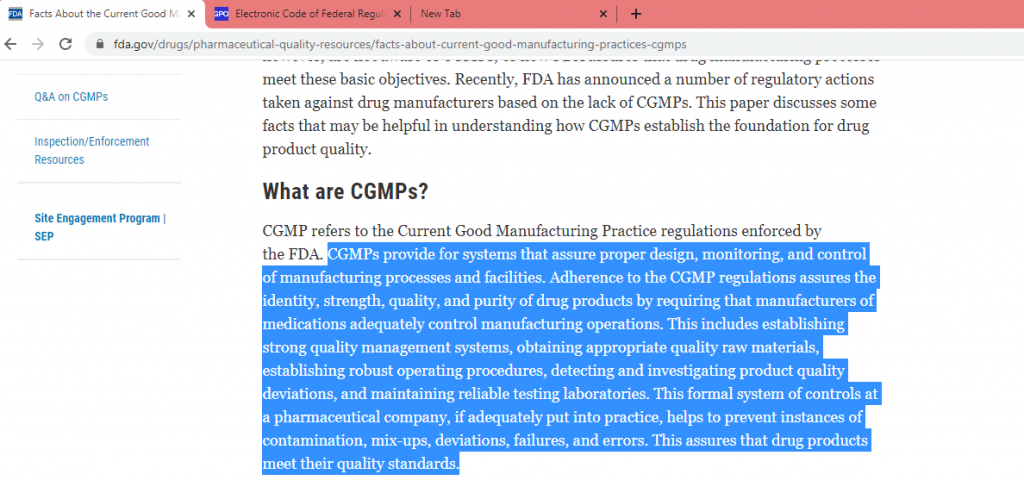
CGMPs provide for systems that assure proper design, monitoring, and control of manufacturing processes and facilities. Adherence to the CGMP regulations assures the identity, strength, quality, and purity of drug products by requiring that manufacturers of medications adequately control manufacturing operations. This includes establishing strong quality management systems, obtaining appropriate quality raw materials, establishing robust operating procedures, detecting and investigating product quality deviations, and maintaining reliable testing laboratories. This formal system of controls at a pharmaceutical company, if adequately put into practice, helps to prevent instances of contamination, mix-ups, deviations, failures, and errors. This assures that drug products meet their quality standards.
Definition of GMP according to TGA Guideline
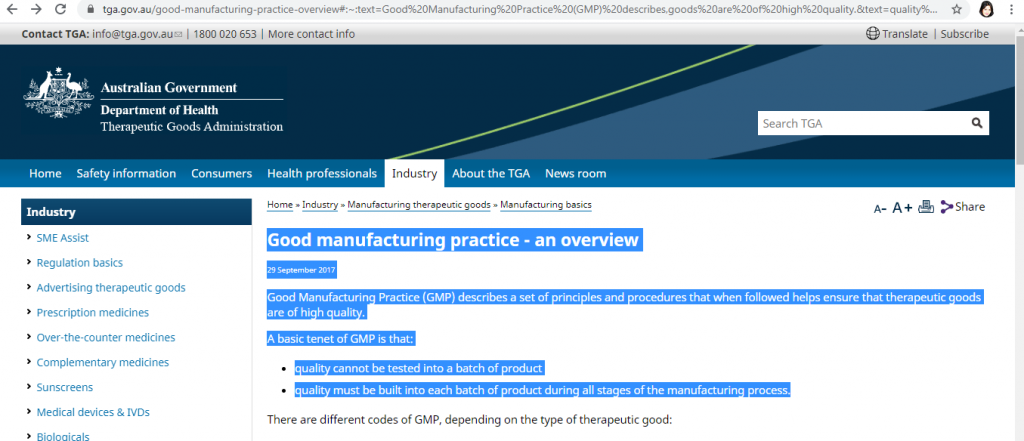
“Good Manufacturing Practice (GMP) describes a set of principles and procedures that when followed helps ensure that therapeutic goods are of high quality. A basic tenet of GMP is that quality cannot be tested into a batch of product. Quality must be built into each batch of product during all stages of the manufacturing process”
Definition of GMP according to UK MHRA guideline
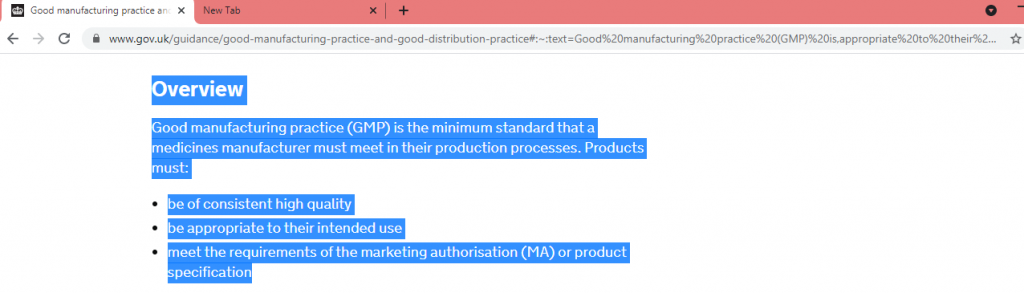
Good manufacturing practice (GMP) is the minimum standard that a medicines manufacturer must meet in their production processes. Products must:
be of consistent high quality
be appropriate to their intended use
meet the requirements of the marketing authorisation (MA) or product specification
According to WHO
“GMP covers all aspects of the manufacturing process: defined manufacturing process; validated critical manufacturing steps; suitable premises, storage, transport; qualified and trained production and quality control personnel; adequate laboratory facilities; approved written procedures and instructions; records to show all steps of defined procedures taken; full traceability of a product through batch processing records and distribution records; and systems for recall and investigation of complaints”.
What is GMP?
Good Manufacturing Practices (GMP) are a set of strict guidelines and principles used by pharmaceutical companies to ensure consistent production of safe, high-quality pharmaceutical products. These guidelines are important to maintain the integrity of manufacturing processes, maintain public health standards, and comply with regulatory requirements from global health authorities such as the U.S. Food and Drug Administration (FDA) or the European Medicines Agency (EMA). ) Europe. Below is a closer look at the key aspects of GMP in the pharmaceutical industry.
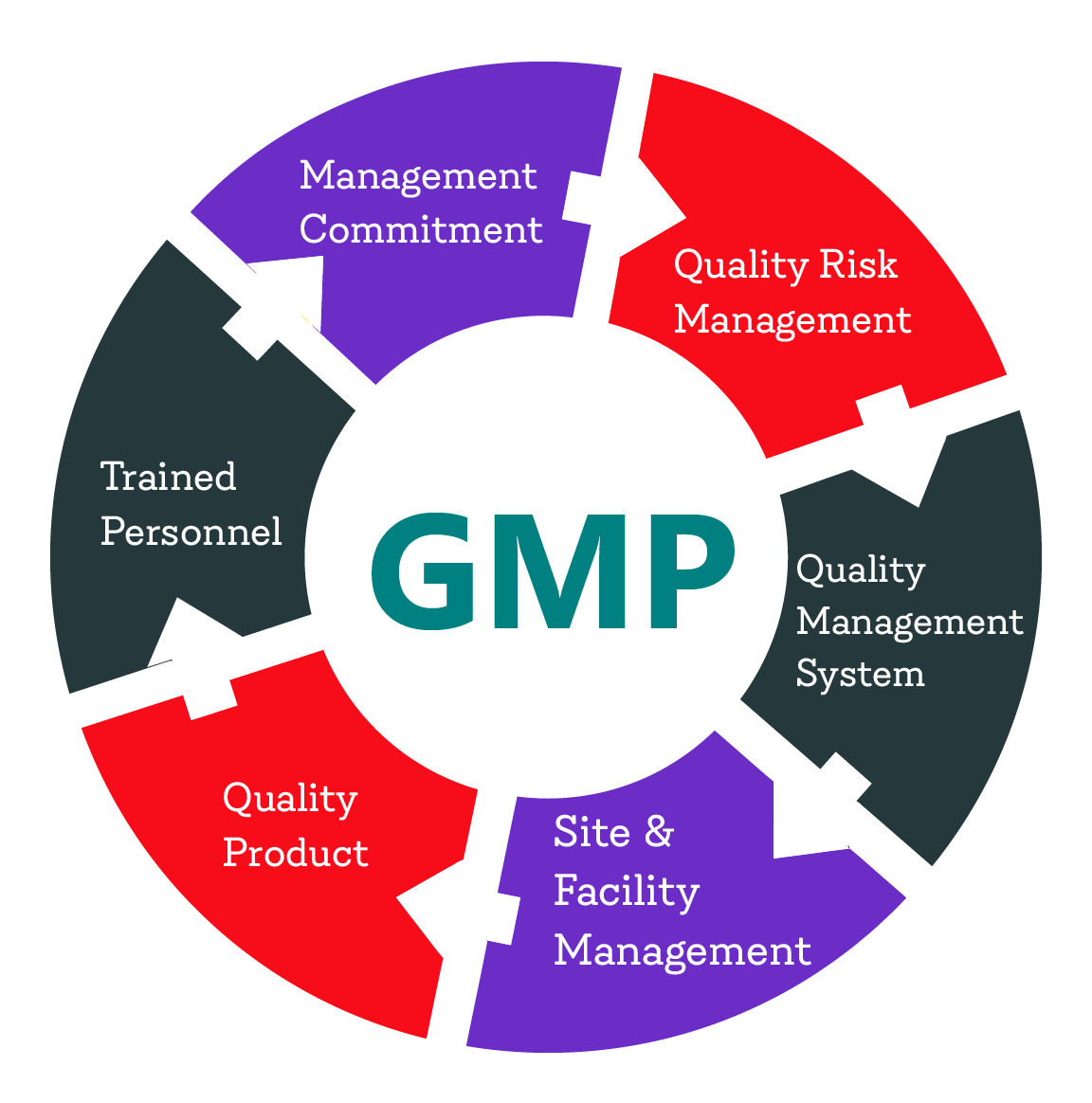
Documents and Records
Quality management system
Staff training
System and device maintenance
Validity and Acceptability
Raw material inspection
Process control
Quality control and testing
Traceability and withdrawal procedures
Documents and Records:
Complete and accurate documentation is critical to GMP. It includes detailed records of manufacturing processes, procedures and results. For example, pharmaceutical companies carefully record every step of the production of a particular drug, from raw material supply to final packaging.
Thorough and accurate documentation of good manufacturing practices (GMP) plays an important role. This involves carefully recording various aspects of production, including processes, procedures, and results. Take the pharmaceutical industry, for example, where pharmaceutical companies take great care to document every critical step in the production of a particular drug.
In compliance with GMP standards, the documentation process begins with detailed records of raw material procurement. Pharmaceutical companies carefully record information about the origin, quality, and quantity of each raw material used in the pharmaceutical manufacturing process. This documentation is not only essential for quality control, but also serves as the basis for traceability and allows the company to identify and correct any problems that arise during the production cycle.
Each step in pharmaceutical manufacturing is accurately documented as the manufacturing process progresses. This includes information about the equipment used, environmental conditions, and deviations from standard procedures. For example, if specific temperatures or pressures are important for a particular production step, these parameters are recorded to ensure consistency and reproducibility.
In addition to manufacturing processes, GMP documents also contain procedures that control various aspects of manufacturing. This includes standard operating procedures (SOPs) for equipment calibration, cleaning protocols, and employee training. Pharmaceutical companies ensure that these procedures are not only fully documented but also regularly updated to reflect improvements or changes in industry regulations.
Outcomes such as product quality and test results are also carefully documented within the GMP framework. Pharmaceutical companies keep detailed records of the quality control tests performed at various stages of manufacturing. This document is an important tool during regulatory investigations and demonstrates the company’s commitment to producing safe and effective medicines.
GMP documentation also extends to final packaging. From the materials used in packaging to the labeling process, every detail is recorded to ensure compliance with regulatory requirements and ensure the safety of end users. This comprehensive document will help you not only comply with regulatory standards, but also improve overall product quality and compliance.
In summary, the importance of complete and accurate documentation in the GMP area cannot be overemphasized. The pharmaceutical industry’s commitment to documenting all aspects of the manufacturing process, from raw material procurement to final packaging, not only ensures regulatory compliance, but also promotes a culture of continuous improvement, quality assurance, and accountability within the industry.
Quality management system
A robust quality control system is implemented to monitor all aspects of manufacturing, testing and quality control. This involves creating and maintaining processes to consistently produce pharmaceutical products that meet predetermined quality standards.
Establishing and maintaining a strong quality management system plays a critical role in ensuring complete oversight of all aspects of the manufacturing, analytical and quality control processes in the pharmaceutical industry. This system has been carefully designed to create a facility that consistently produces pharmaceutical products that meet stringent predetermined quality standards.
To better understand the importance of these systems, let us consider a real-world example from a pharmaceutical manufacturing plant. The introduction of a quality management system involves careful documentation and standardization of production processes. This includes everything from raw material collection and storage to the actual manufacturing process.
For example, if you produce life-saving pharmaceuticals, your quality management system establishes clear protocols for sourcing and verifying raw materials. This may include rigorous testing and certification processes to ensure the purity and integrity of ingredients used in pharmaceutical formulations.
Once the manufacturing process begins, quality control systems monitor each step to ensure compliance with predetermined standards. This may include real-time data monitoring, automated quality checks, and routine inspections to identify and address deviations from established protocols.
Testing is another important step and a quality management system ensures that rigorous testing procedures are implemented. This may include a variety of analytical techniques, such as chromatography or mass spectrometry, to test the structure and efficacy of the drug. The system also monitors environmental conditions such as temperature and humidity to ensure the stability and functionality of the final product.
Quality control measures within the system go beyond manufacturing and include aspects such as packaging and labeling. For example, in the pharmaceutical manufacturing case, quality control systems enforce standards for proper labeling, tamper-evident packaging, and verification of expiration dates to protect end users.
Regular audits and reviews are an essential part of this system. This allows you to continuously evaluate performance and identify areas for continuous improvement. By implementing a strong quality management system, pharmaceutical companies not only comply with regulatory requirements, but also build trust among consumers, healthcare professionals, and regulators regarding the safety and effectiveness of their products.
Staff training
GMP requires that all employees involved in the manufacturing process receive extensive training. This ensures that employees are fully familiar with the processes and requirements associated with their role. For example, people working in quality control must be trained to perform accurate and reliable testing on pharmaceutical products.
Compliance with Good Manufacturing Practices (GMP) requires in-depth training for all employees involved in the production process and emphasizes the importance of ensuring high levels of employee efficiency and performance. This rigorous training program aims to provide employees with a deep understanding of the specific procedures and requirements associated with their respective roles within a manufacturing facility.
For example, quality control personnel play a key role in ensuring compliance with GMP standards. Our extensive training program provides these individuals with the skills and knowledge necessary to perform accurate and reliable pharmaceutical testing. This includes training in the use of state-of-the-art testing equipment, adherence to established testing protocols, and the ability to accurately interpret and analyze test results.
The training not only covers technical aspects, but also emphasizes the importance of a strong awareness of quality standards and compliance. This comprehensive approach ensures that quality control personnel not only perform their duties properly, but also understand the broader context of GMP regulations and their role in ensuring the overall quality and safety of pharmaceutical products.
Additionally, GMP training goes beyond specific job functions to include broader concepts such as sanitation, documentation practices, and safety protocols. For example, production workers are trained in proper dressing procedures and hygiene practices to prevent contamination during manufacturing. Training programs may also include modules on documentation standards to ensure accurate records of all manufacturing activities, which are important for traceability and compliance.
By investing in extensive training, companies not only meet legal requirements, but also instill a culture of excellence and responsibility in their employees. In turn, this contributes to the overall reliability and integrity of the manufacturing process and ultimately promotes the quality and safety of the medicines delivered to consumers.
System and device maintenance
Regular maintenance of plant and equipment is essential to prevent contamination and maintain the accuracy of manufacturing processes. A practical example is planning regular inspection and maintenance of pharmaceutical manufacturing equipment to prevent defects that could affect product quality.
Regular maintenance of plant and equipment is essential to prevent contamination and maintain the accuracy of production processes. A prime example of this need is strategic planning for regular inspection and maintenance of machinery used in pharmaceutical manufacturing. Implementing a proactive maintenance approach allows you to quickly identify and resolve potential defects that could compromise the quality of the final product.
In the pharmaceutical industry, where precision and purity are top priorities, continuous operation of special equipment is very important. A regular maintenance routine, including thorough inspection and maintenance, becomes an essential part of a strong quality assurance system. For example, in pharmaceutical manufacturing plants, complex machinery such as tablet presses, mixers, and encapsulation machines must be inspected regularly to ensure they are operating within set parameters.
A practical example of the importance of regular maintenance can be seen through the example of a tablet press used to produce pharmaceutical tablets. Regular inspections include a complete inspection of machine components such as: B. Tools, pressure rollers and feeding systems. Maintenance activities include lubrication, calibration, and replacement of worn parts.
Following a proactive maintenance plan can help you identify potential problems early, such as wear, deformation or risk of contamination. Resolving these issues in a timely manner helps prevent unexpected errors and reduce downtime in the manufacturing process. This not only ensures consistent quality of medicines, but also contributes to operational efficiency and cost-effectiveness.
In essence, proactive maintenance of plant and equipment, including through regular inspections and maintenance, plays a key role in the pharmaceutical manufacturing process. This approach not only protects against contamination, but also ensures the precision needed to maintain the highest product quality in industries where reliability and compliance are paramount.
Validity and Acceptability
GMP requires verification and qualification of equipment, processes and systems to ensure efficiency and consistency. For example, pharmaceutical companies can ensure that a particular manufacturing process consistently produces drugs that meet required specifications.
Good Manufacturing Practices (GMP) require a thorough verification and qualification process of equipment, processes and systems to ensure efficiency and consistency. These rigorous verifications ensure that our manufacturing operations meet established standards and consistently deliver high-quality products.
For example, consider a pharmaceutical company that produces drugs. By adhering to GMP principles, the company will control preventive measures in certain manufacturing processes. This validation process includes extensive testing and analysis to ensure that the manufacturing process consistently produces medicines that meet regulatory authorities’ rigorous specifications and quality standards.
During this validation process, pharmaceutical companies carefully evaluate various parameters such as raw material specifications, device performance, environmental conditions, and process controls. The goal is to provide evidence and documentation that the manufacturing process consistently produces a drug with the desired properties, ensuring safety, efficacy, and quality of the final product.
Moreover, this verification process is more than an isolated event. It is a constant effort to continuously improve. Regular assessments, redesigns and updates ensure good processes remain effective and aligned with evolving industry standards. This proactive approach not only ensures GMP compliance, but also increases the overall efficiency and reliability of pharmaceutical manufacturing, helping to deliver safe and effective medicines to consumers.
Raw material inspection
We apply rigorous procedures to check and test our raw materials to ensure they meet our quality specifications. In fact, pharmaceutical manufacturers can test the purity, potency, and other relevant characteristics of incoming raw materials before incorporating them into the manufacturing process. Strict protocols are in place to control and test raw materials to ensure stringent quality specifications are met. A great example of this delicate process can be seen in the pharmaceutical industry, where manufacturers carefully test incoming raw materials for a variety of important characteristics such as purity and potency. These raw materials undergo extensive testing to ensure they meet the highest standards before being incorporated into the manufacturing process.
Implementing robust testing procedures in pharmaceutical manufacturing requires evaluating raw materials against predetermined criteria to ensure quality and suitability for use. For example, pharmaceutical companies may use advanced analytical techniques such as chromatography or spectroscopy to analyze the purity of compounds in their raw materials. This ensures that the ingredients meet the required specifications and do not contain impurities that could compromise the safety and functionality of the final product.
Moreover, efficacy testing is an important aspect of the evaluation process, especially for drugs where precise dosing is important for therapeutic efficacy. Manufacturers can accurately measure the active ingredients in their raw materials using sophisticated methods such as high-performance liquid chromatography (HPLC) or mass spectrometry.
In addition to assessing purity and potency, other relevant characteristics such as particle size, moisture content, and microbial contamination can also be examined in depth. This multi-layered approach ensures a complete evaluation of raw materials and does not allow for any compromise in the quality of the final drug product.
By implementing these rigorous testing procedures, pharmaceutical manufacturers not only comply with legal requirements, but also emphasize the production of safe, high-quality drugs. Effective control and analysis systems are essential to ensure that raw materials used in the pharmaceutical industry meet the high standards required to develop reliable and effective medical solutions.
Process control
GMP emphasizes implementing controls at various stages of the manufacturing process to ensure consistency and quality. This may involve monitoring critical process parameters in real time to immediately detect and correct deviations. Good manufacturing practices (GMP) place great importance on the careful application of stringent controls throughout the manufacturing process to ensure consistency and high quality of the final product. This comprehensive approach includes continuous real-time monitoring of critical process parameters, allowing deviations from set values to be immediately detected and corrected.
For example, in the pharmaceutical industry, GMP compliance is essential to ensure safe and effective drug production. Various critical parameters such as drug preparation time, temperature, pressure, and chemical concentration are monitored in real time. If any of these parameters fall outside the specified range, the automated system will raise an alert so operators can take immediate action to correct the problem. This proactive monitoring and timely corrective action not only ensures product quality, but also contributes to the overall safety and efficacy of medicines that reach consumers.
In the context of food manufacturing, GMP practices include monitoring issues such as hygiene, temperature, and ingredient ratios. For example, in packaged food production, strict control measures are implemented to maintain hygiene standards at all stages of the production process. Automatic sensors continuously monitor cleaning and, if there are any deviations, initiate an automatic cleaning process to ensure that the end product meets the highest quality and safety standards.
The application of GMP principles extends beyond the pharmaceutical and food industries to a variety of industries, including electronics, cosmetics, and automobile manufacturing. In any case, real-time monitoring of critical parameters and prompt corrective action demonstrates commitment to GMP and ensures consistent production of high-quality products across a variety of industries.
Quality control and testing
Intermediate and final products undergo rigorous quality control and testing to ensure they meet specified specifications. This includes extensive testing for aspects such as purity, stability and dissolution rate.
Extensive testing and quality control procedures are systematically implemented throughout the manufacturing process, covering both intermediate and final products. The main purpose is to ensure that these products meet strict quality standards by ensuring that they meet specific specifications. Our testing program is comprehensive and focuses on critical factors such as purity, stability, and dissolution rate that are critical to the overall quality and effectiveness of the end result.
For example, in pharmaceutical manufacturing, intermediate products undergo rigorous testing to assess their chemical purity and ensure that they meet the required pharmacological standards. Stability testing determines a product’s resistance to various environmental conditions, ensuring its effectiveness throughout its shelf life. Additionally, dissolution rate testing is very important, especially for oral drugs. This is because it directly influences treatment results by assessing the amount and speed at which active ingredients are released into the body.
In the electronics industry, strict quality control is applied to final products such as smartphones. Purity testing of electronic components ensures that they meet specified standards, preventing defects or performance issues. Reliability testing is essential to ensure that devices can withstand a variety of environmental conditions without performance degradation. Additionally, testing battery discharge rates ensures consistent and stable power delivery over time, improving the overall reliability of the product.
These examples demonstrate how rigorous quality control and testing processes are essential in a variety of industries to ensure that intermediate and final products always meet specified specifications and ultimately increase customer satisfaction and product reliability.
Traceability and withdrawal procedures
GMP requires the establishment of a traceability system to track and recall products in case of quality issues or regulatory violations. Real-world examples include implementing a barcode system to easily identify and recall products in the event of a recall.
Compliance with GMP in the pharmaceutical industry is not only a regulatory requirement, but also a critical factor in protecting public health and maintaining the reputation of pharmaceutical companies. Practical implementation of GMP principles allows careful control of all stages of pharmaceutical production to produce safe and consistently high-quality products.
Good Manufacturing Practices (GMP) mandate the creation of a robust traceability system to monitor and recover products if quality issues occur or deviations from compliance standards occur. A specific example of this need is the integration of advanced barcoding systems into pharmaceutical production processes. This implementation allows for seamless product identification and recovery in recall situations and increases the efficiency and accuracy of the overall process.
Imagine a pharmaceutical company that diligently applies GMP principles to its operations. The company uses cutting-edge barcode technology as part of its tracking system. Each product is assigned a unique barcode, linked to extensive data about production details, ingredients and quality control systems. If there is a quality or non-compliance issue, these barcodes are essential to quickly identify and isolate affected batches.
To delve deeper into the practical significance, imagine a situation where a particular batch of medicine is suspected to be out of quality standards. GMP-compliant tracking systems allow companies to quickly identify affected products by scanning barcodes, allowing batches to be quickly removed from distribution channels, preventing potential loss to customers. Detailed data associated with the barcode can help you find the root cause of the problem and implement corrective actions to prevent the problem from recurring.
In essence, GMP compliance in the pharmaceutical industry goes beyond regulatory obligations. This is proving to be an important factor in maintaining public health and strengthening the reputation of pharmaceutical companies. Practical implementation of GMP principles, such as the use of advanced tracking systems such as barcodes, implies a commitment to strict control at all stages of the production process. These efforts result in the production of safe, consistent, high-quality medicines that not only ensure regulatory compliance but, more importantly, increase consumer trust and maintain the integrity of the industry.