What are the strongest OTC pain relievers?
When pain strikes, millions of Americans reach for over-the-counter (OTC) medications for relief. Whether you’re dealing with a throbbing headache, sore muscles, or joint inflammation, understanding which pain relievers pack the most punch can help you manage discomfort more effectively. This comprehensive guide examines the strongest OTC pain relievers available today, comparing their effectiveness, appropriate uses, and potential side effects to help you make informed decisions about pain management.
Understanding OTC Pain Medication Categories
Pain relievers available without prescription generally fall into two main categories: nonsteroidal anti-inflammatory drugs (NSAIDs) and acetaminophen. These medications work through different mechanisms in the body, making them suitable for various types of pain and health conditions. NSAIDs include familiar names like ibuprofen (Advil, Motrin), naproxen sodium (Aleve), and aspirin (Bayer, Bufferin). These medications block chemicals called prostaglandins that cause inflammation and pain from headaches, menstrual cramps, arthritis, and muscle strains. Acetaminophen (Tylenol), on the other hand, works differently by affecting pain signals in the central nervous system without providing significant anti-inflammatory benefits. Understanding these fundamental differences is crucial for selecting the most appropriate medication for your specific pain needs.
The effectiveness of pain relievers varies significantly depending on the nature of your discomfort. While many people tend to stick with familiar brands, the underlying active ingredients and their mechanisms determine which medication might provide the strongest relief for your particular condition. For inflammation-related pain such as arthritis, muscle strains, or menstrual cramps, NSAIDs generally offer more potent relief due to their anti-inflammatory properties. Conversely, for general pain without significant inflammation, acetaminophen might provide sufficient relief with potentially fewer side effects, especially for those with certain health conditions that make NSAIDs riskier to use.
NSAIDs: The Strongest Anti-Inflammatory Options
Among OTC pain relievers, NSAIDs are widely recognized as the most potent options for addressing both pain and inflammation. These medications function by reducing the body’s production of prostaglandins, which are lipids with hormone-like properties that play a key role in inflammation and pain perception. This dual action makes NSAIDs particularly effective for conditions where inflammation contributes significantly to discomfort, such as arthritis, tendonitis, and sports injuries. Many healthcare professionals consider NSAIDs to be the best pain relief medications available without prescription, especially for pain involving inflammation and swelling.
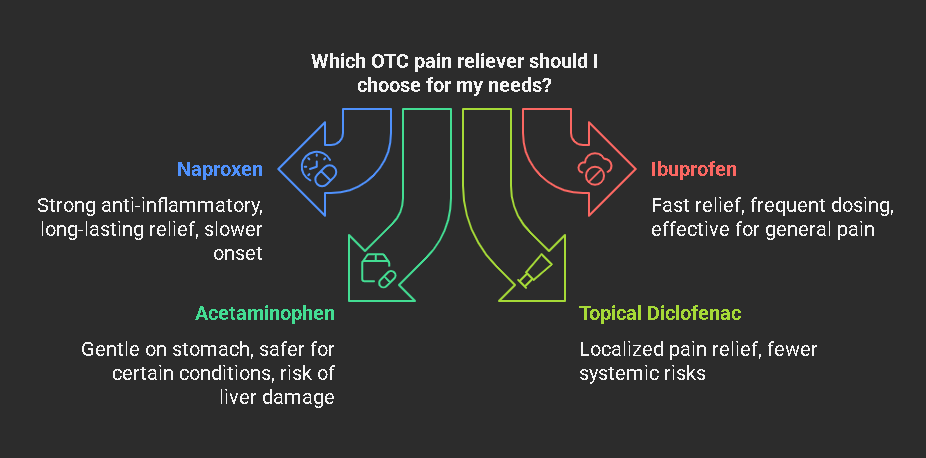
Naproxen sodium (Aleve) is considered by many experts to be the strongest anti-inflammatory medication available over the counter. Its extended duration of action represents a significant advantage, allowing for less frequent dosing compared to other NSAIDs. While ibuprofen typically requires dosing every 4-6 hours, naproxen sodium provides relief for 8-12 hours, making it particularly convenient for managing persistent or chronic pain conditions. This extended relief can improve treatment adherence and provide more consistent pain management throughout the day and night. However, naproxen’s longer-lasting effect comes with a trade-off – it may take longer to reach maximum pain relief (up to 4 hours) compared to faster-acting options like ibuprofen, which typically begins working within 30 minutes and reaches peak effectiveness in 1-2 hours.
Comparing Potency: Naproxen vs. Ibuprofen
When evaluating the strongest OTC pain relievers, naproxen and ibuprofen frequently emerge as top contenders. While both effectively target pain and inflammation, they differ in several important ways that may influence which is most appropriate for specific situations. Naproxen’s longer duration of action represents its primary advantage over ibuprofen. A single dose of naproxen can provide relief for 8-12 hours, making it particularly useful for overnight pain management or for those who cannot take medication frequently throughout the day. This extended relief comes from naproxen’s slower metabolism in the body, allowing it to remain active longer than faster-clearing alternatives.
Ibuprofen, while requiring more frequent dosing, offers the advantage of faster onset of action. It begins working within 30 minutes of ingestion, with maximum pain relief typically achieved within 1-2 hours. This makes ibuprofen potentially more suitable for acute pain situations where rapid relief is desired. The maximum daily OTC ibuprofen dose is typically 1,200 mg, while naproxen is limited to 660 mg per day unless otherwise directed by a healthcare professional. These dosing differences reflect the relative potency of these medications, with naproxen generally considered stronger on a milligram-per-milligram basis. Both medications share similar side effect profiles typical of NSAIDs, including potential for stomach upset, heartburn, dizziness, and more serious risks like kidney damage and cardiovascular effects with long-term use.
Acetaminophen: A Different Approach to Pain Relief
Acetaminophen (Tylenol) represents an alternative approach to pain management that works differently from NSAIDs. While not considered an anti-inflammatory medication, acetaminophen effectively reduces pain and fever by influencing pain signals within the central nervous system. This different mechanism of action makes acetaminophen considerably gentler on the stomach compared to NSAIDs, positioning it as a valuable option for individuals who cannot tolerate the gastrointestinal effects of anti-inflammatory medications. Additionally, acetaminophen presents fewer risks for those with certain health conditions that might be exacerbated by NSAIDs, such as heart disease or kidney problems.
The trade-off for acetaminophen’s gentler profile is its limited effectiveness against inflammation. For conditions where swelling and inflammation are significant contributors to pain – such as arthritis, sprains, or other inflammatory conditions – acetaminophen typically provides less relief than NSAIDs. However, for general pain relief and fever reduction, acetaminophen remains highly effective and is considered one of the safest OTC pain relievers available when used as directed. This makes it particularly valuable for older adults (over 65), who are generally advised against daily NSAID use due to increased risks of side effects. The relative safety profile of acetaminophen, when taken correctly, has positioned it as a first-line recommendation for many healthcare providers, especially for ongoing pain management needs where the anti-inflammatory benefits of NSAIDs are not essential.
Specialized OTC Pain Relief Options
Beyond the standard oral NSAIDs and acetaminophen, several specialized OTC pain relievers offer targeted approaches for specific conditions. Diclofenac gel (Voltaren Arthritis Pain), available over the counter since 2020, provides localized relief when applied directly to painful joints. This topical NSAID delivers medication directly to the site of discomfort while minimizing systemic absorption, resulting in fewer body-wide side effects compared to oral NSAIDs1. The targeted nature of diclofenac gel makes it particularly valuable for arthritis pain in specific joints, allowing for effective relief with reduced risk of gastrointestinal, kidney, or cardiovascular side effects that can occur with oral anti-inflammatory medications.
Combination products like Alka-Seltzer represent another specialized approach to pain relief. These products contain aspirin (an NSAID) along with antacid ingredients like sodium bicarbonate and citric acid. This formulation addresses pain while simultaneously neutralizing stomach acid, potentially making it more tolerable for those who experience digestive discomfort with traditional NSAIDs. However, it’s important to note that these combination products come with their own considerations – the sodium content from sodium bicarbonate may be problematic for individuals with heart failure or kidney problems, and the aspirin component carries blood-thinning effects that may increase bleeding risk. Other specialized options include various topical products containing ingredients like lidocaine, capsaicin, menthol, or methyl salicylate, which can provide localized relief for muscle and joint pain through different mechanisms including numbing, warming, or cooling sensations.
Safety Considerations and Potential Risks
Despite their availability without prescription, OTC pain relievers can be potent medications with significant side effects when misused or taken by individuals with certain health conditions. NSAIDs carry risks of gastrointestinal problems including stomach upset, heartburn, and potentially more serious issues like bleeding or ulcers with prolonged use1. More concerning are the potential risks of kidney damage, cardiovascular problems including heart attack and stroke, and interactions with blood thinners and other medications. These risks increase with higher doses and longer duration of use, particularly in older adults, those with existing kidney or heart conditions, and individuals taking multiple medications.
Acetaminophen, while generally safer for the stomach, carries its own significant risk: liver damage when taken in excessive amounts or combined with alcohol. The narrow margin between therapeutic and toxic doses makes acetaminophen overdose a leading cause of acute liver failure. Even at recommended doses, acetaminophen can cause liver problems in individuals who regularly consume alcohol or have existing liver disease. Understanding these risks underscores the importance of using OTC pain relievers exactly as directed and consulting with healthcare providers before beginning regular use, particularly for individuals with pre-existing health conditions. As Dr. Christopher Gilligan, a pain medicine physician with Harvard-affiliated Brigham and Women’s Hospital notes, “OTC pain relievers can be fairly potent medicine and help reduce most inflammation and pain, but people may not think of them as real medicine and so don’t always use them as directed. This can lead to serious problems”.
Choosing the Right Pain Reliever for Your Needs
Selecting the most appropriate OTC pain reliever depends on several factors including the type and source of pain, your individual health profile, and personal considerations like medication tolerance and lifestyle factors. For pain accompanied by significant inflammation, such as arthritis, tendonitis, or injuries involving swelling, NSAIDs like naproxen or ibuprofen typically provide stronger relief due to their anti-inflammatory properties. Naproxen may be particularly beneficial for persistent pain requiring less frequent dosing, while ibuprofen might be preferred for acute pain where faster onset is desired. However, individuals with kidney disease, heart conditions, or those taking blood thinners should exercise caution with NSAIDs and consult healthcare providers before use.
For those who need to avoid NSAIDs due to health concerns or medication interactions, acetaminophen offers an effective alternative for many types of pain, particularly when inflammation is not a primary factor. Its gentler profile on the stomach and kidneys makes it suitable for older adults and individuals with certain chronic conditions that might be exacerbated by NSAIDs. The choice between different pain relievers should also consider practical factors like timing and duration – for overnight pain relief, longer-acting naproxen might be more appropriate, while daytime pain that requires quick relief might be better addressed with faster-acting ibuprofen. For localized joint or muscle pain, topical options like diclofenac gel may provide targeted relief with reduced risk of systemic side effects. Ultimately, consulting with healthcare providers about your specific situation can help ensure you select the strongest and safest pain reliever for your individual needs.
Emerging Research and Alternative Approaches
Recent research has challenged conventional wisdom about pain management, suggesting that OTC pain relievers may be more effective than previously thought compared to prescription options. Some studies have found that combinations of OTC medications, such as acetaminophen and ibuprofen taken together, can provide pain relief comparable to or even better than opioids for certain conditions. One study found that taking acetaminophen and ibuprofen together provided greater pain relief than opioids after tooth extraction, while other research demonstrated that OTC pain relievers were as effective as opioids for treating sciatica pain. These findings are particularly significant given the ongoing opioid crisis and growing concerns about prescription pain medication dependence.
Beyond medication-based approaches, comprehensive pain management increasingly incorporates complementary strategies that may enhance the effectiveness of OTC pain relievers while potentially reducing the need for higher doses. These include physical therapy, targeted exercise programs, heat and cold therapy, massage, and mind-body practices like meditation and relaxation techniques. For individuals with chronic pain conditions, a multimodal approach often provides better outcomes than reliance on medication alone. Additionally, addressing underlying factors that contribute to pain – such as poor ergonomics, repetitive strain, or inadequate sleep – can significantly impact pain levels and potentially reduce dependence on pain relievers. When used as part of a holistic approach to pain management and with appropriate medical guidance, OTC pain relievers can effectively address discomfort while minimizing risks associated with stronger prescription alternatives.
When it comes to identifying the strongest OTC pain relievers, naproxen (Aleve) is generally considered the most potent anti-inflammatory option available without prescription. Its longer duration of action and strong anti-inflammatory properties make it particularly valuable for persistent pain with inflammatory components. However, the “strongest” pain reliever ultimately depends on individual factors including the nature of your pain, your health profile, and specific needs regarding onset and duration of relief. Ibuprofen offers faster action, acetaminophen provides gentler effects for those with certain health conditions, and specialized products like diclofenac gel deliver targeted relief for specific applications.
Despite their availability without prescription, these medications carry significant risks when misused or taken by individuals with certain health conditions. Using OTC pain relievers safely requires understanding their appropriate uses, adhering to recommended dosages, and recognizing when to consult healthcare providers about pain that persists or worsens. For many types of pain, OTC options provide effective relief without the risks associated with stronger prescription medications. As research continues to evolve, the role of these accessible pain management tools remains crucial in helping individuals address discomfort safely while maintaining quality of life and daily function. Before starting any pain management regimen, even with OTC medications, consulting with healthcare providers can help ensure you select the most appropriate and effective options for your specific situation.
What are the strongest OTC pain relievers? Read More »