GMP

Essential GMP Principles for Pharma Industry Professionals

Dr. Michael Lee

CA, USA


Introduction

Medicines are unlike most products people buy. Patients cannot see, taste, or test a tablet or injection to know whether it is safe and effective. They trust that the product contains the right ingredient, in the right amount, free from harmful contaminants, every time. Good Manufacturing Practice (GMP) is the system that earns and protects that trust.

GMP is the part of quality assurance that ensures medicinal products are consistently produced and controlled to the quality standards appropriate for their intended use. It is not a single procedure or a checklist for inspectors. It is a way of working that applies to everyone, from the operator weighing raw materials to the senior manager approving a budget.

This article outlines the essential GMP principles every pharmaceutical professional should understand, why each matters, and how to apply them in daily work.


1. Why GMP Exists

GMP regulations grew out of tragedies. Contaminated and poorly made medicines have harmed and killed patients throughout the twentieth century, and each major incident pushed regulators to tighten the rules. The Elixir Sulfanilamide poisoning in the United States in 1937, the thalidomide disaster of the early 1960s, and later contamination events involving sterile products and diethylene glycol in liquid medicines all shaped modern requirements.

The lesson from this history is that quality cannot be tested into a product. Final testing examines only a small sample and can miss problems that are unevenly distributed in a batch. Quality must be built in through controlled materials, validated processes, qualified equipment, trained people, and reliable records. GMP provides the framework for doing exactly that.


2. The Foundation: Pharmaceutical Quality System and Quality Management

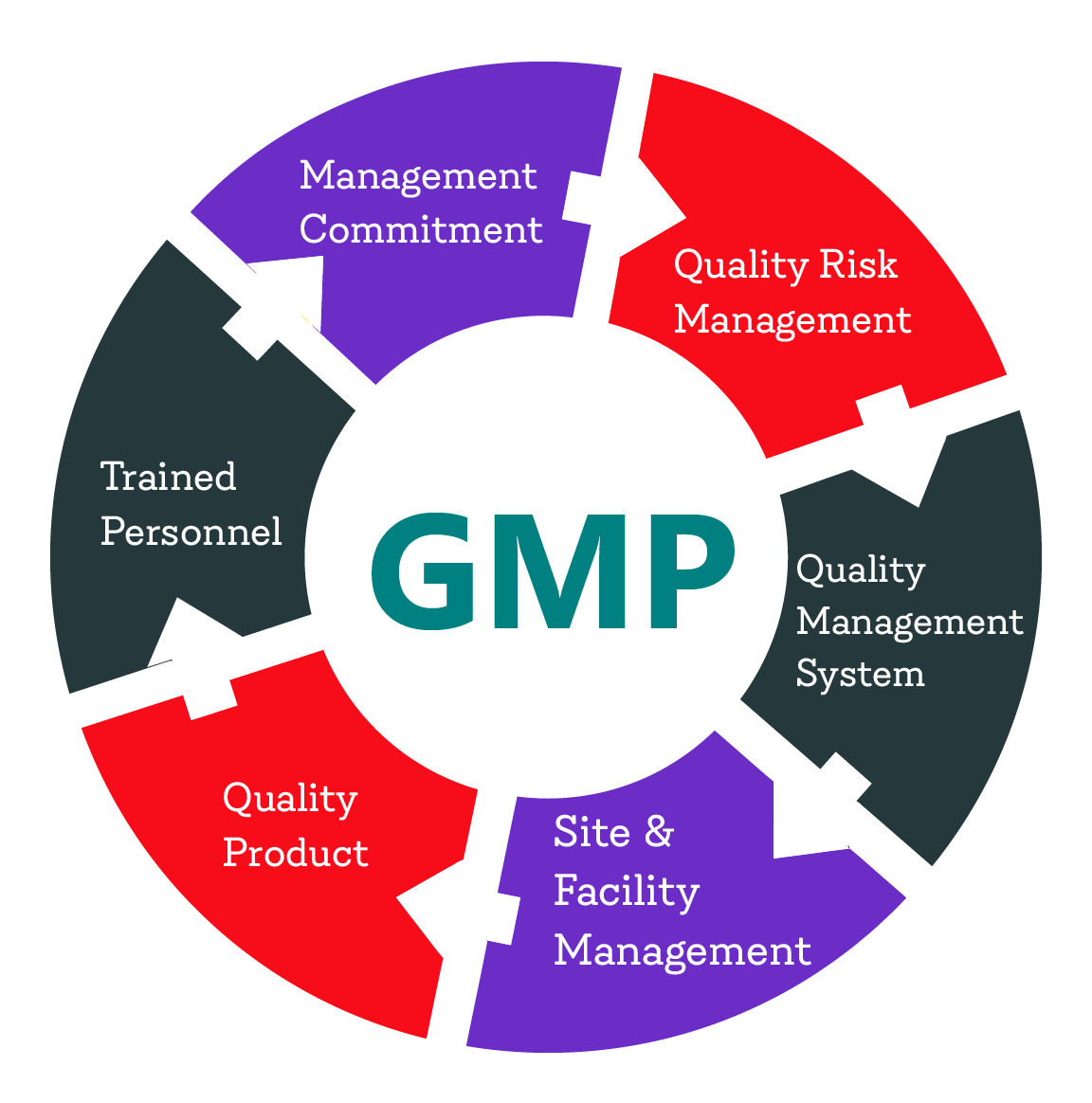
GMP operates inside a broader Pharmaceutical Quality System (PQS), described in ICH Q10. The PQS defines how the organization manages quality: through leadership commitment, clear responsibilities, documented procedures, and continual improvement.

Core expectations include:

  • Management responsibility. Senior leaders must provide the resources, structure, and support for compliance, and they remain accountable for it.
  • An independent quality unit. The quality function must have the authority to approve or reject materials, batches, and procedures without pressure from production or commercial teams.
  • Risk-based decision-making. Resources and controls are directed to where the risk to patients is highest.
  • Continual improvement. Deviations, complaints, audit findings, and trends feed back into better processes.

Without this foundation, individual GMP practices tend to become isolated rules followed inconsistently.


3. Personnel: Training, Hygiene, and Responsibility

People are the most important and the most variable element in any manufacturing process. GMP therefore sets clear expectations for them.

Qualified and Trained Staff

Every facility needs enough qualified personnel to perform the work correctly. Employees should have defined roles, job descriptions, and documented training that covers:

  • Initial GMP training on joining the company.
  • Job-specific training on the procedures they perform.
  • Ongoing refresher training, including updates when procedures or regulations change.
  • Specialized training for higher-risk areas such as sterile manufacturing, potent compounds, or laboratory operations.

Training is only effective when it is assessed. Signing an attendance sheet proves presence, not competence. Observation, practical demonstration, and performance review are stronger evidence.

Personal Hygiene and Health

Operators are a potential source of contamination. GMP requires hygiene programs that cover handwashing, appropriate clothing and gowning, restrictions on jewelry and cosmetics in production areas, and prohibitions on eating, drinking, and smoking in manufacturing zones. Employees should report illnesses or open wounds that could compromise product quality. In sterile areas, gowning and aseptic technique are qualified and monitored.

Shared Responsibility

Although the quality unit has formal authority, quality is everyone’s responsibility. Operators should feel empowered to stop a process when something looks wrong, and supervisors should support that decision.


4. Premises and Facility Design

Facilities must be designed, located, constructed, and maintained to suit the operations performed in them. Good design prevents mix-ups, cross-contamination, and errors before they occur.

Key principles include:

  • Logical flow. Materials, personnel, and waste should move in a way that minimizes the risk of contamination and mix-ups.
  • Segregation. Areas for receiving, quarantine, sampling, production, packaging, storage, and quality control should be separated or controlled appropriately.
  • Surfaces and finishes. Walls, floors, and ceilings should be smooth, impervious, and easy to clean and disinfect.
  • Environmental control. HVAC systems regulate temperature, humidity, air quality, and pressure differentials between rooms.
  • Dedicated facilities where needed. Highly sensitizing or hazardous products, such as certain penicillins, cephalosporins, or potent compounds, may require dedicated or strictly segregated facilities.
  • Pest control and maintenance. Buildings should be kept in good repair, with effective pest control programs.

Cleanrooms are classified by airborne particle limits and microbial limits, and sterile operations rely on unidirectional airflow, pressure cascades, and environmental monitoring to maintain control.


5. Equipment: Qualification, Calibration, and Maintenance

Equipment must be suitable for its purpose and must not adversely affect product quality. GMP expects a lifecycle approach:

  • Design and selection. Equipment should be made of materials that do not react with, add to, or absorb from the product.
  • Qualification. Installation Qualification (IQ), Operational Qualification (OQ), and Performance Qualification (PQ) demonstrate that equipment is installed correctly and performs as intended.
  • Calibration. Measuring and control instruments, such as balances, thermometers, and pressure gauges, are calibrated against traceable standards at defined intervals.
  • Preventive maintenance. Scheduled maintenance reduces breakdowns and drift, and records show what was done and when.
  • Status labeling. Equipment should be clearly labeled as clean, in use, under maintenance, or out of service.
  • Cleaning procedures. Written, validated procedures describe how equipment is cleaned between batches and between products.

Computerized systems that control equipment or generate GMP data must also be validated, following the principles of GAMP 5 and Annex 11 of the EU GMP guidelines.


6. Materials Management

Product quality starts with the quality of materials. GMP requires control from the moment a material arrives until it is used or disposed of.

  • Approved suppliers. Suppliers of active substances, excipients, and primary packaging are qualified, and quality agreements define responsibilities.
  • Receipt and quarantine. Incoming materials are inspected, identified, and held in quarantine until released.
  • Sampling and testing. Samples are tested against approved specifications. Identity testing of every container, or a justified alternative approach, guards against mix-ups and adulteration.
  • Storage. Materials are stored under labeled, controlled conditions, with clear separation of quarantined, approved, and rejected stock.
  • Stock rotation. First-expired, first-out (FEFO) or first-in, first-out (FIFO) systems reduce the use of old stock.
  • Traceability. Each container is labeled with its name, batch number, status, and expiry or retest date.
  • Rejected materials. Rejected items are clearly identified and segregated to prevent accidental use.

Because supply chains are global and complex, risk-based supplier oversight, including audits, is increasingly important.


7. Documentation: The Backbone of GMP

An old GMP saying holds that “if it isn’t written down, it didn’t happen.” Documentation describes what to do, and records prove that it was done.

Types of Documents

  • Specifications for materials, intermediates, and finished products.
  • Master formulae and manufacturing instructions that define how a product is made.
  • Standard Operating Procedures (SOPs) that describe routine tasks.
  • Batch manufacturing and packaging records that capture what actually happened for each batch.
  • Logbooks and test records for equipment use, cleaning, calibration, and laboratory work.
  • Validation protocols and reports.

Good Documentation Practices

Documents should be clear, approved, version-controlled, and available at the point of use. Entries should be made at the time of the activity, in indelible ink or validated electronic systems. Corrections should never obscure the original entry: a single line, the date, the initials, and the reason should be recorded. Blank spaces should not be left where data might be added later.

Data Integrity

Regulators place heavy emphasis on data integrity, summarized by the ALCOA+ principles. Data must be Attributable, Legible, Contemporaneous, Original, and Accurate, as well as Complete, Consistent, Enduring, and Available. Electronic systems need unique user accounts, access controls, secure audit trails, and regular audit trail review. Practices such as testing into compliance, deleting raw data, sharing passwords, or backdating records are serious violations and have led to some of the most severe regulatory actions in recent years.


8. Production Controls

Production is where materials become medicines, and GMP requires that it be carried out according to approved, validated instructions.

Essential controls include:

  • Line clearance. Before starting a new batch or product, the area and equipment are checked to confirm that all materials, documents, and labels from the previous operation have been removed.
  • Verified dispensing. Weighing and dispensing are checked by a second person or by a validated electronic system.
  • Defined process parameters. Critical parameters such as mixing time, temperature, compression force, and fill volume are specified, monitored, and recorded.
  • In-process controls. Checks during production, such as tablet weight, hardness, pH, or fill volume, detect problems early.
  • Yield reconciliation. Actual yields are compared with theoretical yields, and unexplained discrepancies are investigated.
  • Prevention of cross-contamination. This involves technical measures such as dedicated equipment, closed systems, and air handling, and organizational measures such as campaign production, cleaning verification, and cleaning validation.
  • Labeling of intermediates and bulk products. Clear identification prevents mix-ups.

Any deviation from approved instructions must be documented and, where appropriate, investigated and approved by the quality unit.


9. Validation and Qualification

Validation provides documented evidence that a process, procedure, or system consistently leads to the expected results.

  • Process validation follows a lifecycle approach: process design, process qualification, and continued process verification. It confirms that the commercial process reliably produces product that meets its specifications.
  • Cleaning validation demonstrates that cleaning procedures remove product residues, cleaning agents, and microbial contaminants to acceptable limits, with limits increasingly derived from toxicological, health-based assessments.
  • Analytical method validation confirms that test methods are accurate, precise, specific, linear, and robust for their intended purpose.
  • Computerized system validation ensures that software is fit for purpose and protects data integrity.
  • Equipment and facility qualification confirms that utilities, equipment, and cleanrooms perform as required.

Validation is not a one-time event. Changes must be evaluated through change control, and revalidation is performed when they could affect product quality.


10. Quality Control and Laboratory Practices

The quality control laboratory verifies that materials and products meet their specifications. GMP expects laboratories to operate with the same discipline as production.

  • Approved methods. Only validated or verified methods are used.
  • Qualified instruments. Equipment is qualified, calibrated, and maintained.
  • Reference standards and reagents. These are properly sourced, labeled, stored, and used within their expiry.
  • Representative sampling. Sampling plans and techniques ensure samples reflect the whole batch or lot.
  • Stability testing. Stability programs establish shelf life and storage conditions and continue after commercial launch.
  • Out-of-specification (OOS) investigations. A failing result must trigger a structured, documented investigation rather than repeated testing until a passing result appears. Invalidating a result requires an assignable, scientifically justified cause.
  • Retention samples. Samples of starting materials and finished products are kept for defined periods to support investigations.

The laboratory must also maintain its own data integrity controls, including audit trail review and restricted access to results.


11. Deviations, CAPA, and Change Control

Even well-run facilities face unexpected events. GMP does not assume perfection. It requires that problems are detected, reported, investigated, and prevented from recurring.

Deviation Management

Any departure from approved procedures or specifications is recorded, assessed for impact on product quality, and investigated in proportion to its risk. Prompt reporting matters. A culture that punishes honest reporting produces hidden problems.

Root Cause Analysis and CAPA

Investigations should identify the true root cause rather than stopping at “operator error.” Tools such as the 5 Whys and fishbone diagrams help. Corrective and Preventive Actions (CAPA) then address the cause, with assigned owners, due dates, and follow-up to confirm that the actions worked.

Change Control

Changes to processes, materials, equipment, facilities, methods, or software are proposed, assessed for risk and regulatory impact, approved by the quality unit, implemented in a controlled manner, and verified afterward. Uncontrolled change is among the most common causes of unexpected quality failures.


12. Packaging and Labeling Controls

Packaging and labeling errors are a leading cause of product recalls. A wrong label or leaflet can cause serious harm, so GMP sets strict controls.

  • Segregation and line clearance between packaging runs.
  • Reconciliation of printed materials, including labels and cartons, with documented investigation of any discrepancy.
  • Verification of printed details, such as batch number, expiry date, and product name, at start-up and at intervals during the run.
  • Automated inspection, such as vision systems and barcode verification, where appropriate.
  • Secure storage and control of printed packaging materials, with destruction of surplus coded items.
  • Serialization and track-and-trace requirements, where applicable, to help protect the supply chain from counterfeit products.

13. Complaints, Recalls, and Product Quality Review

GMP does not end when a batch is released.

  • Complaint handling. Complaints are recorded, evaluated, and investigated, and trends are reviewed. Complaints related to potential quality defects may trigger batch investigations and, where needed, recalls.
  • Recall procedures. Companies must have a tested, documented plan to remove defective products from the market quickly, with clear responsibilities and communication channels.
  • Product Quality Review (PQR) or Annual Product Review (APR). A periodic review of each product examines data such as batch results, deviations, changes, stability, complaints, and trends to confirm the process remains in control and to identify improvements.

These activities close the loop by using real-world performance to improve future manufacturing.


14. Contract Manufacturing and Outsourced Activities

Many companies use contract manufacturers and laboratories. GMP is clear that the contract giver remains responsible for the quality of products made on its behalf.

Good practice includes:

  • Assessing and approving contract acceptors before use.
  • Establishing a written quality agreement that defines responsibilities for manufacturing, testing, change notification, deviations, and release.
  • Conducting periodic audits and performance reviews.
  • Keeping open communication channels for changes and problems.

Outsourcing the activity does not outsource the accountability.


15. Self-Inspection and Audits

Regular self-inspections (internal audits) let a company identify and correct weaknesses before regulators find them. A strong program is risk-based, covers all GMP areas, uses trained and objective auditors, and leads to documented corrective actions with management oversight. Supplier audits and third-party audits complement internal programs.

Effective audits look at how work is actually performed, not just whether procedures exist. Observing operations, speaking with staff, and examining records provide a realistic picture of compliance.


16. Building a Culture of GMP Compliance

Regulatory inspectors increasingly look beyond documents to assess quality culture, meaning the shared attitudes and behaviors toward quality and compliance. A strong culture has recognizable features:

  • Visible leadership commitment, including willingness to delay a shipment rather than compromise quality.
  • Openness. Employees can raise concerns and report mistakes without fear of unfair blame.
  • Accountability. People understand their roles and take ownership of quality.
  • Learning orientation. Errors are studied to improve systems.
  • Consistency. Procedures are followed whether or not an inspector is present.

The practical test of culture is what happens when quality conflicts with schedule or cost. The answer shows what the organization truly values.


17. Everyday Practices for Pharma Professionals

GMP principles become real through daily habits. Some practical guidelines for anyone working in the industry:

  1. Follow the current approved procedure. If it does not work, raise a change request rather than improvising.
  2. Document as you go. Record data at the time of the activity, accurately and completely.
  3. Never falsify or backdate. Honest documentation of a mistake is always better than concealment.
  4. Report deviations promptly. Early reporting allows better containment.
  5. Keep your area clean and organized. Good housekeeping prevents contamination and mix-ups.
  6. Stay current with training. Understand the reasons behind procedures, not only the steps.
  7. Question what seems wrong. If a result, instruction, or situation looks unusual, stop and ask.
  8. Think of the patient. Every action, however small, ultimately affects someone relying on the product.

Conclusion

GMP is often seen as a burden of rules, but its purpose is simple and meaningful: protect patients by ensuring that every medicine is safe, effective, and of consistent quality. The essential principles covered here, including a strong quality system, trained personnel, suitable facilities and equipment, controlled materials, reliable documentation, validated processes, rigorous laboratory practices, effective handling of deviations and change, and a genuine culture of quality, work together as a single system. Weakness in one area can undermine the others.

For pharmaceutical professionals, understanding GMP means understanding not only what the rules require but why they exist. That understanding turns compliance from a checklist exercise into a professional commitment. Regulations will continue to evolve with new technologies such as continuous manufacturing, digital systems, and advanced therapies, but the underlying principles of control, documentation, risk management, and patient focus will remain constant.


Guideline References

  1. ICH Q7 – Good Manufacturing Practice Guide for Active Pharmaceutical Ingredients.
  2. ICH Q8 (R2) – Pharmaceutical Development.
  3. ICH Q9 (R1) – Quality Risk Management.
  4. ICH Q10 – Pharmaceutical Quality System.
  5. US FDA, 21 CFR Part 210 – Current Good Manufacturing Practice in Manufacturing, Processing, Packing, or Holding of Drugs: General.
  6. US FDA, 21 CFR Part 211 – Current Good Manufacturing Practice for Finished Pharmaceuticals.
  7. US FDA (2011) – Guidance for Industry: Process Validation: General Principles and Practices.
  8. US FDA (2018) – Guidance for Industry: Data Integrity and Compliance With Drug CGMP: Questions and Answers.
  9. US FDA (2022) – Guidance for Industry: Investigating Out-of-Specification (OOS) Test Results for Pharmaceutical Production.
  10. European Commission, EudraLex Volume 4 – EU Guidelines for Good Manufacturing Practice for Medicinal Products for Human and Veterinary Use, including Part I (Basic Requirements for Medicinal Products), Annex 1 (Manufacture of Sterile Medicinal Products), Annex 11 (Computerised Systems), and Annex 15 (Qualification and Validation).
  11. WHO Technical Report Series No. 986, Annex 2 – WHO Good Manufacturing Practices for Pharmaceutical Products: Main Principles.
  12. PIC/S PE 009 – Guide to Good Manufacturing Practice for Medicinal Products.
  13. PIC/S PI 041 – Good Practices for Data Management and Data Integrity in Regulated GMP/GDP Environments.
  14. ISPE GAMP 5 (Second Edition) – A Risk-Based Approach to Compliant GxP Computerized Systems.
  15. MHRA (2018) – GXP Data Integrity Guidance and Definitions.

Essential GMP Principles for Pharma Industry Professionals Read More »
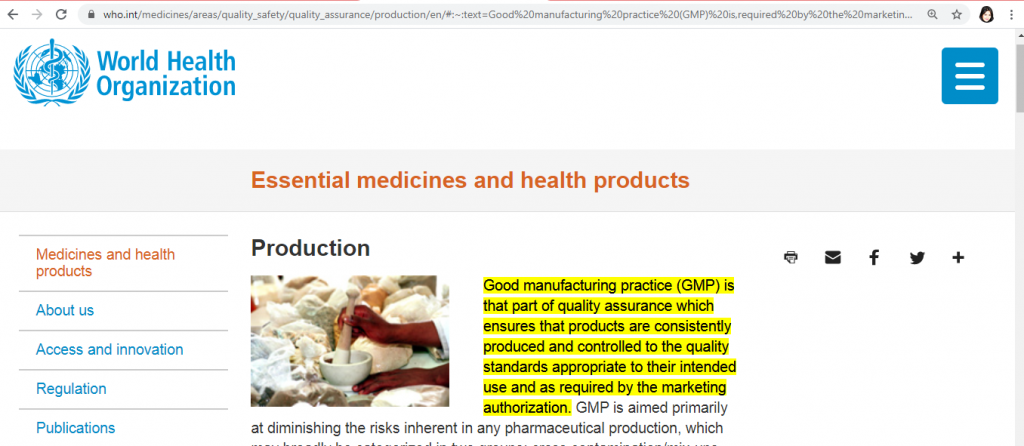
Definition of GMP according to different Pharmaceutical guideline

Definition of GMP according to WHO guideline

Definition of GMP: “Good manufacturing practice (GMP) is that part of quality assurance which ensures that products are consistently produced and controlled to the quality standards appropriate to their intended use and as required by the marketing authorization.”

definition of GMP


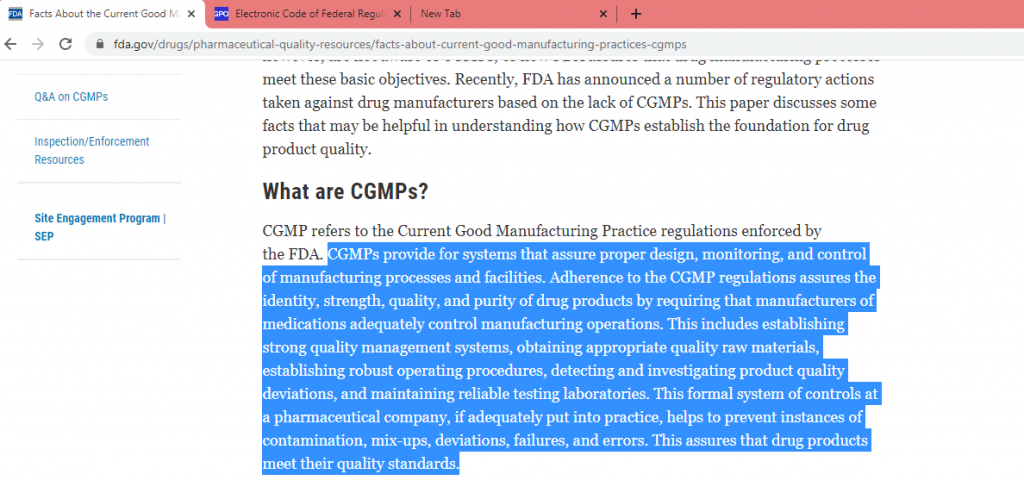
Definition of GMP according to US FDA Guideline

CGMPs provide for systems that assure proper design, monitoring, and control of manufacturing processes and facilities. Adherence to the CGMP regulations assures the identity, strength, quality, and purity of drug products by requiring that manufacturers of medications adequately control manufacturing operations. This includes establishing strong quality management systems, obtaining appropriate quality raw materials, establishing robust operating procedures, detecting and investigating product quality deviations, and maintaining reliable testing laboratories. This formal system of controls at a pharmaceutical company, if adequately put into practice, helps to prevent instances of contamination, mix-ups, deviations, failures, and errors. This assures that drug products meet their quality standards.

definition of GMP
 
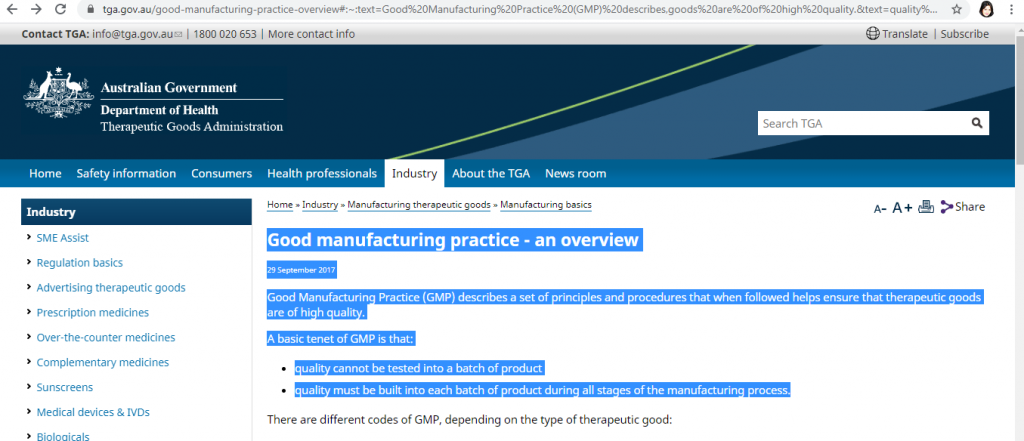
Definition of GMP according to TGA Guideline

“Good Manufacturing Practice (GMP) describes a set of principles and procedures that when followed helps ensure that therapeutic goods are of high quality. A basic tenet of GMP is that quality cannot be tested into a batch of product. Quality must be built into each batch of product during all stages of the manufacturing process”

definition of GMP
 
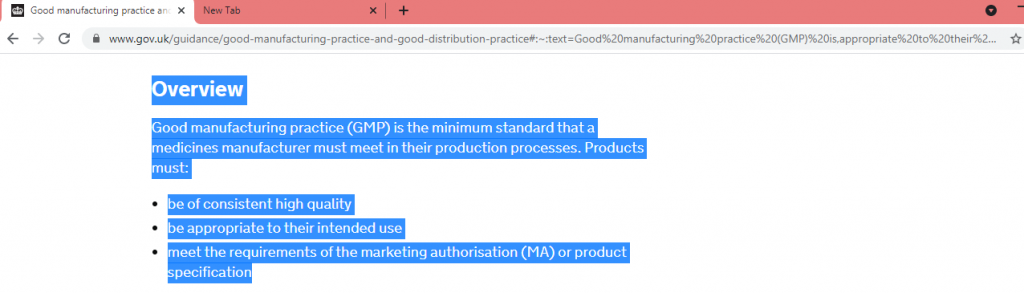
Definition of GMP according to UK MHRA guideline

Good manufacturing practice (GMP) is the minimum standard that a medicines manufacturer must meet in their production processes. Products must:

  • be of consistent high quality
  • be appropriate to their intended use
  • meet the requirements of the marketing authorisation (MA) or product specification
definition of GMP
According to WHO

“GMP covers all aspects of the manufacturing process: defined manufacturing process; validated critical manufacturing steps; suitable premises, storage, transport; qualified and trained production and quality control personnel; adequate laboratory facilities; approved written procedures and instructions; records to show all steps of defined procedures taken; full traceability of a product through batch processing records and distribution records; and systems for recall and investigation of complaints”.


What is GMP?

Good Manufacturing Practices (GMP) are a set of strict guidelines and principles used by pharmaceutical companies to ensure consistent production of safe, high-quality pharmaceutical products. These guidelines are important to maintain the integrity of manufacturing processes, maintain public health standards, and comply with regulatory requirements from global health authorities such as the U.S. Food and Drug Administration (FDA) or the European Medicines Agency (EMA). ) Europe. Below is a closer look at the key aspects of GMP in the pharmaceutical industry.


  • Documents and Records
  • Quality management system
  • Staff training
  • System and device maintenance
  • Validity and Acceptability
  • Raw material inspection
  • Process control
  • Quality control and testing
  • Traceability and withdrawal procedures
 
Documents and Records:

Complete and accurate documentation is critical to GMP. It includes detailed records of manufacturing processes, procedures and results. For example, pharmaceutical companies carefully record every step of the production of a particular drug, from raw material supply to final packaging.

Thorough and accurate documentation of good manufacturing practices (GMP) plays an important role. This involves carefully recording various aspects of production, including processes, procedures, and results. Take the pharmaceutical industry, for example, where pharmaceutical companies take great care to document every critical step in the production of a particular drug.

In compliance with GMP standards, the documentation process begins with detailed records of raw material procurement. Pharmaceutical companies carefully record information about the origin, quality, and quantity of each raw material used in the pharmaceutical manufacturing process. This documentation is not only essential for quality control, but also serves as the basis for traceability and allows the company to identify and correct any problems that arise during the production cycle.

Each step in pharmaceutical manufacturing is accurately documented as the manufacturing process progresses. This includes information about the equipment used, environmental conditions, and deviations from standard procedures. For example, if specific temperatures or pressures are important for a particular production step, these parameters are recorded to ensure consistency and reproducibility.

In addition to manufacturing processes, GMP documents also contain procedures that control various aspects of manufacturing. This includes standard operating procedures (SOPs) for equipment calibration, cleaning protocols, and employee training. Pharmaceutical companies ensure that these procedures are not only fully documented but also regularly updated to reflect improvements or changes in industry regulations.

Outcomes such as product quality and test results are also carefully documented within the GMP framework. Pharmaceutical companies keep detailed records of the quality control tests performed at various stages of manufacturing. This document is an important tool during regulatory investigations and demonstrates the company’s commitment to producing safe and effective medicines.


GMP documentation also extends to final packaging. From the materials used in packaging to the labeling process, every detail is recorded to ensure compliance with regulatory requirements and ensure the safety of end users. This comprehensive document will help you not only comply with regulatory standards, but also improve overall product quality and compliance.

In summary, the importance of complete and accurate documentation in the GMP area cannot be overemphasized. The pharmaceutical industry’s commitment to documenting all aspects of the manufacturing process, from raw material procurement to final packaging, not only ensures regulatory compliance, but also promotes a culture of continuous improvement, quality assurance, and accountability within the industry.

 
Quality management system

A robust quality control system is implemented to monitor all aspects of manufacturing, testing and quality control. This involves creating and maintaining processes to consistently produce pharmaceutical products that meet predetermined quality standards.


Establishing and maintaining a strong quality management system plays a critical role in ensuring complete oversight of all aspects of the manufacturing, analytical and quality control processes in the pharmaceutical industry. This system has been carefully designed to create a facility that consistently produces pharmaceutical products that meet stringent predetermined quality standards.

To better understand the importance of these systems, let us consider a real-world example from a pharmaceutical manufacturing plant. The introduction of a quality management system involves careful documentation and standardization of production processes. This includes everything from raw material collection and storage to the actual manufacturing process.

For example, if you produce life-saving pharmaceuticals, your quality management system establishes clear protocols for sourcing and verifying raw materials. This may include rigorous testing and certification processes to ensure the purity and integrity of ingredients used in pharmaceutical formulations.

Once the manufacturing process begins, quality control systems monitor each step to ensure compliance with predetermined standards. This may include real-time data monitoring, automated quality checks, and routine inspections to identify and address deviations from established protocols.

Testing is another important step and a quality management system ensures that rigorous testing procedures are implemented. This may include a variety of analytical techniques, such as chromatography or mass spectrometry, to test the structure and efficacy of the drug. The system also monitors environmental conditions such as temperature and humidity to ensure the stability and functionality of the final product.

Quality control measures within the system go beyond manufacturing and include aspects such as packaging and labeling. For example, in the pharmaceutical manufacturing case, quality control systems enforce standards for proper labeling, tamper-evident packaging, and verification of expiration dates to protect end users.

Regular audits and reviews are an essential part of this system. This allows you to continuously evaluate performance and identify areas for continuous improvement. By implementing a strong quality management system, pharmaceutical companies not only comply with regulatory requirements, but also build trust among consumers, healthcare professionals, and regulators regarding the safety and effectiveness of their products.

 
Staff training

GMP requires that all employees involved in the manufacturing process receive extensive training. This ensures that employees are fully familiar with the processes and requirements associated with their role. For example, people working in quality control must be trained to perform accurate and reliable testing on pharmaceutical products.

Compliance with Good Manufacturing Practices (GMP) requires in-depth training for all employees involved in the production process and emphasizes the importance of ensuring high levels of employee efficiency and performance. This rigorous training program aims to provide employees with a deep understanding of the specific procedures and requirements associated with their respective roles within a manufacturing facility.

For example, quality control personnel play a key role in ensuring compliance with GMP standards. Our extensive training program provides these individuals with the skills and knowledge necessary to perform accurate and reliable pharmaceutical testing. This includes training in the use of state-of-the-art testing equipment, adherence to established testing protocols, and the ability to accurately interpret and analyze test results.

The training not only covers technical aspects, but also emphasizes the importance of a strong awareness of quality standards and compliance. This comprehensive approach ensures that quality control personnel not only perform their duties properly, but also understand the broader context of GMP regulations and their role in ensuring the overall quality and safety of pharmaceutical products.

Additionally, GMP training goes beyond specific job functions to include broader concepts such as sanitation, documentation practices, and safety protocols. For example, production workers are trained in proper dressing procedures and hygiene practices to prevent contamination during manufacturing. Training programs may also include modules on documentation standards to ensure accurate records of all manufacturing activities, which are important for traceability and compliance.

By investing in extensive training, companies not only meet legal requirements, but also instill a culture of excellence and responsibility in their employees. In turn, this contributes to the overall reliability and integrity of the manufacturing process and ultimately promotes the quality and safety of the medicines delivered to consumers.


System and device maintenance

Regular maintenance of plant and equipment is essential to prevent contamination and maintain the accuracy of manufacturing processes. A practical example is planning regular inspection and maintenance of pharmaceutical manufacturing equipment to prevent defects that could affect product quality.

Regular maintenance of plant and equipment is essential to prevent contamination and maintain the accuracy of production processes. A prime example of this need is strategic planning for regular inspection and maintenance of machinery used in pharmaceutical manufacturing. Implementing a proactive maintenance approach allows you to quickly identify and resolve potential defects that could compromise the quality of the final product.

In the pharmaceutical industry, where precision and purity are top priorities, continuous operation of special equipment is very important. A regular maintenance routine, including thorough inspection and maintenance, becomes an essential part of a strong quality assurance system. For example, in pharmaceutical manufacturing plants, complex machinery such as tablet presses, mixers, and encapsulation machines must be inspected regularly to ensure they are operating within set parameters.

A practical example of the importance of regular maintenance can be seen through the example of a tablet press used to produce pharmaceutical tablets. Regular inspections include a complete inspection of machine components such as: B. Tools, pressure rollers and feeding systems. Maintenance activities include lubrication, calibration, and replacement of worn parts.

Following a proactive maintenance plan can help you identify potential problems early, such as wear, deformation or risk of contamination. Resolving these issues in a timely manner helps prevent unexpected errors and reduce downtime in the manufacturing process. This not only ensures consistent quality of medicines, but also contributes to operational efficiency and cost-effectiveness.


In essence, proactive maintenance of plant and equipment, including through regular inspections and maintenance, plays a key role in the pharmaceutical manufacturing process. This approach not only protects against contamination, but also ensures the precision needed to maintain the highest product quality in industries where reliability and compliance are paramount.

 
Validity and Acceptability

GMP requires verification and qualification of equipment, processes and systems to ensure efficiency and consistency. For example, pharmaceutical companies can ensure that a particular manufacturing process consistently produces drugs that meet required specifications.

Good Manufacturing Practices (GMP) require a thorough verification and qualification process of equipment, processes and systems to ensure efficiency and consistency. These rigorous verifications ensure that our manufacturing operations meet established standards and consistently deliver high-quality products.

For example, consider a pharmaceutical company that produces drugs. By adhering to GMP principles, the company will control preventive measures in certain manufacturing processes. This validation process includes extensive testing and analysis to ensure that the manufacturing process consistently produces medicines that meet regulatory authorities’ rigorous specifications and quality standards.

During this validation process, pharmaceutical companies carefully evaluate various parameters such as raw material specifications, device performance, environmental conditions, and process controls. The goal is to provide evidence and documentation that the manufacturing process consistently produces a drug with the desired properties, ensuring safety, efficacy, and quality of the final product.

Moreover, this verification process is more than an isolated event. It is a constant effort to continuously improve. Regular assessments, redesigns and updates ensure good processes remain effective and aligned with evolving industry standards. This proactive approach not only ensures GMP compliance, but also increases the overall efficiency and reliability of pharmaceutical manufacturing, helping to deliver safe and effective medicines to consumers.

 
Raw material inspection

We apply rigorous procedures to check and test our raw materials to ensure they meet our quality specifications. In fact, pharmaceutical manufacturers can test the purity, potency, and other relevant characteristics of incoming raw materials before incorporating them into the manufacturing process.
Strict protocols are in place to control and test raw materials to ensure stringent quality specifications are met. A great example of this delicate process can be seen in the pharmaceutical industry, where manufacturers carefully test incoming raw materials for a variety of important characteristics such as purity and potency. These raw materials undergo extensive testing to ensure they meet the highest standards before being incorporated into the manufacturing process.

Implementing robust testing procedures in pharmaceutical manufacturing requires evaluating raw materials against predetermined criteria to ensure quality and suitability for use. For example, pharmaceutical companies may use advanced analytical techniques such as chromatography or spectroscopy to analyze the purity of compounds in their raw materials. This ensures that the ingredients meet the required specifications and do not contain impurities that could compromise the safety and functionality of the final product.


Moreover, efficacy testing is an important aspect of the evaluation process, especially for drugs where precise dosing is important for therapeutic efficacy. Manufacturers can accurately measure the active ingredients in their raw materials using sophisticated methods such as high-performance liquid chromatography (HPLC) or mass spectrometry.

In addition to assessing purity and potency, other relevant characteristics such as particle size, moisture content, and microbial contamination can also be examined in depth. This multi-layered approach ensures a complete evaluation of raw materials and does not allow for any compromise in the quality of the final drug product.

By implementing these rigorous testing procedures, pharmaceutical manufacturers not only comply with legal requirements, but also emphasize the production of safe, high-quality drugs. Effective control and analysis systems are essential to ensure that raw materials used in the pharmaceutical industry meet the high standards required to develop reliable and effective medical solutions.

 
Process control

GMP emphasizes implementing controls at various stages of the manufacturing process to ensure consistency and quality. This may involve monitoring critical process parameters in real time to immediately detect and correct deviations.
Good manufacturing practices (GMP) place great importance on the careful application of stringent controls throughout the manufacturing process to ensure consistency and high quality of the final product. This comprehensive approach includes continuous real-time monitoring of critical process parameters, allowing deviations from set values to be immediately detected and corrected.

For example, in the pharmaceutical industry, GMP compliance is essential to ensure safe and effective drug production. Various critical parameters such as drug preparation time, temperature, pressure, and chemical concentration are monitored in real time. If any of these parameters fall outside the specified range, the automated system will raise an alert so operators can take immediate action to correct the problem. This proactive monitoring and timely corrective action not only ensures product quality, but also contributes to the overall safety and efficacy of medicines that reach consumers.

In the context of food manufacturing, GMP practices include monitoring issues such as hygiene, temperature, and ingredient ratios. For example, in packaged food production, strict control measures are implemented to maintain hygiene standards at all stages of the production process. Automatic sensors continuously monitor cleaning and, if there are any deviations, initiate an automatic cleaning process to ensure that the end product meets the highest quality and safety standards.

The application of GMP principles extends beyond the pharmaceutical and food industries to a variety of industries, including electronics, cosmetics, and automobile manufacturing. In any case, real-time monitoring of critical parameters and prompt corrective action demonstrates commitment to GMP and ensures consistent production of high-quality products across a variety of industries.

 
Quality control and testing

Intermediate and final products undergo rigorous quality control and testing to ensure they meet specified specifications. This includes extensive testing for aspects such as purity, stability and dissolution rate.

Extensive testing and quality control procedures are systematically implemented throughout the manufacturing process, covering both intermediate and final products. The main purpose is to ensure that these products meet strict quality standards by ensuring that they meet specific specifications. Our testing program is comprehensive and focuses on critical factors such as purity, stability, and dissolution rate that are critical to the overall quality and effectiveness of the end result.

For example, in pharmaceutical manufacturing, intermediate products undergo rigorous testing to assess their chemical purity and ensure that they meet the required pharmacological standards. Stability testing determines a product’s resistance to various environmental conditions, ensuring its effectiveness throughout its shelf life. Additionally, dissolution rate testing is very important, especially for oral drugs. This is because it directly influences treatment results by assessing the amount and speed at which active ingredients are released into the body.

In the electronics industry, strict quality control is applied to final products such as smartphones. Purity testing of electronic components ensures that they meet specified standards, preventing defects or performance issues. Reliability testing is essential to ensure that devices can withstand a variety of environmental conditions without performance degradation. Additionally, testing battery discharge rates ensures consistent and stable power delivery over time, improving the overall reliability of the product.

These examples demonstrate how rigorous quality control and testing processes are essential in a variety of industries to ensure that intermediate and final products always meet specified specifications and ultimately increase customer satisfaction and product reliability.

 
Traceability and withdrawal procedures

GMP requires the establishment of a traceability system to track and recall products in case of quality issues or regulatory violations. Real-world examples include implementing a barcode system to easily identify and recall products in the event of a recall.

Compliance with GMP in the pharmaceutical industry is not only a regulatory requirement, but also a critical factor in protecting public health and maintaining the reputation of pharmaceutical companies. Practical implementation of GMP principles allows careful control of all stages of pharmaceutical production to produce safe and consistently high-quality products.

Good Manufacturing Practices (GMP) mandate the creation of a robust traceability system to monitor and recover products if quality issues occur or deviations from compliance standards occur. A specific example of this need is the integration of advanced barcoding systems into pharmaceutical production processes. This implementation allows for seamless product identification and recovery in recall situations and increases the efficiency and accuracy of the overall process.

Imagine a pharmaceutical company that diligently applies GMP principles to its operations. The company uses cutting-edge barcode technology as part of its tracking system. Each product is assigned a unique barcode, linked to extensive data about production details, ingredients and quality control systems. If there is a quality or non-compliance issue, these barcodes are essential to quickly identify and isolate affected batches.

What is cGMP

To delve deeper into the practical significance, imagine a situation where a particular batch of medicine is suspected to be out of quality standards. GMP-compliant tracking systems allow companies to quickly identify affected products by scanning barcodes, allowing batches to be quickly removed from distribution channels, preventing potential loss to customers. Detailed data associated with the barcode can help you find the root cause of the problem and implement corrective actions to prevent the problem from recurring.

In essence, GMP compliance in the pharmaceutical industry goes beyond regulatory obligations. This is proving to be an important factor in maintaining public health and strengthening the reputation of pharmaceutical companies. Practical implementation of GMP principles, such as the use of advanced tracking systems such as barcodes, implies a commitment to strict control at all stages of the production process. These efforts result in the production of safe, consistent, high-quality medicines that not only ensure regulatory compliance but, more importantly, increase consumer trust and maintain the integrity of the industry.

Definition of GMP according to different Pharmaceutical guideline Read More »