Effluent treatment plants (ETPs) represent a critical infrastructure in industrial settings, serving as the primary defense against environmental contamination from wastewater discharge. These sophisticated systems employ a sequence of physical, chemical, and biological processes to purify industrial wastewater before it can be safely released into the environment or recycled for further use. The intricate design and operation of ETPs reflect the complex nature of industrial effluents and the stringent regulatory requirements governing their treatment and disposal.
Understanding Industrial Effluent and Its Environmental Impact
Water serves as an indispensable resource in manufacturing and industrial processes, functioning as a coolant, solvent, and medium for numerous chemical reactions. After completing its role in these processes, the resulting wastewater—termed effluent—contains a mixture of toxic and non-toxic materials that pose significant environmental hazards if released untreated. Industrial effluent typically contains suspended solids, dissolved chemicals, heavy metals, organic compounds, and potentially harmful microorganisms, all of which can severely impact aquatic ecosystems and pose threats to public health1. The composition of effluent varies considerably across different industries, with pharmaceutical, chemical, textile, and food processing sectors each generating wastewater with unique contamination profiles and treatment challenges.
The environmental consequences of untreated effluent discharge extend beyond immediate pollution concerns. Excessive organic matter in water bodies depletes dissolved oxygen, creating hypoxic conditions that suffocate aquatic life. Heavy metals and persistent organic pollutants can bioaccumulate in the food chain, eventually reaching humans through contaminated food sources. Nutrient-rich effluents may trigger eutrophication, causing harmful algal blooms that devastate aquatic ecosystems. In recognition of these serious environmental implications, regulatory frameworks worldwide mandate the treatment of industrial wastewater before discharge, necessitating the implementation of efficient effluent treatment plants.
Fundamental Principles of Effluent Treatment
The fundamental goal of effluent treatment is the systematic removal of contaminants through a methodical series of processes designed to handle specific types of pollutants. The treatment methodology follows a sequential approach, beginning with the removal of larger physical contaminants, followed by chemical treatments to neutralize harmful substances, and culminating in biological treatments to degrade organic matter. This structured approach ensures each treatment stage builds upon the previous one, gradually improving water quality until it meets the required standards for environmental release or reuse.
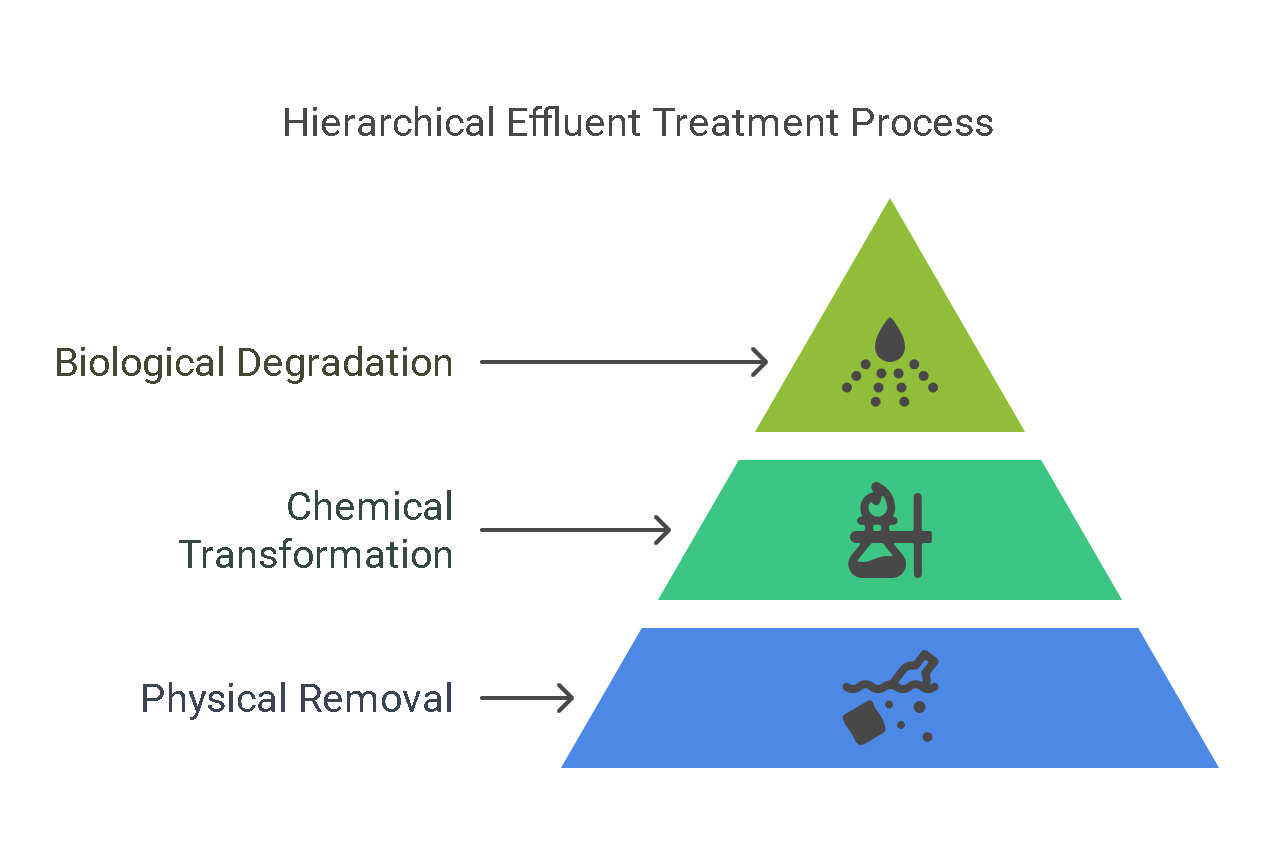
Effective effluent treatment relies on a comprehensive understanding of wastewater characteristics and the appropriate selection of treatment technologies. The principles of separation, transformation, and removal guide the design of treatment processes, with each stage targeting particular contaminants based on their physical, chemical, and biological properties. Physical separation removes suspended and floating materials, chemical transformation converts dissolved contaminants into separable forms, and biological processes break down organic compounds into simpler, less harmful substances. The integration of these principles allows ETPs to address the multifaceted nature of industrial effluents and produce water that complies with increasingly stringent regulatory standards
Design Parameters of Effluent Treatment Plants
The design of an efficient effluent treatment plant requires careful consideration of multiple parameters that characterize the wastewater to be treated. These parameters fall into three primary categories: physical, chemical, and biological, each influencing different aspects of the treatment process design and operation.
Physical Parameters of Wastewater
The physical properties of wastewater provide essential insights into the types of treatment processes required, particularly for the preliminary and primary treatment stages. Suspended solids, including soil particles, plant fibers, and other insoluble materials, necessitate effective filtration and sedimentation processes. Turbidity, which measures the water’s ability to absorb or scatter light due to suspended particles, serves as a visual indicator of contamination levels and treatment effectiveness. The temperature of wastewater significantly impacts biological treatment processes, as higher temperatures often correlate with increased microbial activity but can also indicate higher levels of toxicity. The color of the effluent, determined by dissolved or suspended materials, offers valuable clues about the types of contaminants present and may require specific treatment approaches for aesthetic and regulatory compliance.
Chemical Parameters for Treatment Design
The chemical composition of industrial effluent presents more complex challenges for treatment design, requiring specialized processes to address various contaminants. Total dissolved solids, primarily consisting of inorganic salts, affect the osmotic pressure of the water and may require advanced treatments like reverse osmosis for removal. Wastewater alkalinity and pH levels influence chemical reaction rates and the solubility of contaminants, necessitating careful monitoring and adjustment throughout the treatment process. The hardness of water, determined by calcium and magnesium ion concentrations, can interfere with certain treatment chemicals and may require softening processes. Organic matter content, measured as Chemical Oxygen Demand (COD) and Biochemical Oxygen Demand (BOD), indicates the oxygen-depleting potential of the effluent and guides the design of biological treatment stages. Heavy metals, fluorides, chlorides, and agricultural chemicals like pesticides represent particularly concerning contaminants due to their environmental persistence and toxicity, often requiring specialized chemical precipitation or adsorption processes for effective removal.
Biological Parameters and Microbial Contaminants
The biological aspects of wastewater encompass various microbial pathogens that may survive in the effluent and pose significant public health risks if not properly addressed. Bacteria present in industrial wastewater may include both beneficial microorganisms that assist in treatment processes and pathogenic varieties that cause diseases like cholera and typhoid. Viruses found in wastewater, including hepatitis A (formerly called yellow jaundice virus) and poliovirus, are particularly concerning due to their high infectivity and resistance to some treatment methods. Protozoa, with their complex metabolic activities and cyst-forming capabilities, present unique challenges for disinfection processes. These biological contaminants necessitate effective disinfection strategies as part of the tertiary treatment stage to ensure the final effluent poses no microbial health risks upon discharge or reuse.
The Four Levels of Effluent Treatment
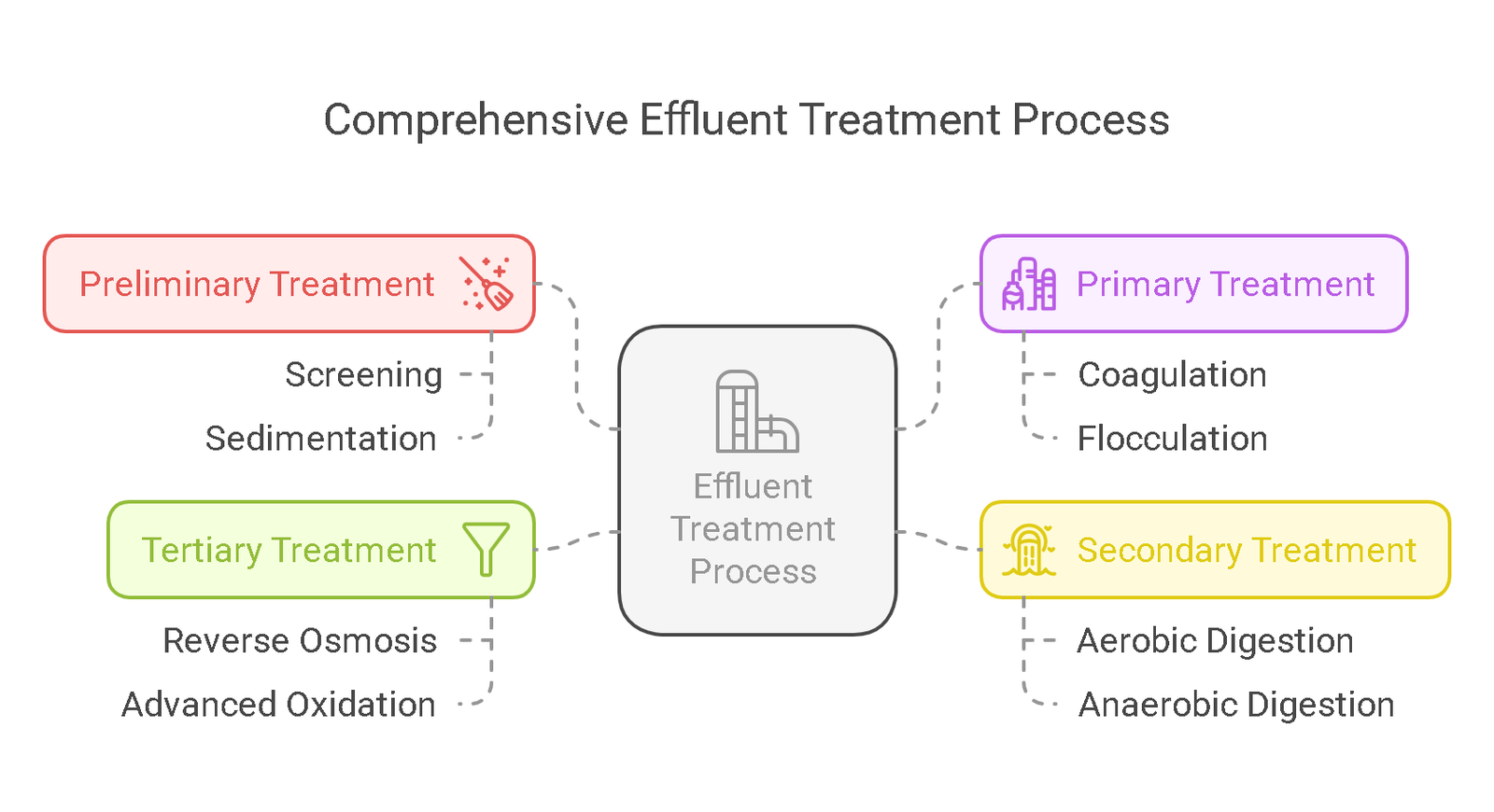
Effluent treatment progresses through four distinct levels, each targeting specific contaminants and building upon the purification achieved in the previous stages. This systematic approach ensures comprehensive treatment that addresses the diverse range of pollutants found in industrial wastewater.
Preliminary Treatment: Physical Contaminant Removal
The preliminary treatment level focuses exclusively on removing physical waste and larger debris from the incoming effluent through mechanical processes. This initial stage employs a range of physical operations including sedimentation, where gravity causes heavier particles to settle out of suspension; filtration to remove suspended solids of various sizes; aeration to increase dissolved oxygen levels and volatilize certain compounds; flow equalization to manage variable input rates and homogenize the effluent composition; clarification to further separate suspended solids; and screening to remove larger debris that could damage downstream equipment. These processes prepare the wastewater for more advanced treatment by eliminating materials that could interfere with subsequent chemical and biological processes. While seemingly simplistic, effective preliminary treatment significantly reduces the load on later treatment stages and improves overall plant efficiency.
Primary Treatment: Combined Physical and Chemical Processes
Building upon preliminary treatment, the primary level targets the removal of larger solids and organic matter through an integrated approach combining physical and chemical processes. This stage utilizes the same physical processes employed in preliminary treatment but introduces chemical interventions to enhance purification efficiency. These chemical processes include coagulation, where chemicals like aluminum sulfate or ferric chloride neutralize electrical charges on particles, allowing them to combine; pH control through the addition of hydrochloric acid or sodium carbonate to optimize conditions for subsequent treatments; chemical precipitation to remove dissolved metals and other contaminants by converting them to insoluble forms; flocculation to aggregate smaller particles into larger, more easily removable flocs; and dissolved air flotation to separate lighter materials that resist sedimentation. This combined approach significantly reduces suspended solids and begins addressing chemical contaminants, preparing the effluent for the more specialized secondary treatment.
Secondary Treatment: Biological Degradation Processes
The secondary treatment level addresses biodegradable organic materials and remaining suspended matter through sophisticated biological processes supported by chemical treatments. While continuing to employ chemical processes similar to the primary stage, secondary treatment introduces microorganisms to break down organic contaminants through metabolic activity. These biological approaches include suspended-growth processes like activated sludge systems, where microorganisms remain suspended in the wastewater while consuming organic matter, and attached-growth or fixed-film processes such as trickling filters, where microorganisms grow on supporting media as the wastewater passes through. These biological methods can be employed individually or in combination, depending on the specific characteristics of the effluent being treated. Secondary treatment dramatically reduces the organic load in the wastewater, as measured by significant reductions in BOD and COD values, and prepares the effluent for final polishing in the tertiary stage1.
Tertiary Treatment: Advanced Purification Methods
The most sophisticated level, tertiary treatment, focuses on removing remaining suspended and dissolved materials through a comprehensive integration of physical, chemical, and biological processes. This advanced stage applies all previously mentioned techniques in a coordinated manner while introducing specialized processes to address specific contaminants. Tertiary treatments may include microfiltration or ultrafiltration for enhanced particle removal, activated carbon adsorption for organic compound removal, ion exchange for dissolved ionic contaminant removal, and advanced disinfection methods to eliminate pathogens. In pharmaceutical facilities, additional treatments may target active pharmaceutical ingredients (APIs) and other industry-specific compounds. Tertiary treatment represents the final refinement of the wastewater before discharge or reuse, ensuring that it meets or exceeds all applicable environmental standards and poses no threat to ecosystems or public health.
Treatment Processes and Technologies in ETPs
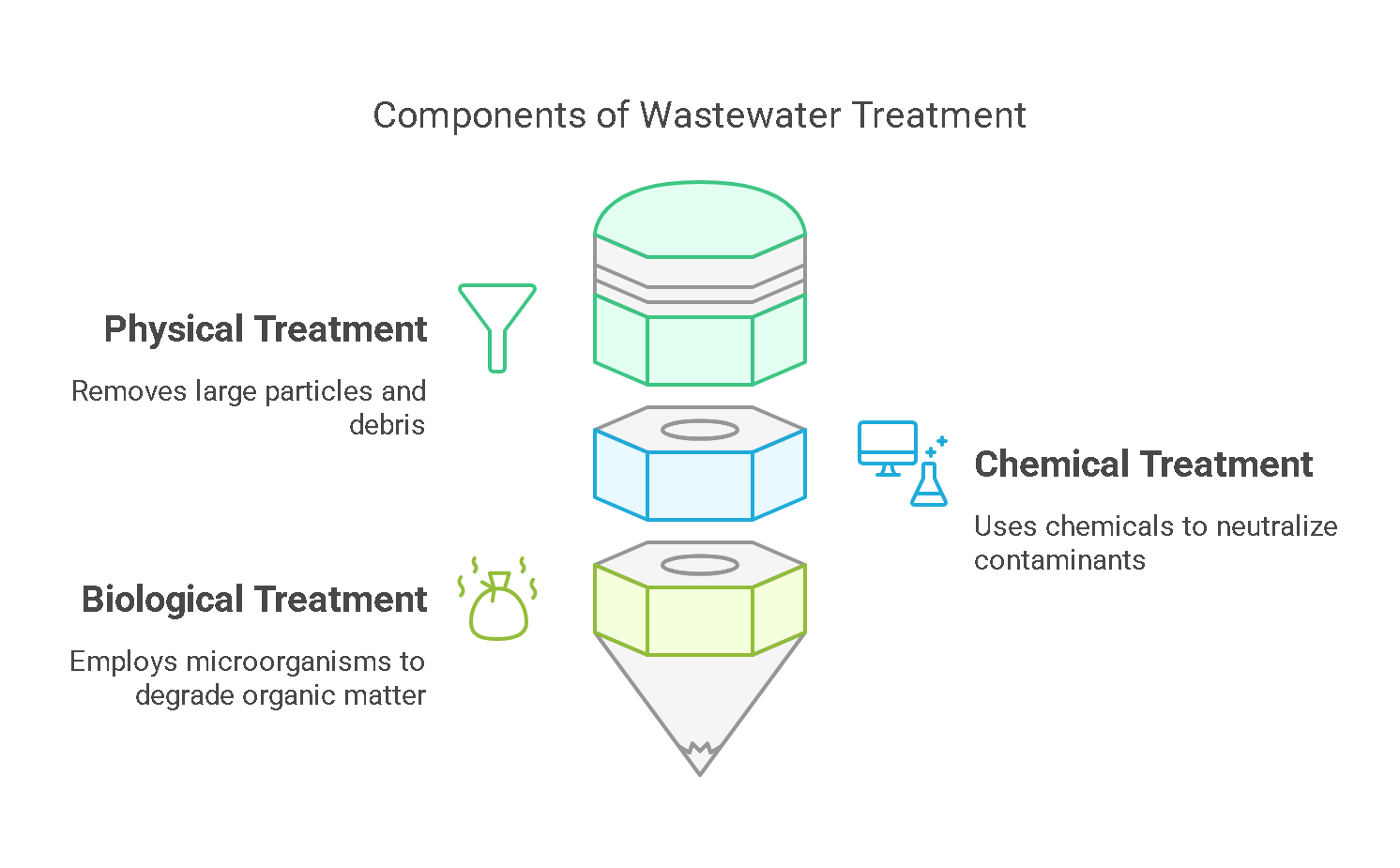
The effective operation of an effluent treatment plant relies on diverse treatment processes and technologies, each serving specific functions in the purification sequence. These processes can be categorized as physical, chemical, and biological approaches, with each category addressing particular aspects of wastewater contamination.
Physical Treatment Technologies
Physical treatment methods employ mechanical principles to separate contaminants from wastewater without altering their chemical composition. Bar screens and sieves remove large debris at the intake, protecting downstream equipment from damage. Sedimentation basins utilize gravity to separate heavier particles, with settling rates governed by Stokes’ Law, which can be expressed as:
Vs=g(ρp−ρf)d2/18u
Where Vs represents the settling velocity, g is gravitational acceleration, Pp and Pf are the densities of the particle and fluid respectively, d is the particle diameter, and μ is the fluid viscosity
Flotation systems bring lighter materials to the surface for removal, often enhanced by dissolved air to create microbubbles that attach to particles. Filtration, ranging from basic sand filters to advanced membrane technologies, removes suspended solids as water passes through porous media. The filtration rate in rapid sand filters typically follows Darcy’s Law:
Q=KAh/L
Where Q is the filtration rate, K represents the hydraulic conductivity of the filter media, A is the cross-sectional area, h is the head loss, and L is the depth of the filter bed.
These physical processes form the foundation of effluent treatment by establishing the necessary conditions for subsequent chemical and biological treatments.
Chemical Treatment Methodologies
Chemical treatments modify the molecular properties of contaminants to facilitate their removal through subsequent physical processes. Coagulation introduces chemicals like aluminum sulfate or polyaluminum chloride that neutralize the electrical charges of colloidal particles, allowing them to combine. Flocculation enhances this aggregation through gentle mixing, forming larger, more easily removable particles. The optimal coagulant dosage (D) can often be estimated using:
D=K×√C
Where K is a constant specific to the coagulant type and C represents the colloidal concentration
Chemical precipitation converts dissolved contaminants into insoluble forms that can be filtered out, particularly effective for heavy metal removal. pH adjustment, using acids or bases, creates optimal conditions for other treatment processes and ensures the final effluent meets discharge standards. Advanced oxidation processes utilize hydroxyl radicals generated through combinations of ozone, hydrogen peroxide, and UV radiation to break down recalcitrant organic compounds. These chemical interventions complement physical treatments and prepare the wastewater for biological processing by removing toxic substances that might inhibit microbial activity.
Biological Treatment Systems
Biological treatments harness microbial metabolism to degrade organic contaminants, converting them into biomass, water, and gases. Aerobic processes, occurring in the presence of oxygen, efficiently break down organic matter through reactions that can be summarized as:
Organic matter+O2+nutrients→CO2+H2O+new cells+residual matter
Activated sludge systems, the most common aerobic biological treatment, maintain a microbial suspension (mixed liquor) that consumes organic material. The sludge age or solids retention time (SRT) in these systems can be calculated as:
SRT=Total mass of solids in system/Mass of solids removed per day
Anaerobic processes, functioning without oxygen, produce biogas as a valuable byproduct while degrading organics through the general reaction:
Organic matter+anaerobic bacteria→CH4+CO2+H2S+new cellsOrganic matter+anaerobic bacteria→CH4+CO2+H2S+new cells
Fixed-film systems like trickling filters and rotating biological contactors provide surfaces for microbial growth, allowing treatment as wastewater passes through or over the biofilm. Membrane bioreactors combine biological treatment with membrane filtration, producing exceptionally high-quality effluent. These biological approaches are particularly effective for treating wastewater with high organic content, substantially reducing BOD and COD values before final polishing and discharge.
Standard Operating Procedures for ETPs
The effective operation of an effluent treatment plant demands strict adherence to standardized procedures that ensure consistent treatment quality and regulatory compliance. These procedures encompass daily operations, maintenance protocols, and comprehensive monitoring systems.
Daily Operational Procedures
Daily ETP operations begin with thorough monitoring of influent characteristics to establish baseline parameters and adjust treatment accordingly. Operators must maintain optimal conditions for each treatment process, including proper chemical dosing based on wastewater composition, appropriate aeration rates for biological processes, and suitable hydraulic retention times throughout the system. The collection and analysis of water samples from various treatment stages provide immediate feedback on system performance, allowing for real-time adjustments to maintain treatment efficiency. Process control parameters like dissolved oxygen levels in aeration tanks, mixed liquor suspended solids (MLSS) in activated sludge systems, and sludge volume index (SVI) must be regularly monitored and maintained within designed ranges. Effluent parameters including pH, COD, and suspended solids should be checked daily to verify compliance with discharge standards and identify potential treatment issues before they become serious problems.
Maintenance Protocols and Schedules
Preventive maintenance forms the cornerstone of reliable ETP operation. Equipment inspection schedules must be established and followed rigorously, with particular attention to mechanical components like pumps, blowers, mixers, and chemical dosing systems that are subject to wear and corrosion. Filter media in sand filters and activated carbon units require regular backwashing to prevent clogging and maintain filtration efficiency. Chemical storage and handling procedures must prioritize safety while ensuring adequate supplies for uninterrupted treatment. Sludge management, including proper collection, dewatering, and disposal, prevents system overloading and ensures compliance with waste management regulations. Treatment tanks require periodic cleaning to remove accumulated solids and biofilms that could reduce treatment efficiency. Electrical systems, instrumentation, and control components need regular calibration and verification to maintain accurate monitoring and automated functions. These maintenance activities should be documented in detailed logs that track equipment history and assist in identifying recurring issues.
Monitoring Systems and Parameters
Comprehensive monitoring forms the backbone of ETP management and regulatory compliance. Daily testing should include analysis of both untreated and treated effluent for critical parameters such as pH, Chemical Oxygen Demand (COD), Biochemical Oxygen Demand (BOD), Total Suspended Solids (TSS), Total Dissolved Solids (TDS), chlorides, sulfates, and oil and grease. As specified in standard operating procedures, external laboratory analysis conducted monthly provides verification of internal testing and more detailed contamination profiles. Calcium hypochlorite dosing (typically 2-3 ppm) after carbon filtration ensures microbial control in the treated water. The treated effluent can then be safely used for gardening or other appropriate purposes based on its quality parameters. Accurate record-keeping of all operational parameters, maintenance activities, and test results creates a historical database that supports performance evaluation, troubleshooting, and regulatory reporting. Modern ETPs increasingly incorporate online monitoring systems that provide continuous real-time data on key parameters, enabling more responsive process control and earlier detection of treatment anomalies.
Regulatory Framework and Compliance Standards
Effluent treatment plants must operate within a comprehensive regulatory framework designed to protect environmental and public health. These regulations establish specific standards for treated effluent quality and impose monitoring and reporting requirements to ensure compliance.
International Regulatory Guidelines
Global regulatory frameworks provide the foundation for national and regional effluent standards. The World Health Organization (WHO) Good Manufacturing Practices (GMP) includes guidelines for pharmaceutical waste management that influence effluent treatment requirements worldwide. International standards organizations like ISO have developed environmental management frameworks such as ISO 14001 that incorporate wastewater treatment considerations. The World Bank Group’s Environmental, Health, and Safety Guidelines establish industry-specific effluent standards that are particularly relevant for developing regions and international projects. These international frameworks establish fundamental principles for effluent management that inform more specific regional and national regulations while promoting global consistency in environmental protection approaches.
Pharmaceutical Industry Specific Regulations
The pharmaceutical industry faces particularly stringent effluent regulations due to the potential environmental impact of active pharmaceutical ingredients (APIs). In the United States, FDA regulations under 21 CFR Parts 210 and 211 establish Good Manufacturing Practices for finished pharmaceuticals, which include proper waste management and effluent control. The European Union implements GMP guidelines with specific provisions in Annex 1 (Sterile Products) and Annex 15 (Qualification and Validation) that impact wastewater management. The European Medicines Agency (EMA) provides guidelines on environmental risk assessment that require evaluation of potential environmental impacts from pharmaceutical manufacturing processes and products. Various pharmacopoeias, including the United States Pharmacopeia (USP), European Pharmacopoeia (Ph. Eur.), British Pharmacopoeia (BP), and Indian Pharmacopoeia (IP), specify requirements for water quality used in pharmaceutical manufacturing, indirectly influencing effluent treatment standards.
Central Pollution Control Board Standards
In India, the Central Pollution Control Board (CPCB) establishes comprehensive standards for industrial effluents under the Water (Prevention and Control of Pollution) Act. These standards specify maximum permissible limits for various physical, chemical, and biological parameters in treated effluents before discharge. Key parameters regulated by CPCB include pH (typically required to be between 6.5-8.5), BOD (often limited to 30 mg/L or less), COD (typically restricted to 250 mg/L or less), TSS (generally limited to 100 mg/L), oil and grease (usually below 10 mg/L), and specific limits for various heavy metals and other toxic substances. The pharmaceutical industry in India must also comply with Schedule M of the Drugs and Cosmetics Act & Rules, which outlines GMP requirements including appropriate waste management and environmental protection measures. Compliance with these standards requires properly designed and operated effluent treatment plants with regular monitoring and reporting to demonstrate ongoing conformance with regulatory requirements.
Challenges and Innovations in Effluent Treatment
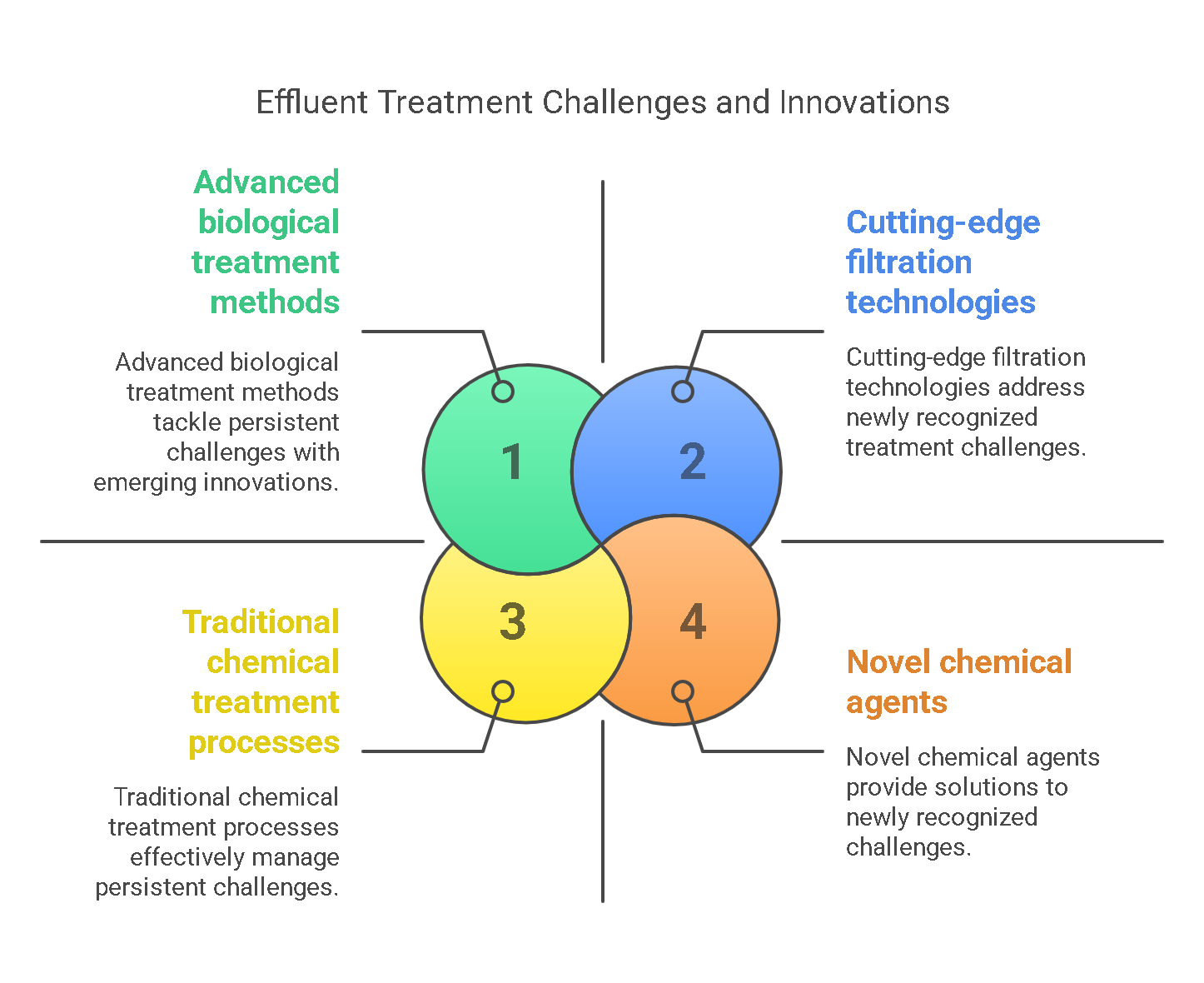
The field of effluent treatment continues to evolve in response to emerging challenges and technological advancements, with innovations addressing both persistent and newly recognized treatment issues.
Current Treatment Challenges
Industrial effluents increasingly contain complex compounds that resist conventional treatment methods, including pharmaceuticals, personal care products, and industrial chemicals with novel molecular structures. The presence of active pharmaceutical ingredients (APIs) in pharmaceutical industry effluents presents particular challenges due to their biological activity at extremely low concentrations and potential environmental persistence. More stringent regulatory standards worldwide require ever-higher treatment efficiencies while simultaneously addressing concerns about the energy consumption and carbon footprint of treatment processes themselves. Space constraints in urban industrial settings limit treatment plant expansion, necessitating more compact and efficient treatment technologies. Climate change impacts, including more variable precipitation patterns and rising temperatures, create additional challenges for treatment plant operations and discharge management. The detection of microplastics, nanomaterials, and other emerging contaminants in industrial wastewaters presents new treatment challenges requiring innovative approaches beyond conventional methods.
Advanced Treatment Technologies
Technological innovations continue to enhance the capabilities of effluent treatment plants. Advanced oxidation processes utilizing combinations of ozone, hydrogen peroxide, UV radiation, and catalysts effectively degrade previously recalcitrant compounds through the generation of highly reactive hydroxyl radicals. Membrane technologies, including ultrafiltration, nanofiltration, and reverse osmosis, provide exceptional contaminant removal capabilities, particularly for dissolved substances that traditional treatments struggle to address. Electrochemical treatment methods offer chemical-free alternatives for specific contaminants through direct electron transfer processes. Biological innovations include granular activated sludge processes that provide superior settling characteristics while occupying smaller footprints, and anammox (anaerobic ammonium oxidation) systems that dramatically reduce energy requirements for nitrogen removal. Nanotechnology applications in treatment, such as nanomaterials for adsorption and catalysis, show promising results for targeted contaminant removal at lower concentrations than previously possible. Resource recovery technologies that extract valuable materials from wastewater, including nutrients, metals, and energy, transform treatment facilities from pure cost centers into partial resource recovery operations.
Sustainable Approaches to Effluent Management
The future of effluent treatment points toward more integrated and sustainable approaches that recognize wastewater as a resource rather than merely a waste stream. Decentralized treatment systems reduce infrastructure requirements and enable water reuse closer to the point of generation, decreasing energy consumption for water transport. Zero liquid discharge technologies aim to eliminate wastewater discharge entirely through advanced treatment and recovery processes that reclaim water for reuse and concentrate contaminants for proper disposal or resource recovery. Digital technologies, including real-time monitoring, artificial intelligence, and predictive analytics, optimize treatment operations and anticipate maintenance needs, improving both performance and efficiency. Energy-neutral or energy-positive treatment plants harness biogas and other renewable energy sources to offset operational costs and reduce environmental footprints. The circular economy approach reframes effluent treatment as part of a broader resource management strategy, recovering water, energy, and materials rather than merely treating waste. These sustainable approaches represent the cutting edge of effluent treatment plant design and operation, aligning environmental protection with economic and operational benefits.
Effluent treatment plants serve as critical infrastructure at the interface between industrial activity and environmental protection. Through their multi-stage treatment processes incorporating physical, chemical, and biological mechanisms, ETPs transform potentially harmful industrial wastewater into effluent that meets stringent regulatory standards for environmental release or reuse. The design and operation of these facilities require sophisticated understanding of contaminant behavior and treatment technologies, alongside rigorous monitoring and maintenance protocols to ensure consistent performance.
The pharmaceutical industry, with its unique challenges related to active pharmaceutical ingredients and other specialized compounds, must implement particularly robust effluent treatment systems to ensure compliance with industry-specific regulations from bodies like the FDA, EMA, and various national regulatory authorities. As global awareness of pharmaceutical contaminants in water bodies increases, treatment technologies continue to advance to address these emerging concerns more effectively.
The evolution of effluent treatment reflects broader societal shifts toward sustainability and circular economy principles. Modern ETPs increasingly incorporate resource recovery, energy efficiency, and water reuse capabilities, transforming what was once considered a purely environmental compliance cost into a potential source of recovered resources and reduced utility expenses. Technological innovations in monitoring, treatment processes, and system integration continue to enhance both the effectiveness and efficiency of effluent treatment.
Ultimately, well-designed and properly operated effluent treatment plants represent not just regulatory compliance mechanisms but essential components of industrial sustainability. By ensuring that industrial activities do not compromise water resources for current and future generations, ETPs embody the principle that economic development and environmental protection can and must coexist through thoughtful engineering and responsible operation.